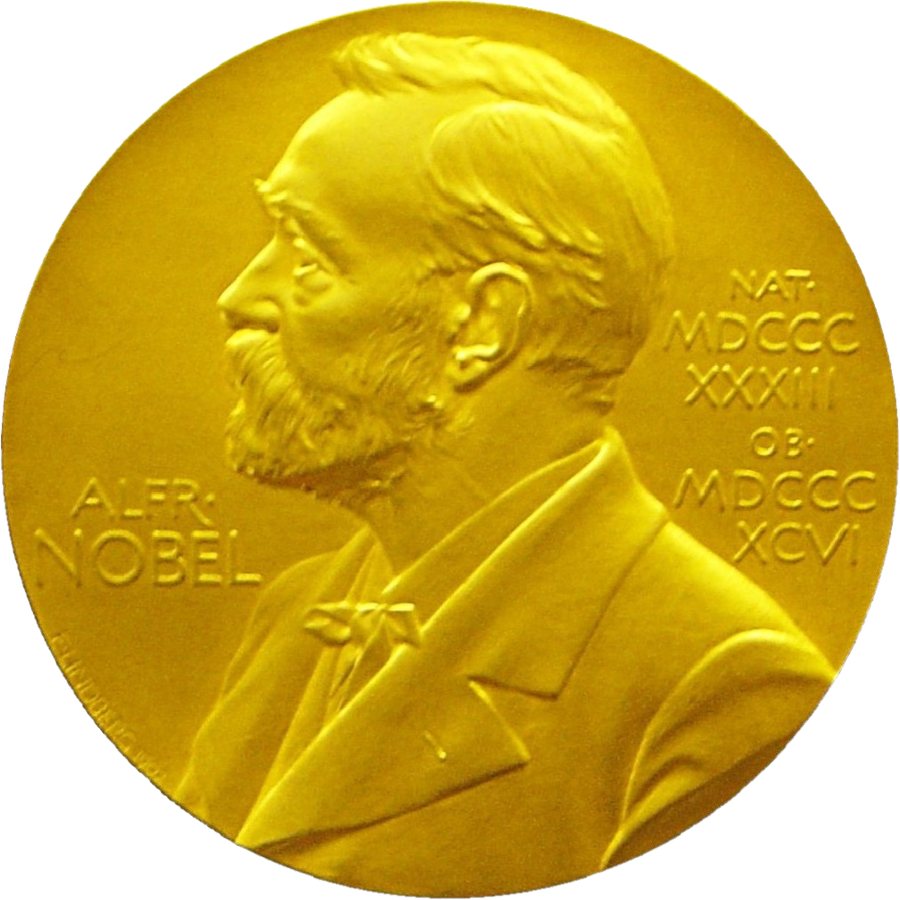
The Royal Swedish Academy of Sciences has awarded the 2026 Nobel Prize in Physics to Francis Halzen for his fundamental contributions to the development of the IceCube Neutrino Observatory and the discovery of high-energy neutrinos of astrophysical origin. The announcement was made on 6 October 2026. The academy said the work has opened new avenues for studying the most energetic phenomena in the universe.
Neutrinos are elementary particles with no electric charge and extremely weak interactions with matter. Those properties allow them to travel vast distances without being absorbed or deflected, so they carry information about physical processes in distant astrophysical objects, including the environments surrounding black holes and active galactic nuclei. That makes them unusually valuable probes of extreme cosmic events, many of which are difficult or impossible to reproduce in laboratories.
The discovery of high-energy astrophysical neutrinos has given researchers a new way to investigate particle acceleration mechanisms and other processes that occur under extreme conditions. The source material describes this achievement as a significant advance for neutrino astronomy and as one of the foundations of multimessenger astronomy, a field that combines neutrino observations with other methods of studying the universe. Because neutrinos and other signals from the same cosmic source can be compared, scientists can build a fuller picture of what is happening in those sources than any single method allows.
A central part of the recognized work is the IceCube Neutrino Observatory, described as the first detector of its kind designed to carry out astrophysical observations from deep ice near the South Pole. The observatory was developed through the international scientific collaboration known as the IceCube Collaboration. It uses approximately one cubic kilometre of ice to detect neutrinos of cosmic origin, and the detection relies on the rare moments when a neutrino interacts with the ice and produces signals that the instrument can record.
According to the source, these cosmic neutrinos offer insight into some of the most energetic events in astrophysics, including supernova explosions, gamma-ray bursts, and processes in the vicinity of black holes and neutron stars. The development of the IceCube infrastructure and the research carried out with it enabled the detection of high-energy astrophysical neutrinos, expanding what scientists can learn about the universe. The Nobel recognition therefore covers both the individual scientific insight and the large instrument and collaborative effort that made the discovery possible.
The prize is one of the most prominent honors in science, and this year's award places the spotlight on a field that has grown from a technical challenge into a way of observing the cosmos. The source material points readers to the official Nobel Prize website for further information on the laureate and the achievements behind the award.
13