China has mapped out a staged path toward landing astronauts on the Moon before 2030, with three uncrewed missions scheduled ahead of the first crewed attempt. The goal was first announced in May 2023 by a spokesperson for the China Manned Space Agency, and the plan has since been refined in detail.
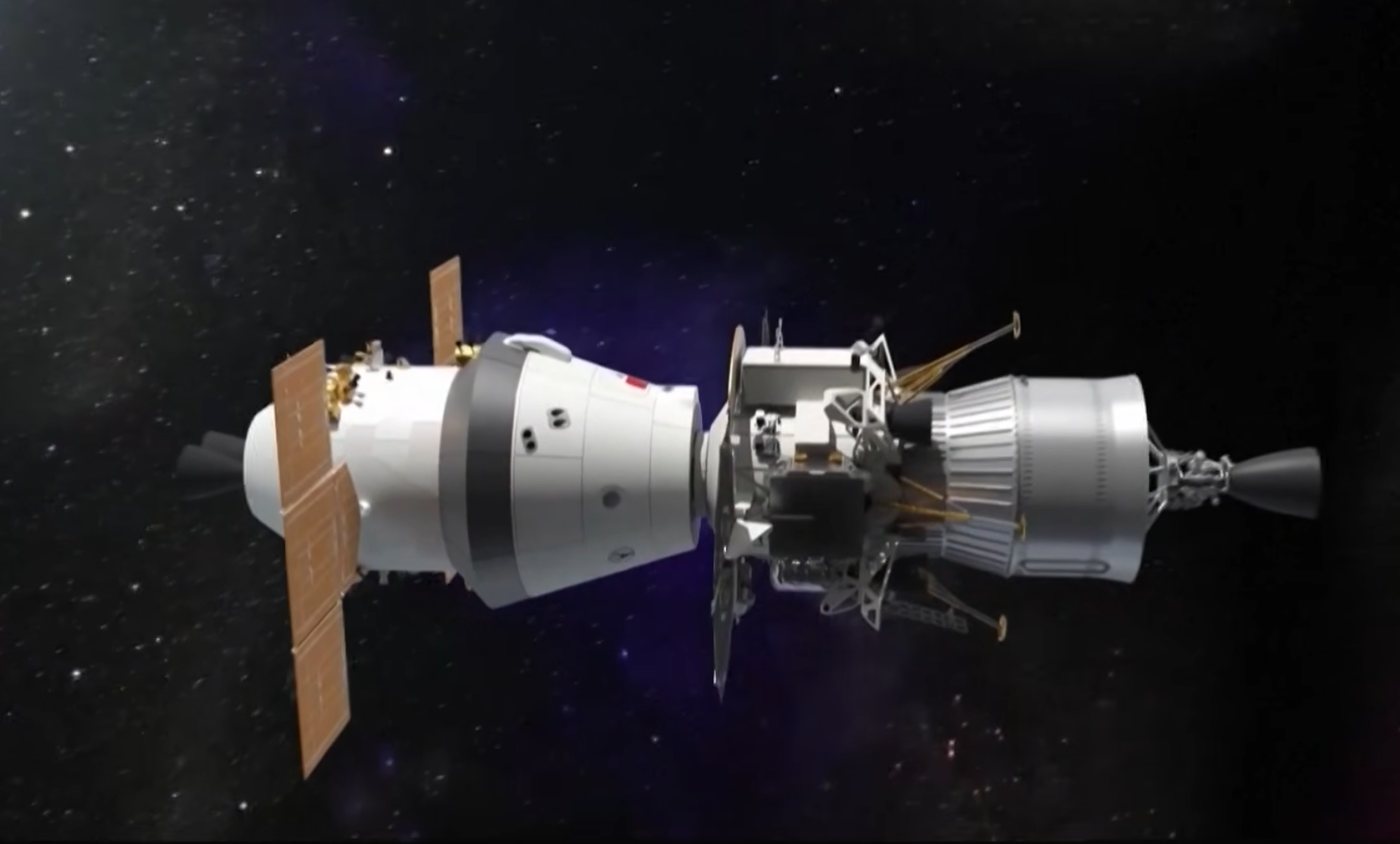
The mission profile calls for two crew members to descend to the surface while a third remains in lunar orbit. The Mengzhou crew ship is designed to dock with the Lanyue lander in orbit around the Moon, and the two spacecraft form the core of the crewed architecture. In May 2026, China merged its lunar and robotic exploration programs into a single project, a move intended to coordinate the effort under one organization.
Schedules have already shifted. The first uncrewed flight of the Mengzhou station-bound spacecraft has slipped to early 2027. An uncrewed landing test of the Lanyue lander is likely in 2028, and a full dress rehearsal flight is expected around 2029. Before any astronauts fly, the sequence must prove the spacecraft can reach lunar orbit, land and return safely.
The leading candidate landing site is Rimae Bode, a region close to the lunar equator. A rover named Tansuo, weighing about 200 kilograms, is planned to reach the surface on the first landing. The plan also foresees assembling a robotic and crewed station near the lunar south pole by 2035.
China's timetable contrasts with plans elsewhere. Russia has delayed its Luna-26 mission and does not expect crewed lunar flights before 2036. Several aspects remain uncertain, including the CZ-10 rockets that are meant to carry the hardware, which have not yet flown their debut missions. Any delay in those launches would ripple through the whole schedule.
Credit. Based on reporting by Martin Smith for NASASpaceflight. Is this your work? Write to us.
14