Elon Musk announced Wednesday that his artificial intelligence platform, Grok Imagine, will produce a full-length feature film adaptation of Homer's epic poem "The Odyssey" that he claims will be "historically accurate" and faithful to the original author's intentions. The announcement comes as controversy continues to surround Christopher Nolan's recently released big-budget film version of the same classical work.
The billionaire owner of X, formerly Twitter, reposted a three-minute scene created by Grok Imagine that a user had shared on the platform. Musk then posted that before the end of this year, Grok Imagine will make a full-length movie of "The Odyssey" that is historically accurate and true to the art of Homer. The statement signals Musk's growing ambition to use artificial intelligence not just for text and image generation but for full-scale cinematic production.
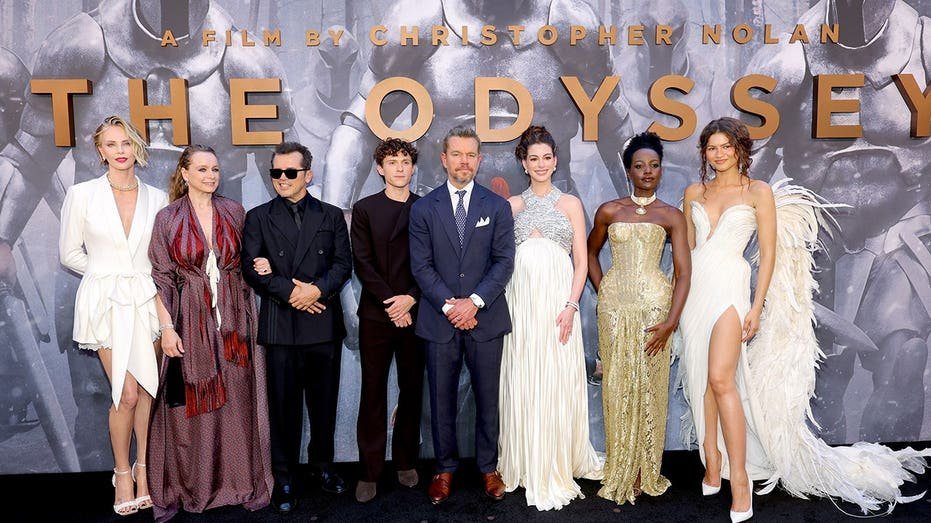
Musk's comments are the latest chapter in a months-long public critique of Nolan's adaptation, which premiered last weekend and earned more than $264 million globally—the best opening weekend of Nolan's career. The controversy centers largely on the casting of Lupita Nyong'o as Helen of Troy, a role that has sparked heated debate online about historical accuracy and representation in Hollywood.
In February, Musk reposted a user who claimed that casting Nyong'o would be an "insult" to Homer because the poem describes Helen as "fair skinned, blonde, and 'the face that launched a thousand ships' because she was so beautiful that men started a war over her." Musk responded at the time by saying, "Chris Nolan has lost his integrity." He also agreed with conservative commentator Matt Walsh, who posted that not one person on the planet actually thinks Nyong'o is the most beautiful woman in the world, and that Nolan would be called racist if he gave the role to a white woman.
In May, Musk further claimed that Nolan's diverse casting choices were motivated by a desire to win awards. Fox News Digital has reached out to representatives for Nolan for comment, but no response has been reported. Nolan's film, which also features a star-studded cast including Matt Damon, Tom Holland, Zendaya, and Anne Hathaway, has been praised for its visual spectacle but criticized by some for its casting decisions.
The AI-generated film proposed by Musk raises questions about the role of artificial intelligence in creative industries. Grok Imagine, developed by Musk's AI company xAI, has primarily been used for generating still images and short video clips. A full-length feature film would represent a significant leap in capability and ambition. The Hollywood Reporter has examined what the AI-generated "Odyssey" might actually contain, noting that the technology is still in early stages for long-form narrative content.
Musk's plan also touches on broader debates about historical accuracy in film adaptations. Homer's "The Odyssey," composed around the 8th century BC, tells the story of the Greek hero Odysseus and his ten-year journey home after the Trojan War. Scholars have long debated the physical descriptions of characters in the poem, including Helen of Troy, who was said to be the daughter of Zeus and the most beautiful woman in the world. The poem itself does not provide a detailed physical description of Helen, though later artistic traditions often depicted her as having light skin and blonde hair.
The announcement has drawn mixed reactions online. Supporters of Musk argue that an AI-generated film could bypass what they see as political correctness in Hollywood, while critics question whether an AI can truly capture the artistic and emotional depth of Homer's work. Some have also pointed out that the concept of "historical accuracy" in a mythological poem is inherently problematic, as "The Odyssey" is a work of fiction rooted in ancient Greek mythology, not a historical document.
Nolan's "The Odyssey" has been a box office success despite the controversy, earning strong reviews for its direction, cinematography, and performances. The film's diverse cast includes actors of various ethnic backgrounds, which Nolan has defended as reflecting the multicultural world of the ancient Mediterranean. Historians note that the ancient Greek world was more diverse than often portrayed in popular culture, with trade and migration bringing people from across the region to Greek city-states.
Musk has not provided a specific release date for his AI-generated film, only stating that it will be completed before the end of the year. It remains unclear how the film will be distributed, whether through theaters, streaming platforms, or directly on X. The project represents one of the most ambitious uses of AI in filmmaking to date, and its success or failure could have significant implications for the future of AI-generated entertainment.