Five orbital launches are scheduled over the coming week, spanning three countries and a range of vehicle classes, with SpaceX's Starship poised to fly its first operational Starlink mission.
The week opens Wednesday, Sept. 23, when a Chinese Chang Zheng 8A lifts off from Commercial Launch Complex 1 at the Wenchang Space Launch Site. A 25-minute window opens at 13:24 UTC, with liftoff planned for 13:30 UTC. The two-stage, medium-lift rocket, developed by the China Aerospace Science and Technology Corporation, will fly a southeasterly trajectory carrying an unspecified payload to an unknown orbit. The vehicle uses two liquid-fueled boosters and a first stage powered by YF-100 engines burning kerosene and liquid oxygen, while its second stage relies on liquid hydrogen and liquid oxygen. With a liftoff thrust of 4,894 kilonewtons, it can deliver up to 9,000 kilograms to low-Earth orbit. The mission marks the rocket's 11th flight overall and its sixth of 2026.
On Thursday, Sept. 24, a Chang Zheng 6A is set to launch from Launch Complex 9A at the Taiyuan Satellite Launch Center. A 26-minute window opens at 08:38 UTC, with liftoff targeted for 08:45 UTC. The rocket will follow a southerly trajectory, also carrying an unspecified payload to an unknown orbit. The two-stage vehicle is equipped with four solid rocket boosters and a first stage powered by two YF-100 engines using kerosene and liquid oxygen; its second stage uses a single YF-115 engine with the same propellants. Total liftoff thrust reaches 7,230 kilonewtons. This will be the 27th launch of a Chang Zheng 6A and the eighth in 2026.
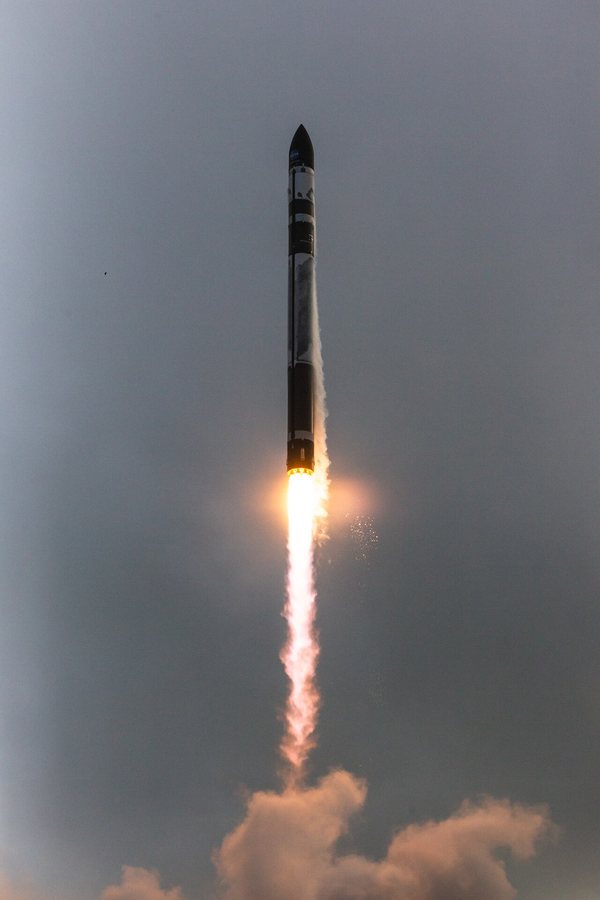
Rocket Lab's Electron is scheduled to fly Saturday, Sept. 26, from Launch Complex 1B on New Zealand's Māhia Peninsula. The small-lift rocket will carry a 100-kilogram StriX satellite to low-Earth orbit for the Japanese company Synspective on an easterly trajectory. Electron stands 18 meters tall and can deliver 320 kilograms to low-Earth orbit. Its first stage is powered by nine Rutherford engines burning kerosene and liquid oxygen, while a single vacuum-optimized Rutherford engine powers the second stage. The mission, named «Owlright, Owlright, Owlright,» will be the 97th Electron launch overall and the 18th of 2026.
Also on Saturday, SpaceX will launch a Falcon 9 from Space Launch Complex 4 East at Vandenberg Space Force Base in California. A three-hour window opens at 04:56 AM PDT. The rocket will fly a southeasterly trajectory to deliver a classified payload for the United States Space Force to low-Earth orbit. The first stage, booster B1100, will be recovered downrange in the Pacific atop the droneship «Of Course I Still Love You.» This will be the booster's 10th flight, following eight Starlink missions and the NROL-105 mission. Falcon 9 uses nine Merlin 1D sea-level engines on its first stage and a single vacuum-optimized Merlin 1D engine on its second stage, both burning kerosene and liquid oxygen. The USSF-385 mission will be the 691st Falcon 9 flight overall and the 108th of 2026.
The week's most anticipated event comes Monday, Sept. 28, when Starship's 14th flight test is scheduled to launch from Pad 2 at Starbase, Texas. A one-hour, 15-minute window opens at 7:15 AM CDT. The vehicle will fly an easterly, sub-orbital profile similar to previous flights, with flight controllers deciding at T+25 minutes whether to perform an orbital insertion burn. Booster 21 will conduct a boostback burn at T+2:27 and a reentry burn at T+6:35 before a soft splashdown in the Gulf of Mexico. Ship 41 will deliver 26 operational Starlink v3 satellites to low-Earth orbit, a first for a Starship mission, then orbit Earth six times over ten hours at an altitude of 275 kilometers. Contingency checks at T+1 hour and T+6 hours allow for an early deorbit if needed. Ship 41 is expected to make a soft splashdown in the Pacific Ocean off the coast of Chile. Starship/Super Heavy is a two-stage, super heavy-lift vehicle capable of delivering up to 100,000 kilograms to low-Earth orbit. Super Heavy features 33 sea-level Raptor engines burning methane and liquid oxygen, while Starship uses three sea-level and three vacuum Raptor engines with the same propellants. The flight will be Starship's 14th and its third of 2026.
17