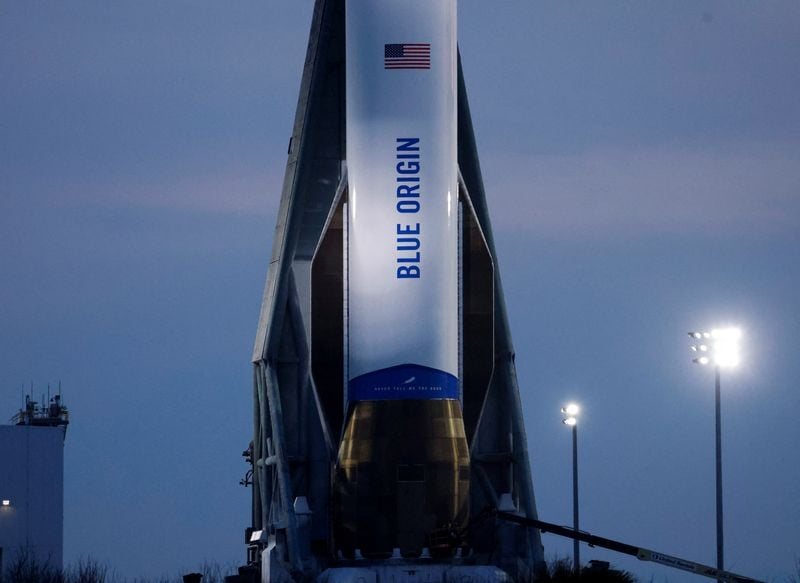
Google has contracted Blue Origin, the space company founded by Jeff Bezos, to launch satellites for Project Suncatcher, an effort to place artificial intelligence computing infrastructure in orbit. The satellites are scheduled to ride Blue Origin's New Glenn rocket, with a target launch window in the first quarter of 2029.
Each satellite is designed to carry Google's tensor processing unit chips, the custom hardware the company uses to run its AI workloads. According to the reporting, every satellite would offer roughly the computing capacity of one data-centre rack on the ground. The launch would mark the first heavy-lift mission for the project, which Google describes as a long-term moonshot rather than a near-term commercial product.
The plan points to a growing interest in moving computing demands beyond Earth. Running large AI systems requires enormous amounts of electricity and cooling, and placing hardware in orbit is one way companies have begun to explore alternatives to land-based facilities. Additional coverage of the agreement confirms the 2029 timeline, though the broader scope of the effort remains open.
Several key questions are still unanswered. The reporting does not specify how many satellites the project will ultimately deploy, nor what the total cost will be. It is also unclear whether the 2029 schedule will hold, since ambitious space hardware programs often face delays in development and testing before launch.
Credit. Based on reporting by Ana Maria Constantin for The Next Web. Is this your work? Write to us.
22