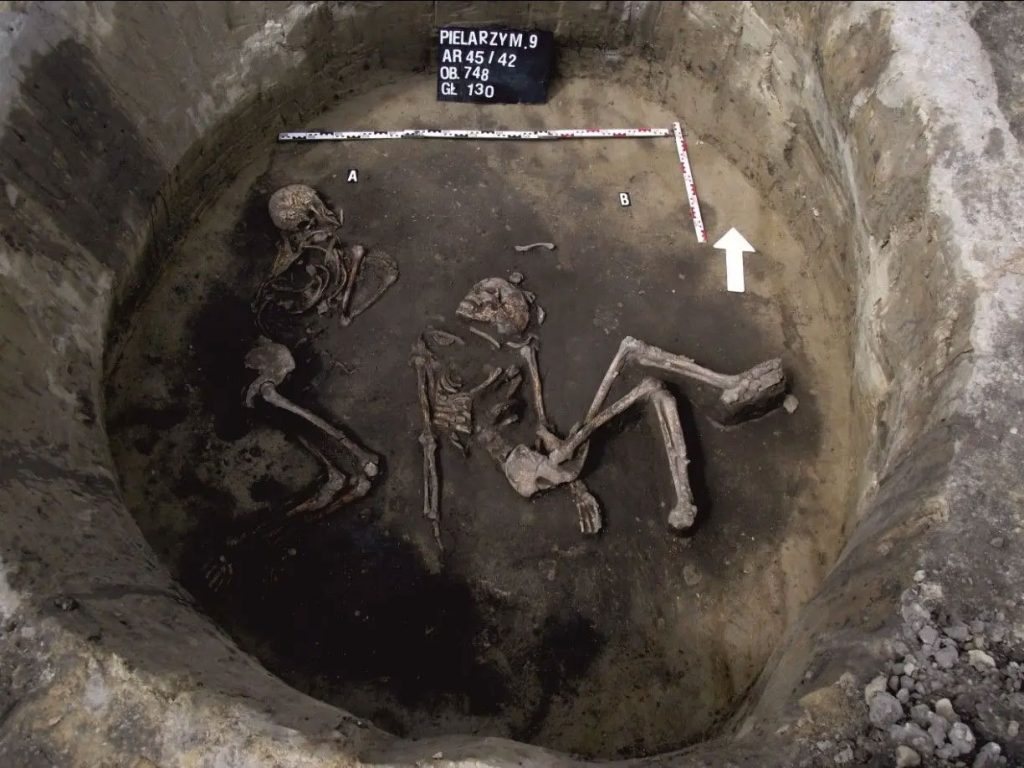
People in Bronze Age Poland were eating millet roughly a century earlier than previously thought, according to new research that reshapes the timeline of early farming in central Europe. The earliest evidence of millet consumption dates to around 1590 B.C., placing its arrival in the region well before the periods scholars had assumed.
The study was led by Przemysław Makarowicz of Adam Mickiewicz University in Poznań. His team analyzed isotopes in the teeth and bones of more than 190 individuals whose remains date between roughly 2200 and 1000 B.C. and were recovered from sites across Poland. Isotope signatures preserved in human tissue reveal what people ate over their lifetimes, allowing researchers to track dietary shifts across centuries rather than relying on plant remains alone.
The findings suggest that millet was not a sudden replacement for the staple crops of the period, wheat and barley. Instead, its adoption appears to have been gradual, with millet gradually becoming part of diets alongside those established grains. Strontium isotope data point to southeastern Poland as the likely origin of the earliest millet consumers, though the researchers found no clear link between the spread of millet and the arrival of migrant groups.
The work adds to a growing picture of how Bronze Age communities in Europe adapted their food systems over time. By combining skeletal chemistry with a large sample of individuals, the team offers a more detailed view of when and how new crops entered everyday life. The study was published in the journal Science Advances.
Credit. Based on reporting by Jessica Esther Saraceni for Archaeology Magazine. Is this your work? Write to us.
15