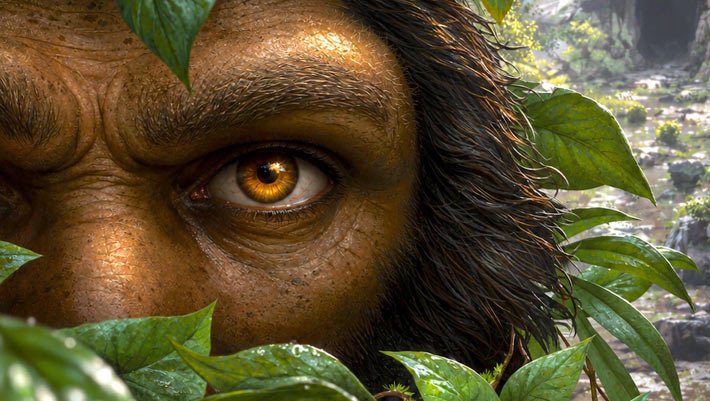
Eight teeth recovered from two caves in southern China suggest that Homo erectus lived in closed rainforest rather than open grassland, and that the species survived there far longer than previously assumed. The findings, reported in Nature on 18 November 2026, point to a more flexible species than scientists had credited.
The teeth date to roughly 324,000 to 184,000 years ago. If that chronology holds, late Homo erectus populations would rank among the longest-lived human species known. The evidence challenges long-standing assumptions about the ecological limits of the species, which was previously linked mainly to open environments.
The researchers also suggest that these hominins may have overlapped in the region with Denisovans, an extinct group known from Asia, although that link has not been confirmed. The teeth alone cannot establish the full range of the animals' diet or behaviour, and it remains unclear how these specimens relate to other hominin populations in China.
Further excavation and analysis of the two cave sites will be needed to test how Homo erectus adapted to forest life, and whether similar remains turn up elsewhere in the region.
Credit. Based on reporting by K. E. Westaway, R. Joannes-Boyau, W. Liao and Q. Shao for Nature. Is this your work? Write to us.
26