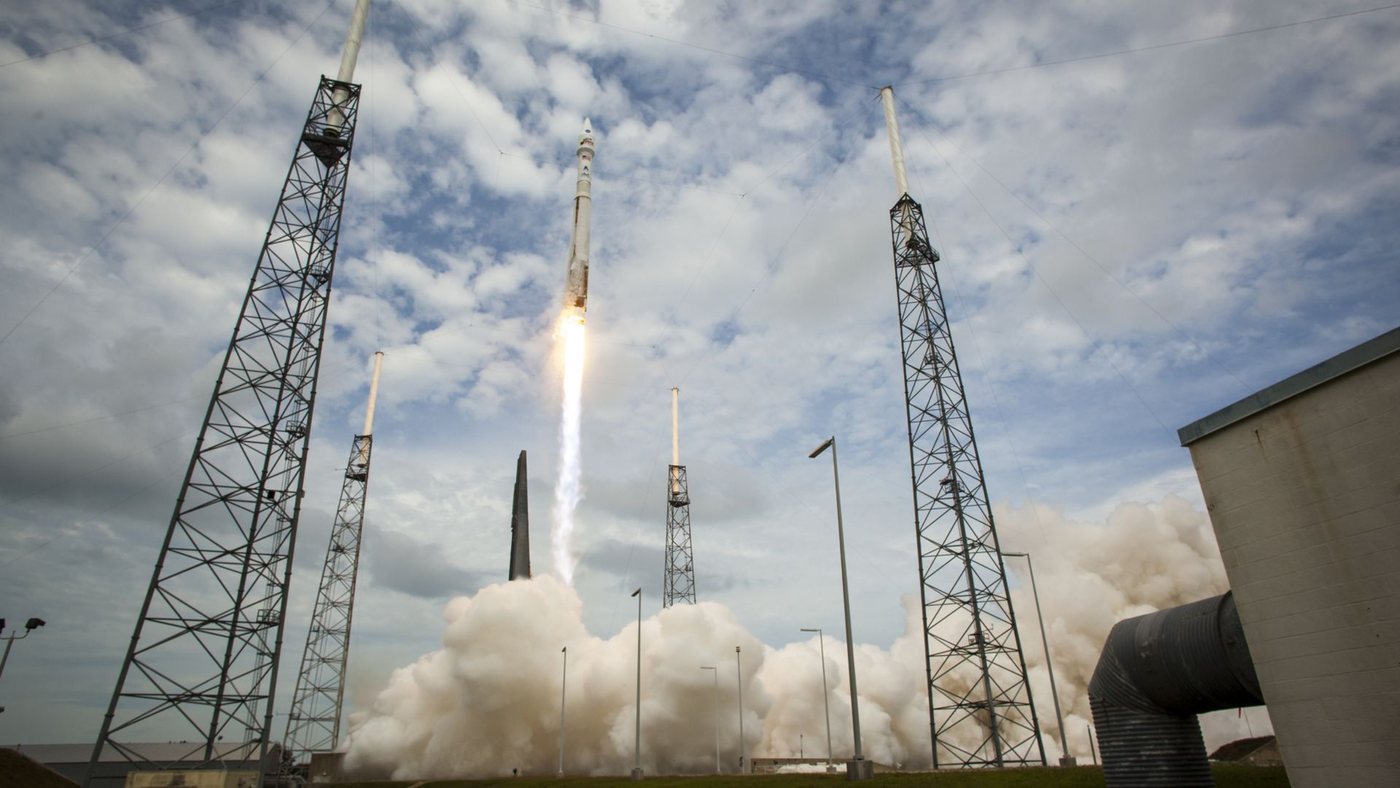
On November 18, 2013, NASA launched its MAVEN spacecraft from Cape Canaveral, Florida, on a journey toward the Red Planet. The mission was built to answer a question that has puzzled planetary scientists for decades: what happened to the water that once flowed across Mars?
Evidence from the planet's surface suggests that Mars was not always the cold, dry world seen today. Dried riverbeds, lake basins and mineral deposits point to a time when liquid water existed on the surface. Such conditions would have required a much denser atmosphere to trap heat and keep water from quickly evaporating or freezing. Today that atmosphere is extremely thin, and scientists want to understand how so much of it disappeared.
MAVEN, short for Mars Atmosphere and Volatile EvolutioN, was designed to study the planet's upper atmosphere and the process known as atmospheric escape, in which gas drifts or is stripped away into space. By measuring how particles and radiation interact with the thin upper layers of the air, the spacecraft aims to show how much gas has been lost over time and at what rate. Those measurements could help explain the transformation of a potentially habitable world into the desert planet observed now.
The spacecraft was not expected to reach its destination immediately. It was designed to arrive in Mars orbit roughly ten months after launch, giving the mission team time to prepare for the science phase once it settled into its path around the planet. The launch marked an important step in NASA's broader effort to understand whether Mars could ever have supported life and what its environment looked like billions of years ago.
Credit. Based on reporting by Hanneke Weitering and Elizabeth Howell for Space.com. Is this your work? Write to us.
24