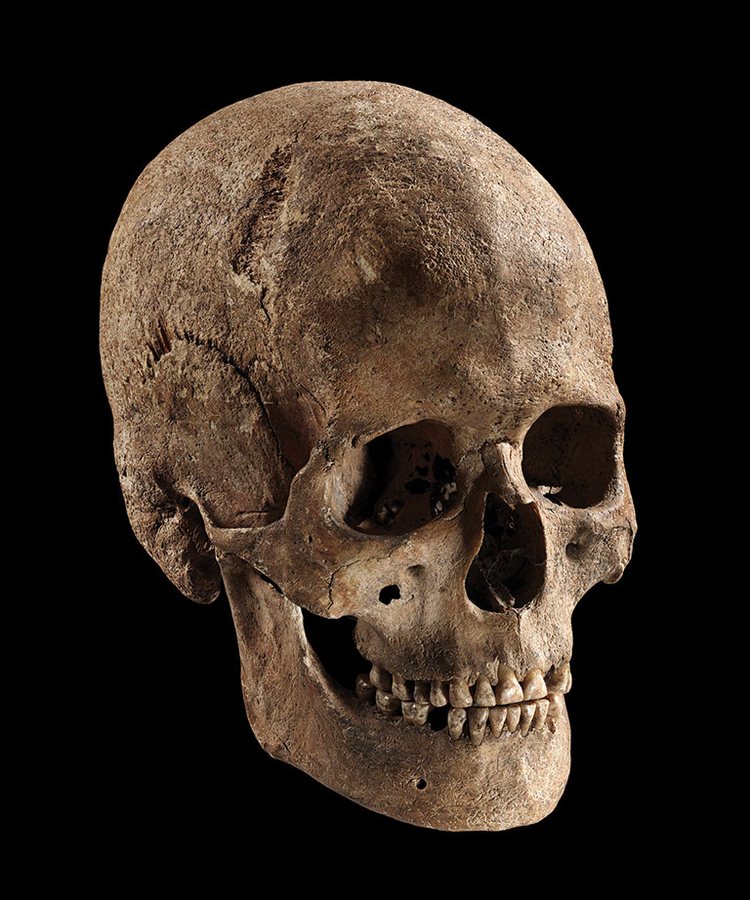
Analysis of a 6,000-year-old skeleton found on the Danish island of Sejerø suggests that its owner lived largely on fish and shellfish from the sea, even as farming communities were beginning to reach Denmark. The remains, known as Rødhals Man, were discovered in a shell midden in 1956 and have now been re-examined by an international research team led by Anders Fischer of the University of Gothenburg and John Meadows of the Leibniz Centre.
Chemical signatures preserved in the bones and teeth point to a diet dominated by marine fish. Radiocarbon dating, corrected for the marine carbon effect, places the individual at roughly 3890 to 3770 B.C., a window that overlaps with the arrival of the first farmers in Denmark. The tooth dentine records a shift over the course of his life. During childhood he ate large amounts of shellfish, flatfish and eels. In adolescence, his intake of land-based protein rose noticeably, moving beyond what is typical for Danish hunter-fishers of the period.
The researchers cannot yet say where that land food came from. It may have been hunted, but the team considers it more likely that it was supplied by neighboring farmers in the form of livestock meat or cereals. No evidence of freshwater fish was found in his diet. The burial itself offers further clues about the community's relationships with incoming farmers. The grave resembles those of early farmers, including a flat-stone frame, suggesting that he may have adopted some elements of their practices while keeping many of his ancestors' traditions. Strong muscle loading visible on his arm bones points to a physically demanding life.
Taken together, the findings sketch a picture of a hunter-gatherer community that was not isolated from the farmers spreading across the region, but was adapting to them while holding on to its own way of life.
Credit. Based on reporting by Jessica Esther Saraceni for Archaeology Magazine. Is this your work? Write to us.
17