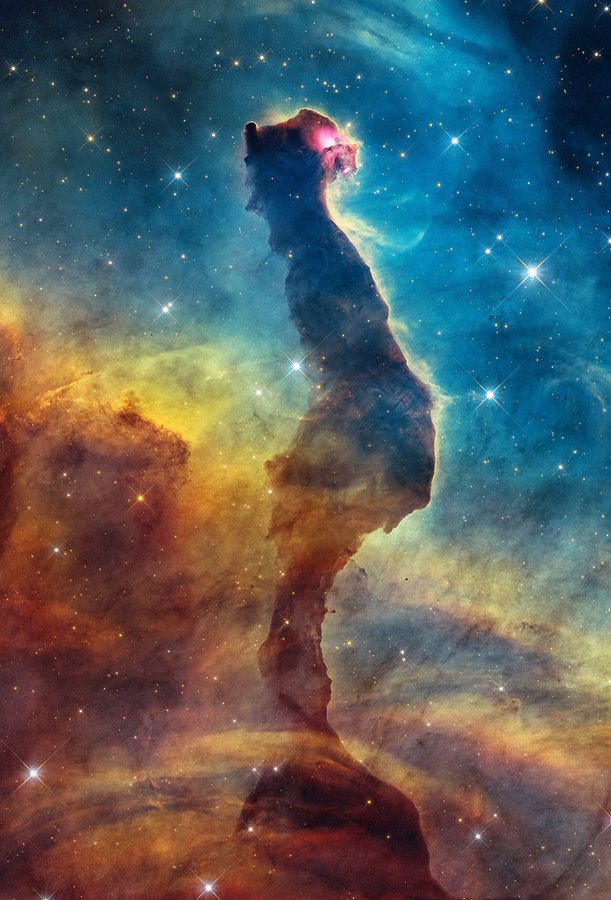
NASA's Hubble and James Webb space telescopes have captured a hauntingly dynamic star-forming scene that resembles a spectral form rising out of a cold mist. The image shows a small region within the Carina Nebula, a diffuse star-forming cloud located about 7,500 light-years from Earth.
The area observed by both telescopes is nicknamed the Cat's Head Nebula. The two observatories operate at different wavelengths, so the combined views let astronomers examine the same region from complementary perspectives. Hubble primarily captures visible and ultraviolet light, while Webb is designed to observe in infrared, which can penetrate dense clouds of gas and dust that block shorter wavelengths.
Star-forming regions like this one are where gas and dust gather under gravity and eventually ignite new stars. Carina is one of the largest and most closely studied such nebulae in the sky, which makes it a frequent target for both telescopes. Images of its interior help researchers understand how stars and, in turn, planetary systems take shape.
Because the image concentrates on a small, selected portion of the nebula, the scene reveals fine structures that would be difficult to distinguish in wider views. The contrast between the two telescopes' data highlights how different wavelengths expose different layers of the same cloud, from glowing gas illuminated by young stars to cooler material that is only visible in infrared.
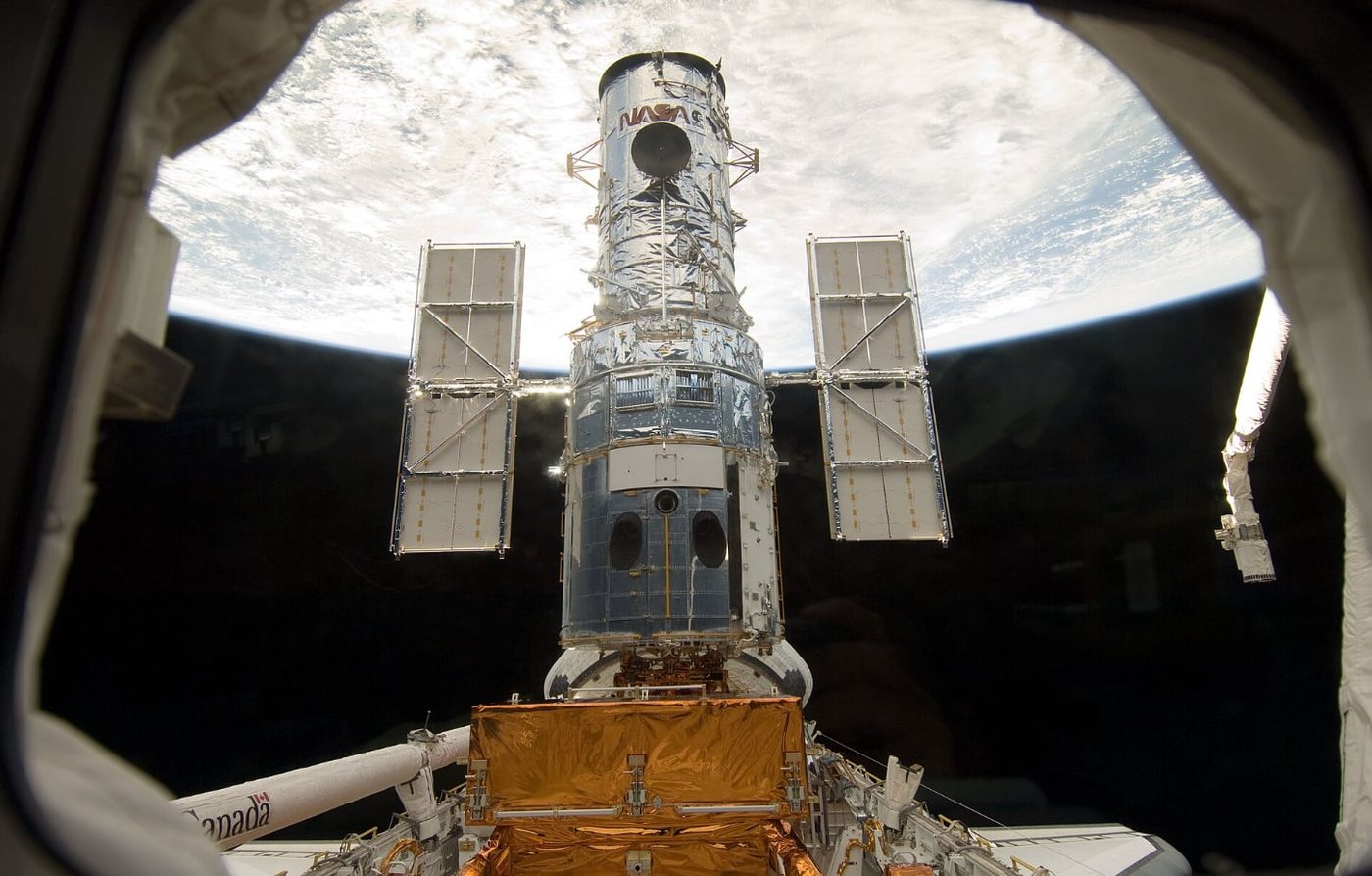
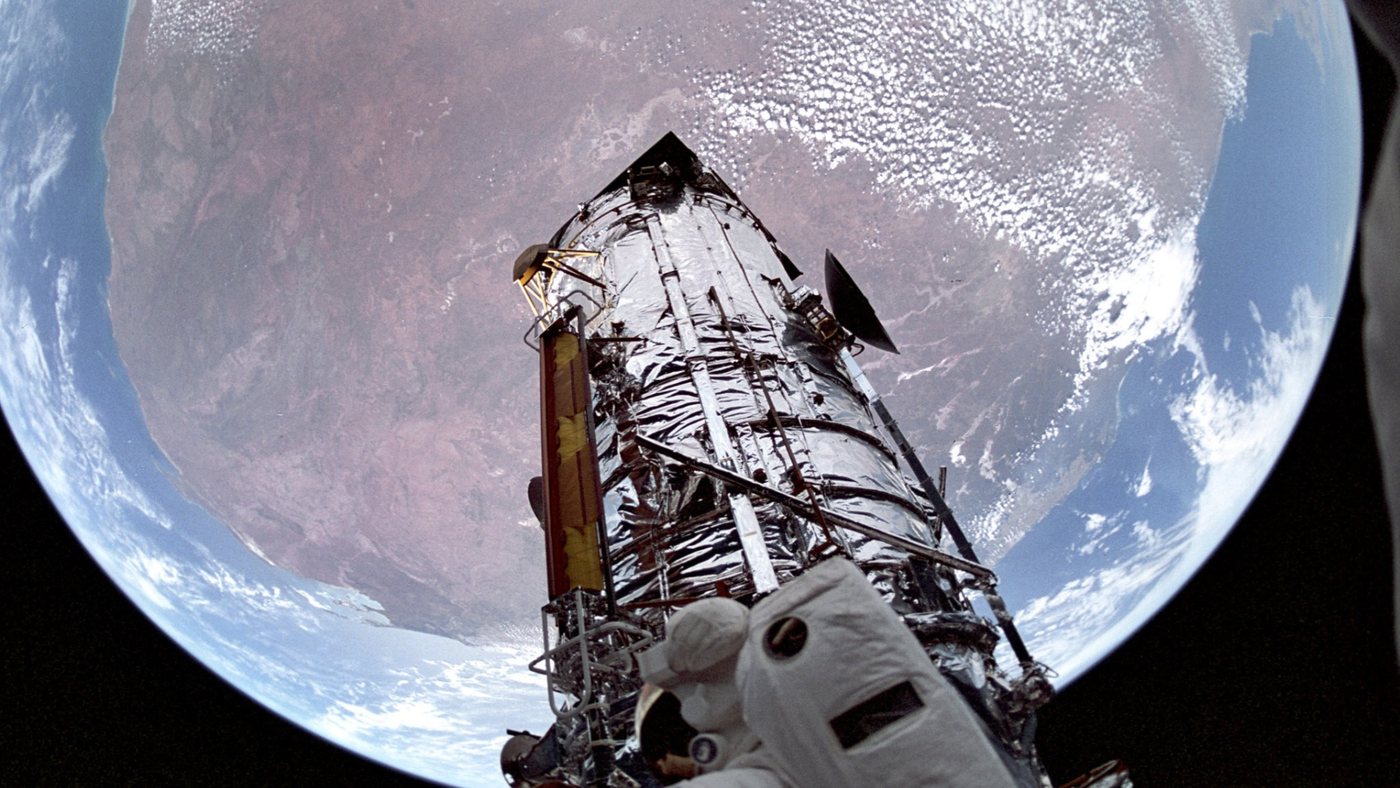
The observations were published by NASA on October 28, 2026. Hubble, launched in 1990, has been used for more than three decades to study objects ranging from nearby nebulae to distant galaxies. Webb, which began science operations in 2022, extends that work into longer wavelengths and has been used to observe some of the earliest galaxies in the universe. Together, the two telescopes allow astronomers to follow the life cycle of stars across a wide span of cosmic time and environments.
Source: seventhscinewsfeed.blogspot.com
14