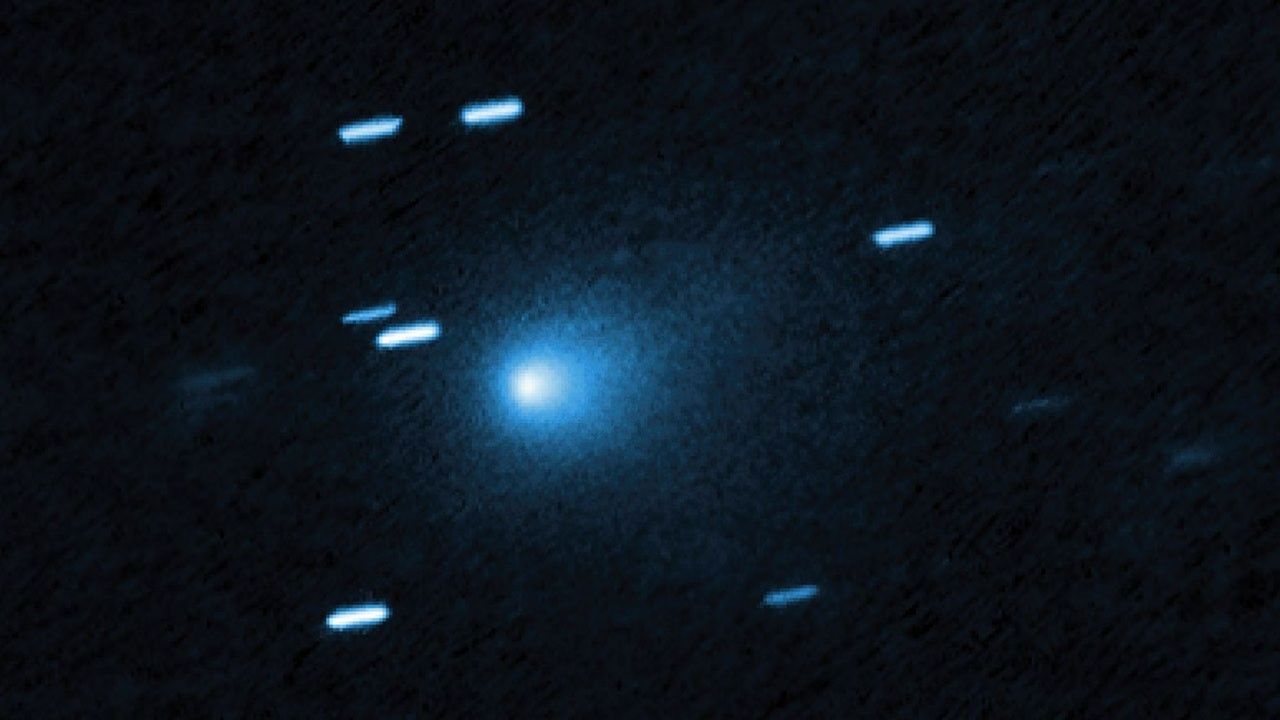
Astronomers have uncovered new evidence that 3I/ATLAS, only the third confirmed interstellar object ever detected entering the Solar System from beyond, formed in an extremely cold environment far from any star. The finding, based on analysis of the object's composition, suggests it originated in a nitrogen-rich region of space where starlight could not reach it.
The object's chemical signature points to conditions that are among the coldest known in the universe. Such environments, often found in the outer reaches of protoplanetary disks or in dense molecular clouds, allow volatile compounds like nitrogen to remain frozen rather than being driven off by heat. The presence of these ices in 3I/ATLAS indicates that it formed at a considerable distance from its host star, where temperatures are low enough for nitrogen and other volatiles to condense.
This is not the first time 3I/ATLAS has drawn attention. As an interstellar visitor, it belongs to a small but growing group of objects that originated outside the Solar System. The first confirmed interstellar object, 1I/'Oumuamua, was detected in 2017 and displayed unusual properties that sparked widespread debate. The second, 2I/Borisov, was identified in 2019 as a more conventional comet. 3I/ATLAS now joins that list, and its composition offers a direct sample of material from another planetary system.
Researchers studying the object's spectrum have identified signatures consistent with a nitrogen-rich chemistry. Nitrogen is a key component of many organic molecules and is thought to be essential for the formation of life. Finding it in an interstellar comet suggests that the building blocks of life may be common in the cold, dark regions of space where such objects form.
The discovery also has implications for understanding how planetary systems assemble. If 3I/ATLAS formed in a region untouched by starlight, it likely originated in the outer disk of its home system, beyond the reach of the star's warming influence. Such regions are where comets and other icy bodies are thought to form, preserving primitive material from the early days of planetary formation.
Astronomers continue to monitor 3I/ATLAS as it travels through the Solar System. Its trajectory and composition will provide further clues about the environment in which it formed and the processes that ejected it into interstellar space. The object is expected to remain observable for some time, allowing additional studies that could refine our understanding of interstellar chemistry.
The study adds to a growing body of research on interstellar objects, which are valuable because they offer direct samples of material from other stars. Unlike distant observations of exoplanets, which rely on indirect measurements, interstellar objects can be studied up close as they pass through our cosmic neighborhood. Each new visitor provides a unique opportunity to compare the chemistry of other planetary systems with our own.
For now, the evidence points to a cold, nitrogen-rich origin for 3I/ATLAS, reinforcing the idea that the universe is filled with diverse chemical environments capable of producing the ingredients for planets and perhaps life. As more interstellar objects are discovered, scientists hope to build a more complete picture of how planetary systems form and evolve across the galaxy.