NASA is two spacewalks away from finishing a years-long upgrade to the International Space Station that will keep the orbiting laboratory powered until its planned decommissioning in 2030. NASA astronaut Anil Menon and Canadian Space Agency astronaut Joshua Kutryk are scheduled to leave the station's Quest airlock at 8 a.m. EDT on Thursday, Oct. 29, to install and unfurl the seventh of eight International Space Station Roll-Out Solar Arrays, known as IROSAs.
The compact, high-efficiency panels are meant to offset power lost as the station's original solar wings have degraded over more than two decades in orbit. If the schedule holds, Menon and Kutryk will return to the vacuum of space on Nov. 5 to install the eighth and final array, closing out a campaign that began in 2021. NASA says the eight arrays will raise the station's available power from 160 kilowatts to about 215 kilowatts, supporting critical operations through the outpost's final years, including what the agency calls a "safe and controlled deorbit" after it is retired.
"Overall, these roll-out arrays increase our power generation capability up to 30 percent," said Gaurang Patel, operations integration manager for NASA's Low Earth Orbit Program, during an Oct. 20 briefing at the Johnson Space Center in Houston. Patel's remarks framed the upgrade as a central part of keeping the station running for its remaining years.
Thursday's outing marks the 285th spacewalk devoted to station assembly, maintenance and upgrades and is planned to last about six hours and 45 minutes. It will be Menon's fourth excursion outside the airlock and Kutryk's first. During both spacewalks, Menon is scheduled to ride the station's robotic arm while carrying the arrays into position for deployment. Menon, a U.S. Air Force lieutenant colonel and emergency physician, arrived at the station aboard a Russian Soyuz in July and has completed three prior spacewalks. Kutryk, a Royal Canadian Air Force colonel and test pilot, boarded the station on Oct. 1 as part of SpaceX's Crew-13 mission. He will become the fifth Canadian astronaut to walk in space and the first since David Saint-Jacques in 2019.
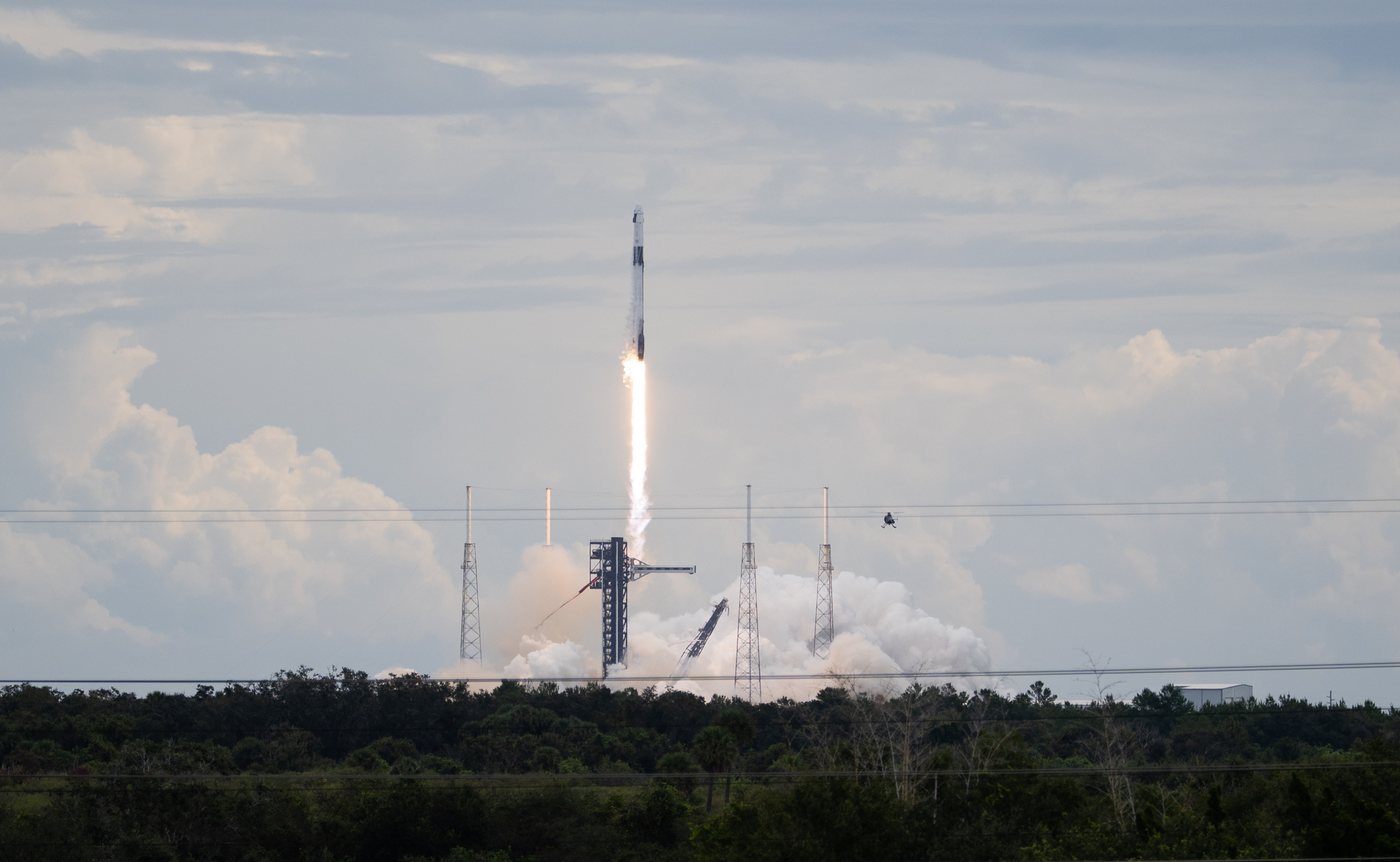
The final pair of arrays arrived at the station rolled up and folded on a carrier in the unpressurized trunk of a SpaceX Cargo Dragon capsule. The spacecraft reached orbit after a Falcon 9 rocket launched it on Oct. 13 from Cape Canaveral Space Force Station. Each IROSA assembly weighs about 750 pounds, according to Garrett Hehn, the spacewalk flight director leading the operation alongside flight director Greg Whitney.
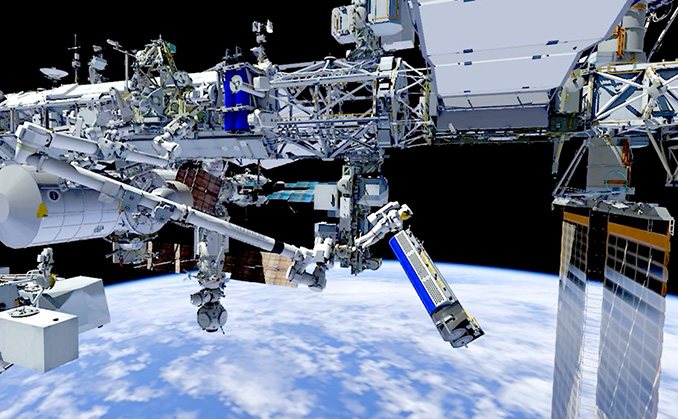
Once Menon and Kutryk free the first array from its carrier, Menon will lock his boots into a foot restraint on the end of the Canadian-built robotic arm, Canadarm2, and ride it out to the port side of the station's main truss. NASA astronauts Jessica Watkins and Luke Delaney will operate the arm from inside the station while Kutryk makes his way to the installation site. The arm will pivot around the array's center of mass rather than Menon's, one direction at a time, a lesson learned from earlier installations meant to make the work "a little less tiring" for the astronaut holding it, Hehn said. Although the rolled-up array is weightless in orbit, it still carries 750 pounds of inertia.
After the IROSA is bolted to a mounting bracket that astronauts installed during a March spacewalk, Menon and Kutryk will swing it open, doubling its length from about 10 feet to 20 feet. Hehn described that step as one of the key points of the outing. The astronauts must then lock the two halves in place and connect the new array's power cables while the station is in Earth's shadow, when none of its solar panels generate electricity. "We can't have any sun on the arrays whenever we're handling those hot cables," Hehn said.
Finally, the astronauts will release the last restraints and let the array unroll on its own over about 10 minutes, powered by energy stored in carbon-fiber composite booms rather than motors. Hehn likened the panels to a snap bracelet that, once released, "just continues rolling out steadily."
The station's eight original solar wings, designed to last 15 years, were delivered by space shuttles between 2000 and 2009. Rather than replacing them outright, NASA chose to mount the smaller IROSA arrays, which generate about 8 kilowatts of electricity each, in front of the old wings. This allows the unshaded portions of the original panels to keep producing power. The first IROSA unfurled in June 2021, though not without difficulty: a spacesuit glitch and an array that would not unfold cleanly forced astronauts Shane Kimbrough and Thomas Pesquet to finish the job on a second spacewalk. Six arrays were in place by June 2023, and NASA ordered an additional pair that summer.
18