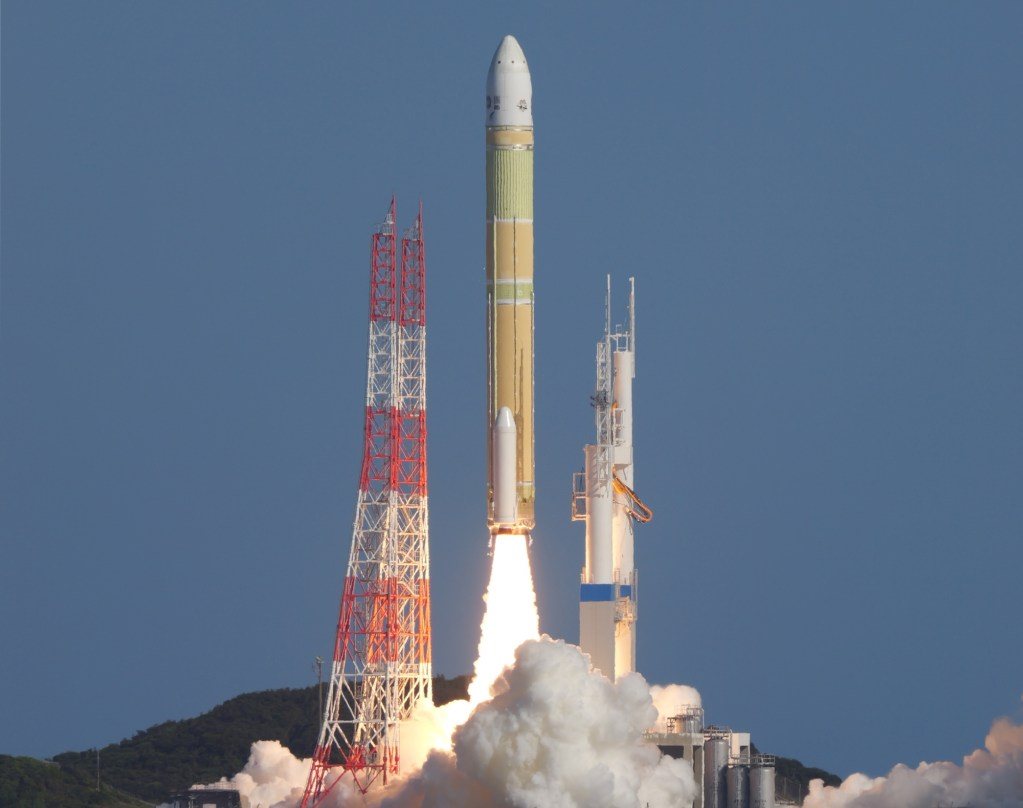
Japanese lunar lander developer ispace has selected the H3 rocket, built by Mitsubishi Heavy Industries, to launch its next mission to the Moon in 2028. The announcement marks a significant step in establishing what the two companies are calling Japan's first private lunar transportation system.
ispace's third lunar mission, designated Mission 3, will be the first to ride the H3. The company's previous attempts include the Hakuto-R Mission 1 lander, which launched on a Falcon 9 in December 2022 but crashed during its landing attempt in April 2023. A second mission, Hakuto-R Mission 2, is currently scheduled for launch later this year but will use a different rocket. The 2028 flight represents an opportunity for ispace to leverage a domestically produced launch vehicle for the first time.
The H3 rocket is Japan's next-generation launch vehicle, developed by the Japan Aerospace Exploration Agency (JAXA) and Mitsubishi Heavy Industries. After a failed maiden flight in March 2023, the H3 successfully reached orbit on its second test flight in February 2024, carrying a mass simulator and later releasing two small satellites. The rocket is designed to be more flexible and cost-competitive than its predecessor, the H-IIA, and features a restartable upper stage capable of trans-lunar injection burns.
For ispace, the partnership with Mitsubishi Heavy Industries provides a domestic launch option that reduces reliance on foreign providers. The company aims to establish a regular cadence of lunar deliveries, serving both government and commercial customers. ispace has already secured contracts with NASA and other entities to deliver payloads to the Moon. The 2028 mission is expected to carry a lander capable of delivering up to 30 kilograms of cargo to the lunar surface, using an improved design based on lessons learned from previous landing failures.
The announcement comes amid a global surge in lunar exploration. Multiple private companies and national space agencies are racing to return to the Moon, with NASA's Artemis program aiming to land astronauts near the south pole later this decade. ispace's missions are part of a broader effort to develop a sustainable commercial lunar economy. Japan's own space agency, JAXA, has successfully landed two small spacecraft on the Moon: the OMOTENASHI cubesat, which failed to communicate after landing, and the SLIM lander, which made a pinpoint landing in January 2024 but tipped over. The H3 is expected to become Japan's workhorse rocket for both government and commercial launches.
ispace's CEO, Takeshi Hakamada, has emphasized the importance of having a Japanese launch vehicle for lunar missions, citing national pride and logistical advantages. The company went public on the Tokyo Stock Exchange in 2023 and raised $46 million in its Series C funding round that same year. Financial details of the H3 launch contract were not disclosed, but the mission timeline gives ispace several years to refine its lander technology and for Mitsubishi Heavy Industries to further certify the H3 for interplanetary flights.
In the broader context, the ispace-H3 partnership represents a milestone in Japan's private space sector. It aligns with government policy to foster a domestic space industry capable of competing globally. If successful, the 2028 mission could open the door for more frequent and cost-effective lunar deliveries from Japan, strengthening the country's role in the growing international push to establish a permanent human presence on the Moon.