Japan's space agency launched a first-of-its-kind sample-return mission to Mars on Monday, October 19, marking another major step in humanity's effort to understand one of its closest planetary neighbors. The Japan Aerospace Exploration Agency (JAXA) sent its Martian Moons Exploration (MMX) probe into space, a project built with help from NASA, the European Space Agency (ESA) and other partners.
Over the next few years, the spacecraft will study the Red Planet's two small moons, Phobos and Deimos. It will photograph the pair up close before attempting to land on the larger moon, Phobos, to collect rocky material. If all goes to plan, those samples will be carried back to Earth in roughly five years. Scientists expect the returned material to help settle a decades-old question about how both moons formed. The findings could also shed light on Mars' ancient history and on conditions in the early solar system.
The mission's significance has drawn strong reactions from researchers. Sonia Fornasier, an astronomer at the Paris Observatory who has studied Phobos and Deimos extensively and serves as a project scientist for MMX's infrared spectrometer instrument, told Live Science that the mission "marks a transformative leap in our capacity to investigate the Martian system." She said it ranks very high among the missions sent to Mars so far.
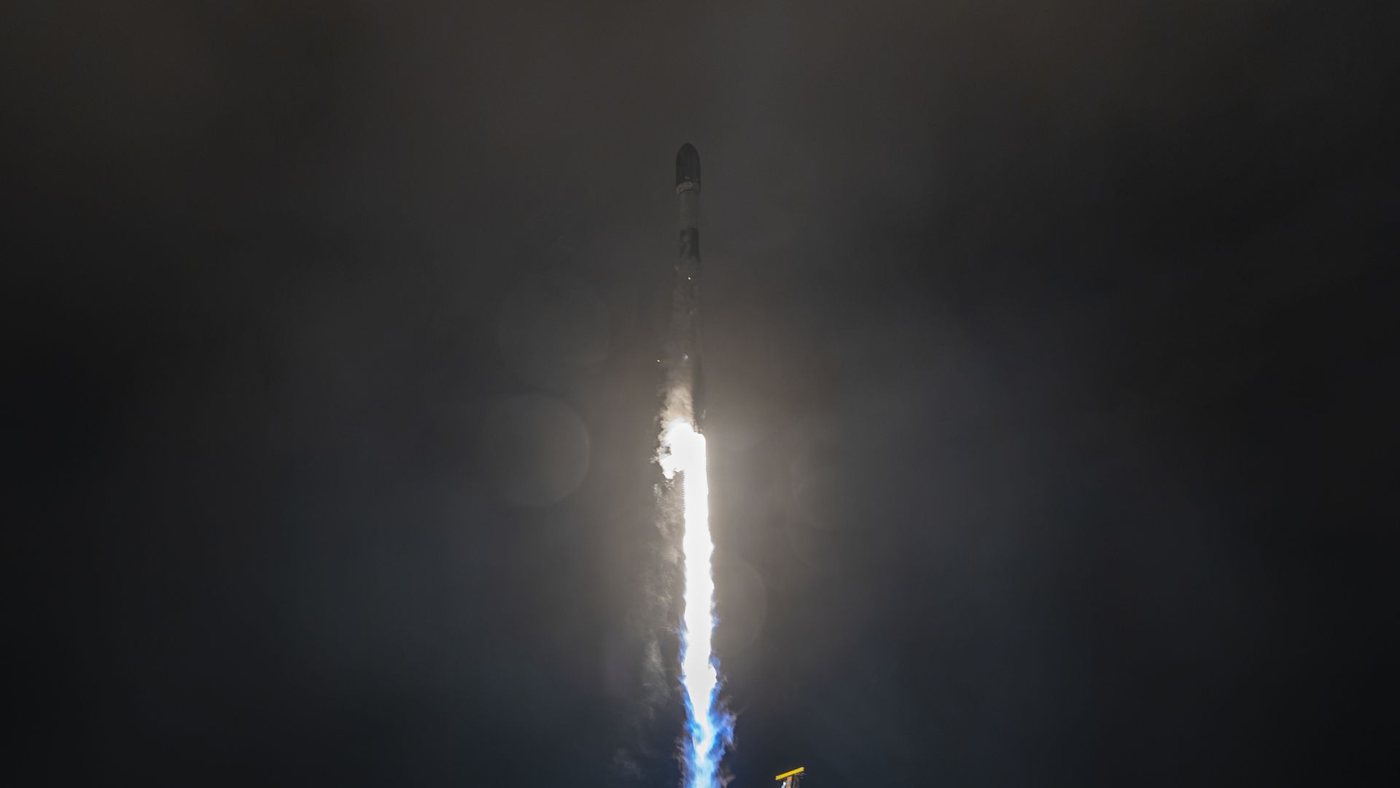
The probe lifted off aboard an H3 rocket from the Tanegashima Space Center in Kagoshima prefecture at 3:41 p.m. EDT on Monday, or 4:41 a.m. Tuesday local time. The mission had originally been scheduled for launch in 2024, but it was delayed over initial concerns about the H3 rocket. The camper-van-sized spacecraft separated from the rocket's fairing a little over an hour later. On Wednesday, October 21, JAXA announced that the mission had passed its initial critical operations phase, meaning the probe is now on its roughly 225-million-kilometer journey to Mars, which will take about 10 months.
Naoki Murakami, general manager of Mitsubishi Electric's space division, which led the design of the MMX probe, addressed a post-launch news conference early Tuesday. "MMX took its first step today," he said, according to The Japan Times. "This marks the beginning of a long, five-year journey." Large crowds gathered at the Tanegashima Space Center to watch the launch.
Once the probe reaches Mars in August 2027, it will enter a quasi-satellite orbit around Phobos. In that orbit, MMX will circle Mars alongside the moon without being gravitationally bound to it, similar to the handful of quasi-moons that accompany Earth around the Sun. After collecting data from a distance for several months, the probe will attempt to land on Phobos not once but twice.
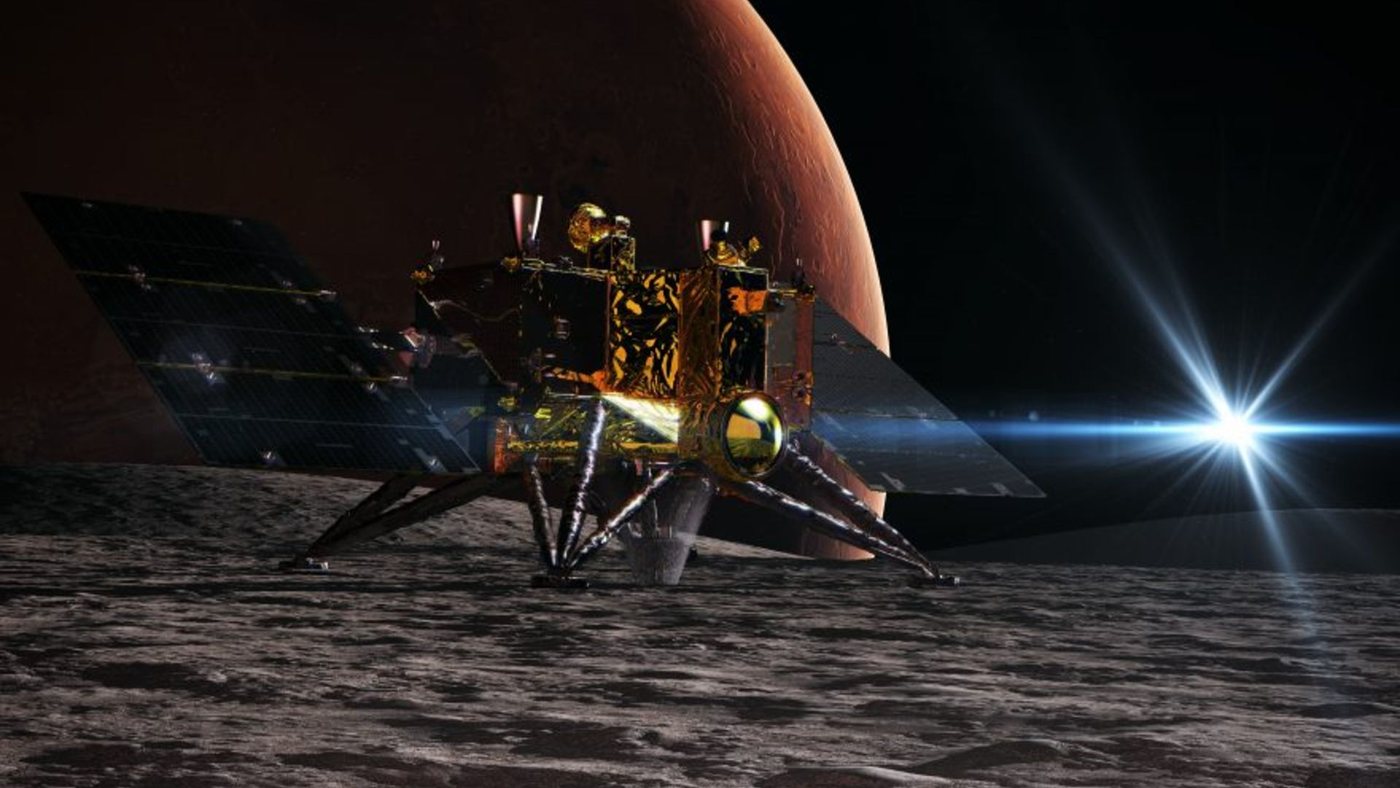
During the first landing attempt, MMX will hover just above the surface and deploy a mini rover named Idefix, built by the French and German space agencies. The rover weighs about 25 kilograms on Earth but only around 15 grams on Phobos, according to ESA, so it will have to cope with extremely weak gravity as it moves across the surface. Once Idefix completes its initial assessment, the full probe will set down on Phobos on its four-legged lander module.
Mission planners hope that landing goes more smoothly than the recent attempts by Japan's Moon Sniper and Resilience lunar landers, which crash-landed on Earth's Moon in 2024 and 2025. Two of the lander's legs contain sampling devices, one that drills into Phobos and another that collects surface material. The second, called the Pneumatic Sampler or P-Sampler, was built by Honeybee Robotics, a company owned by Blue Origin, on behalf of NASA. Kris Zacny, vice president of the Exploration Technology Group at Honeybee Robotics, said at an October 15 NASA news conference that it will gather material in a matter of seconds.
In total, JAXA aims to collect about 10 grams of material from Phobos, roughly twice what the agency obtained on its most recent sample-return mission, Hayabusa2. That mission gathered samples from the asteroid Ryugu in 2019 and found material rich in surprising organic compounds. After collecting its samples, sometime between late 2028 and early 2029, MMX will conduct a series of close flybys of Deimos before beginning its return trip to Earth in late 2030, which would be the first return flight ever attempted by a spacecraft of this kind.
15