NASA's Lunar Reconnaissance Orbiter has discovered the largest newly formed impact crater ever found in the solar system, a 222-meter-wide scar on the Moon's eastern edge that also revealed an unexpected thermal phenomenon, according to two papers published in Science Advances.
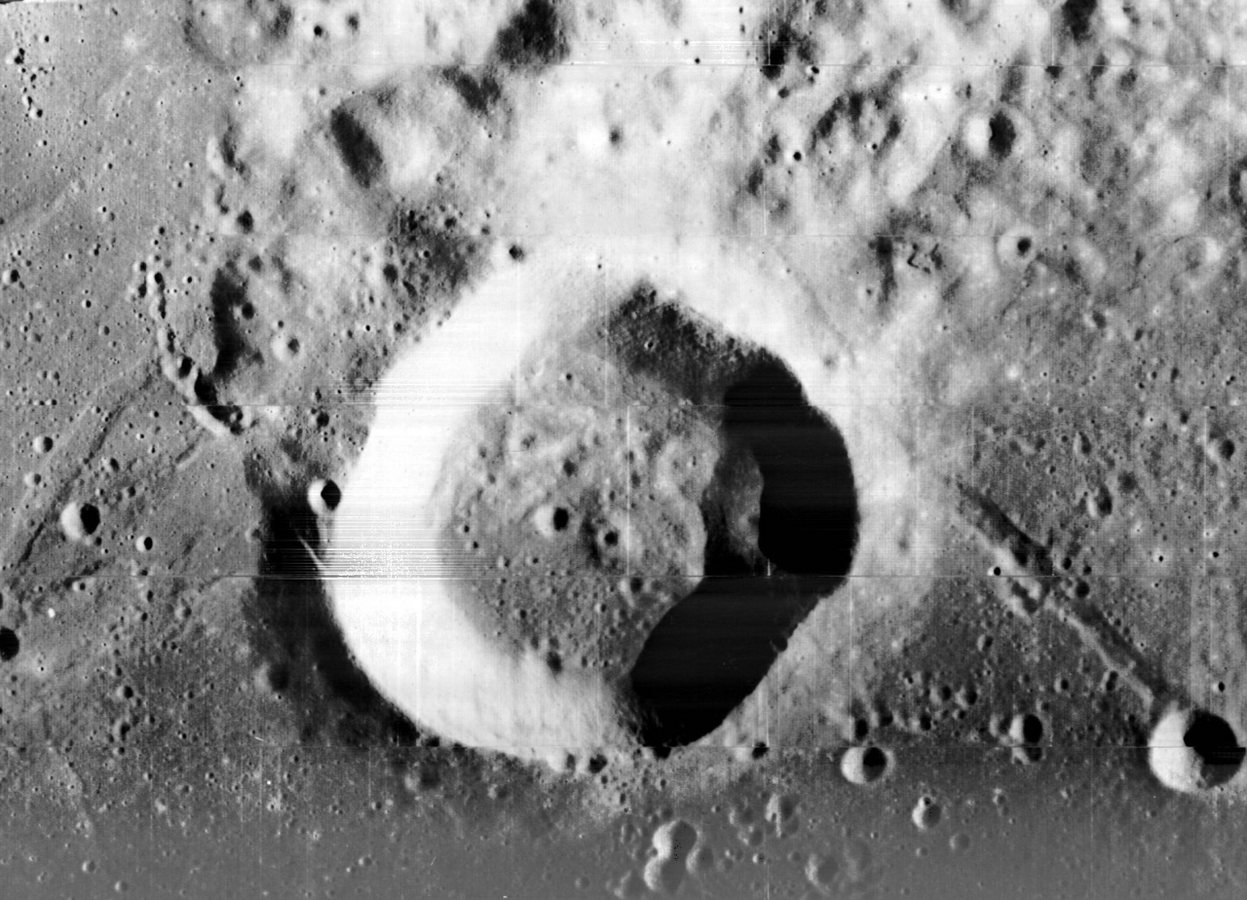
The crater, officially named McGetchin Crater after lunar scientist Tom McGetchin, formed between April 11 and May 22, 2024, when a comet or asteroid roughly the size of a three- to six-story building slammed into the lunar surface. The impact excavated a bowl 43 meters deep, spanning more than two American football fields in length and three vertically stacked school buses in depth. Scientists estimate that craters of this size appear on the Moon only about once every century.
Robert Wagner, an image-processing specialist from Intuitive Machines, first spotted the crater on Oct. 24, 2025, while conducting a routine data-quality check of imagery from the Lunar Reconnaissance Orbiter Camera's Wide-Angle Camera. He was stacking hundreds of before-and-after frames to highlight changes in surface color when a bright spot with a dark halo caught his eye.
«I just stopped, dropped everything, and started looking into what that spot was,» Wagner said. «It was by far the most obvious impact debris pattern I've ever seen in one of these images.»
By comparing new imagery of the region with older frames, Wagner confirmed that a fresh crater had formed. The discovery was made easier by the fact that McGetchin stood out more clearly than most other craters, which typically appear as small fuzzy halos around bright points in difference images.
Once the crater was identified, LRO scientists used the Narrow-Angle Camera to capture sharper images, revealing its size, shape, and surroundings. Those high-resolution images also allowed researchers to estimate the dimensions of the impactor. The Moon's lack of a thick atmosphere means incoming objects reach the surface with little to no resistance, making impacts from comets, asteroids, and even rocket stages common. Most of these objects are too small to detect, but LRO's instruments can spot craters as small as nine meters across, typically formed by objects about 1.1 meters wide. Scientists believe impacts of this scale create over 100 new craters on the lunar surface every year.
Throughout its 17-year mission, LRO has cataloged at least 1,000 new impact craters and more than 100,000 surface changes. The spacecraft's LROC instrument images the Moon from an altitude of 96.5 kilometers, capturing high-resolution black-and-white and moderate-resolution multispectral images. It has been used to discover new craters, landslides, seismic faults, potential lava tubes, and even robotic landers.
Beyond the visual discovery, LRO's Diviner Lunar Radiometer Experiment instrument revealed a striking thermal anomaly around McGetchin. Scientists found a 6.5-kilometer-wide area surrounding the crater that is approximately 16 degrees Fahrenheit cooler than the surrounding environment during the lunar night. This cooling is thought to occur because the impact dislodged and «fluffed» the regolith around the crater, making it less dense and more susceptible to heat loss.
The phenomenon demonstrates that surface impacts can affect more than just the crater itself, providing scientists with valuable insight into how future robotic and crewed lunar missions will fare on the surface. Understanding the thermal and physical properties of lunar soil is critical for planning landing sites, constructing habitats, and operating equipment in the harsh lunar environment.
Two new papers have been published in the Science Advances journal on the discovery of McGetchin, with more expected. The first paper announces the discovery of the crater, while the second studies it using LRO's Diviner instrument. The lead image of McGetchin Crater was taken by LROC's Narrow-Angle Camera on Dec. 5, 2025.