Elon Musk’s most ambitious technology claims often arrive as a date. A cargo ship to Mars in 2022. Crewed ships in 2024. A million robotaxis in 2020. Pilot production of a humanoid robot in 2025. Dates make a technological future feel measurable, but they can also hide the most important question in engineering: what level of maturity has actually been reached?
By August 2026, the clearest way to assess Musk’s record is not to ask whether a programme is exciting. It is to ask whether it has crossed the boundary from prototype to repeatable system and, beyond that, whether people can rely on it.
SpaceX provides the strongest example of why that distinction matters. Musk’s 2017 Mars plan projected two cargo vehicles reaching Mars in 2022 and four ships, including two with crews, in 2024. Those missions did not happen. Starship remained an experimental flight programme in 2026, with SpaceX continuing to test new versions of the vehicle, propulsion and re-entry systems.
The missed Mars schedule is substantial. A programme that has not yet flown people to orbit cannot reasonably be credited with the benefits of a Mars settlement simply because the hardware is visibly advancing. Starship should be assessed for what its tests demonstrate, not for the civilisation-scale outcome that remains in the future.
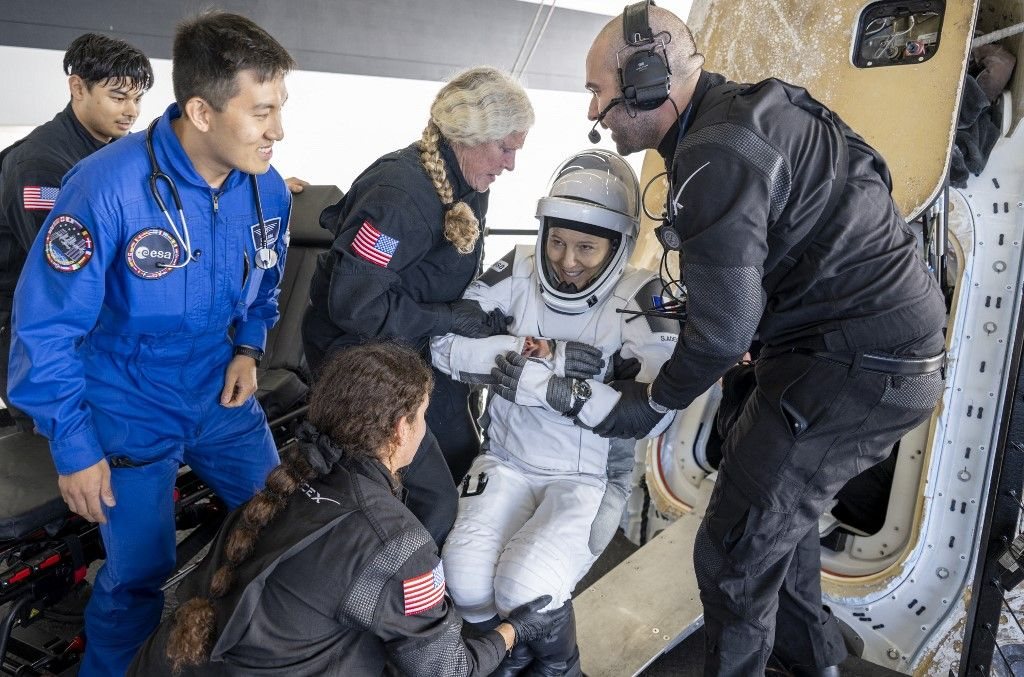
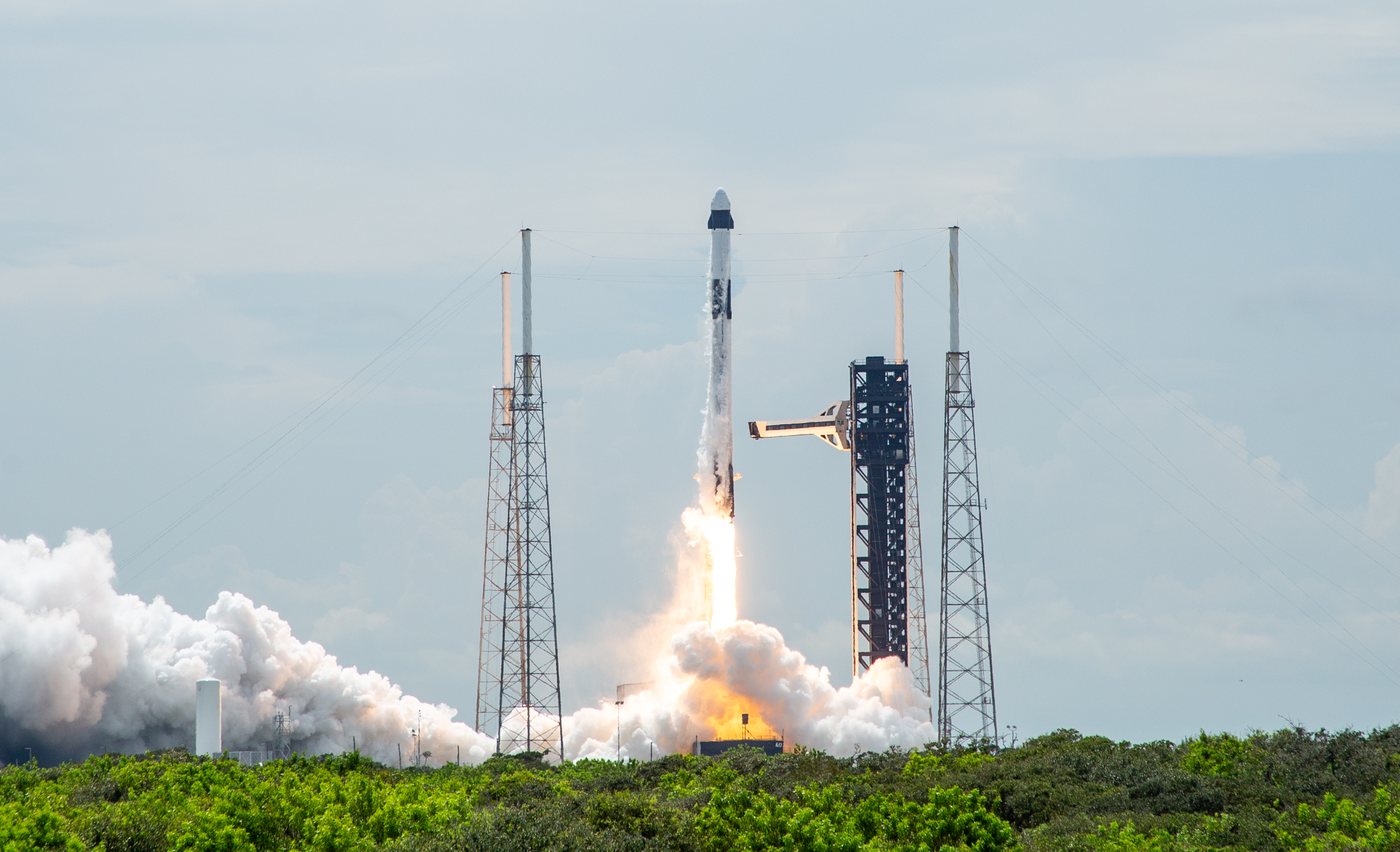
Crew Dragon sits at a very different maturity level. NASA certified the Crew Dragon spacecraft and Falcon 9 launch system for regular human spaceflight in 2020. The significance is institutional as much as technical: the system moved from development and test flights into a recurring service carrying astronauts to the International Space Station. In February 2026 NASA and SpaceX launched Crew-12, the twelfth rotational crew mission under the Commercial Crew programme.
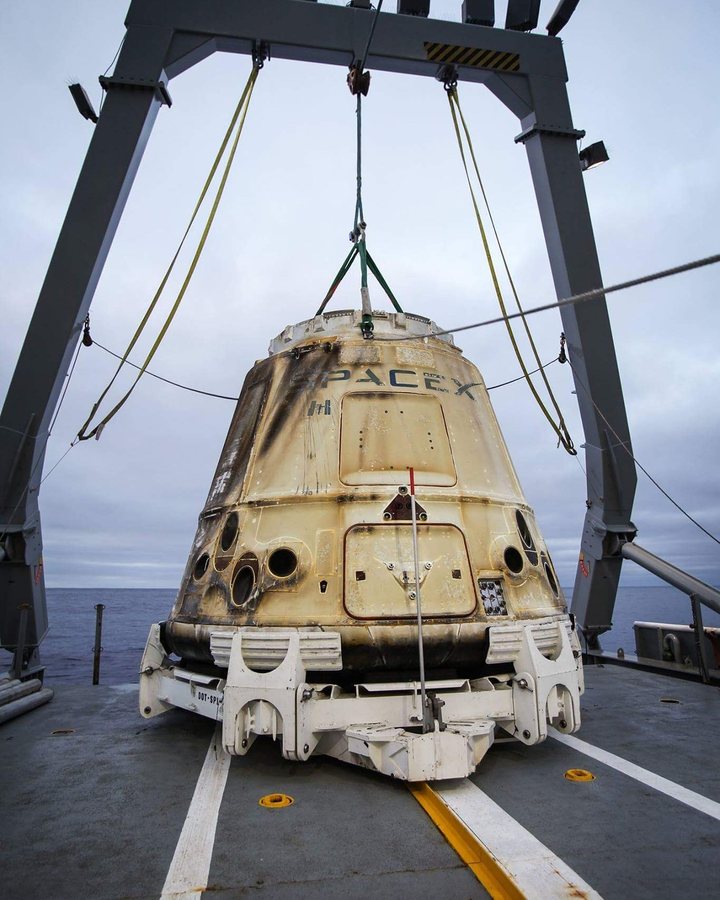
The same operational value appears in cargo. In May 2026 a SpaceX Dragon mission carried about 6,500 pounds of scientific investigations, equipment and supplies to the station. Those kilograms matter more than an animation of a future city on Mars. They allow experiments to run, instruments to be replaced and crews to live and work in orbit.
It is also important to distribute credit accurately. Musk helped set direction, take corporate risk and sustain a culture that accepted unusually aggressive technical goals. The spacecraft, however, is the output of thousands of engineers, technicians, suppliers, astronauts, NASA managers and public contracts. Treating every Falcon landing as the work of one individual is as misleading as pretending that the founder played no role at all.
Tesla’s autonomy programme occupies the middle of the maturity ladder. In 2016 Tesla said its cars were being fitted with the hardware needed for full self-driving capability. In 2019 Musk forecast more than one million robotaxis in 2020 and a vehicle that would no longer require attention to the road by around the middle of that year.
Consumer FSD in 2026 still requires active driver supervision, according to Tesla’s own description, and the company explicitly says the system does not make the car autonomous. NHTSA opened a preliminary investigation in 2025 into reports of traffic-safety violations with FSD engaged. Yet there is genuine technical progress alongside that miss: Tesla said Robotaxi was operating in seven major metropolitan areas in the second quarter of 2026, and Cybercab had entered production. NHTSA also said the 2026 Model Y was the first vehicle to pass its new advanced driver-assistance tests.
That is a real engineering trajectory, but it is not the trajectory promised in 2019. The correct label is not ‘nothing works’ and not ‘full autonomy solved’. It is a delayed and still constrained transition from supervised driver assistance toward commercial autonomy.
Optimus is less mature. Tesla had discussed pilot production in 2025. Its 2025 annual report still described Optimus as not commercialised, and by the second quarter of 2026 the company said first-generation production lines were being installed with production anticipated later in the year. Humanoid robotics is therefore still a programme whose public claims run ahead of industrial proof.
Neuralink demands even more caution because the stakes are medical. Its PRIME study is a first-in-human early-feasibility trial. The ClinicalTrials.gov record describes a small planned enrolment and a long follow-up period. That makes the work important but preliminary. If a brain-computer interface lets a person with paralysis control a computer, the human value is direct and profound. A handful of early participants, however, cannot establish broad safety, durability or clinical benefit.
The contrast across these projects suggests a useful rule for evaluating frontier technology. Count a prototype as evidence that a team can build a prototype. Count a controlled human trial as evidence that a device has entered clinical evaluation. Count a repeated transport service as infrastructure. Do not promote one category into the next because a founder uses a confident date.
Musk’s engineering organisations have produced systems that clearly deserve the word achievement. Crew Dragon is one. Reusable Falcon operations are another. Tesla’s large-scale battery deployments and the standardisation of its charging connector show a similar transition from product to infrastructure.
Starship may eventually join that list at a new scale, and Neuralink may eventually become a practical assistive medical platform. In 2026, neither should be credited for outcomes that have not yet been demonstrated.
That is not cynicism. It is the same standard science applies to every other extraordinary claim: define the result, identify the stage of evidence, and wait for replication in the world outside the presentation hall.
205