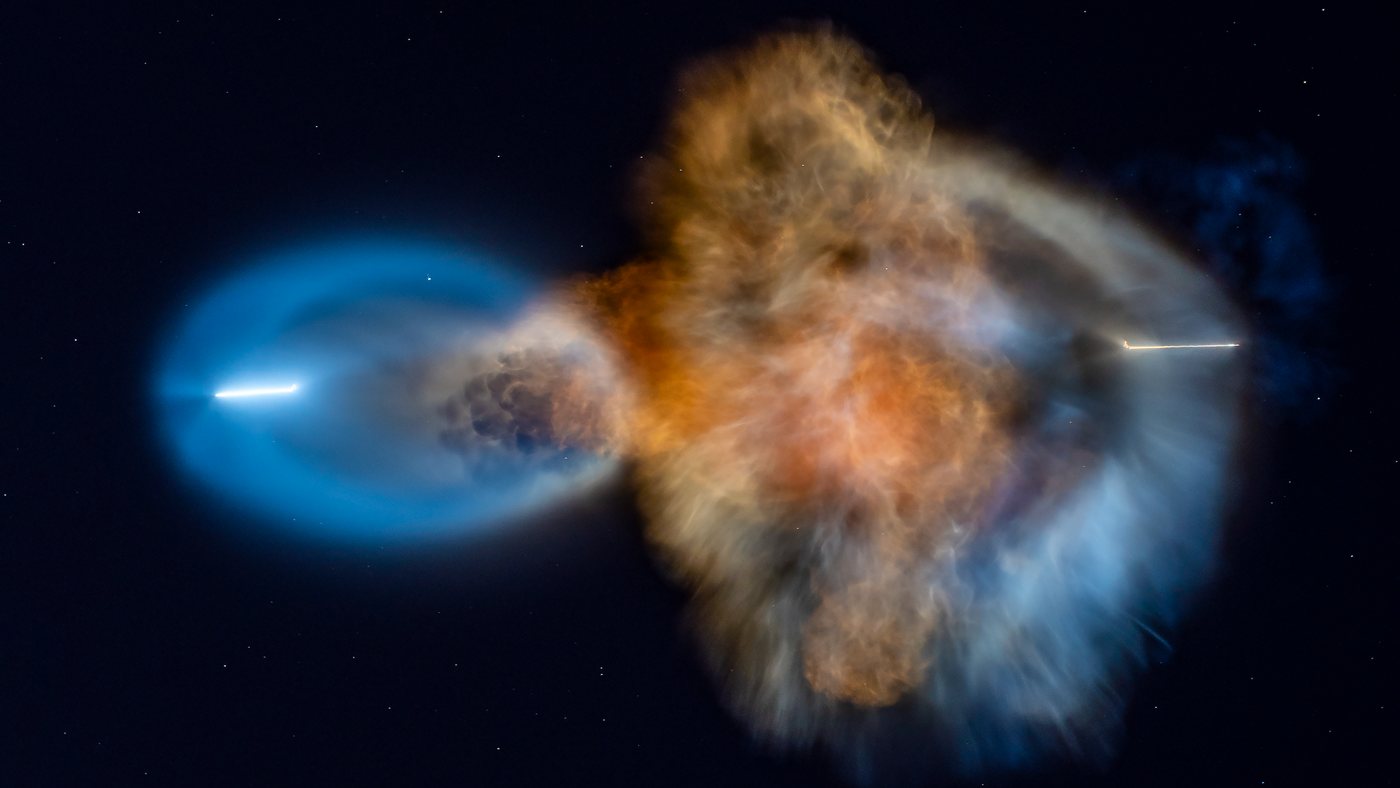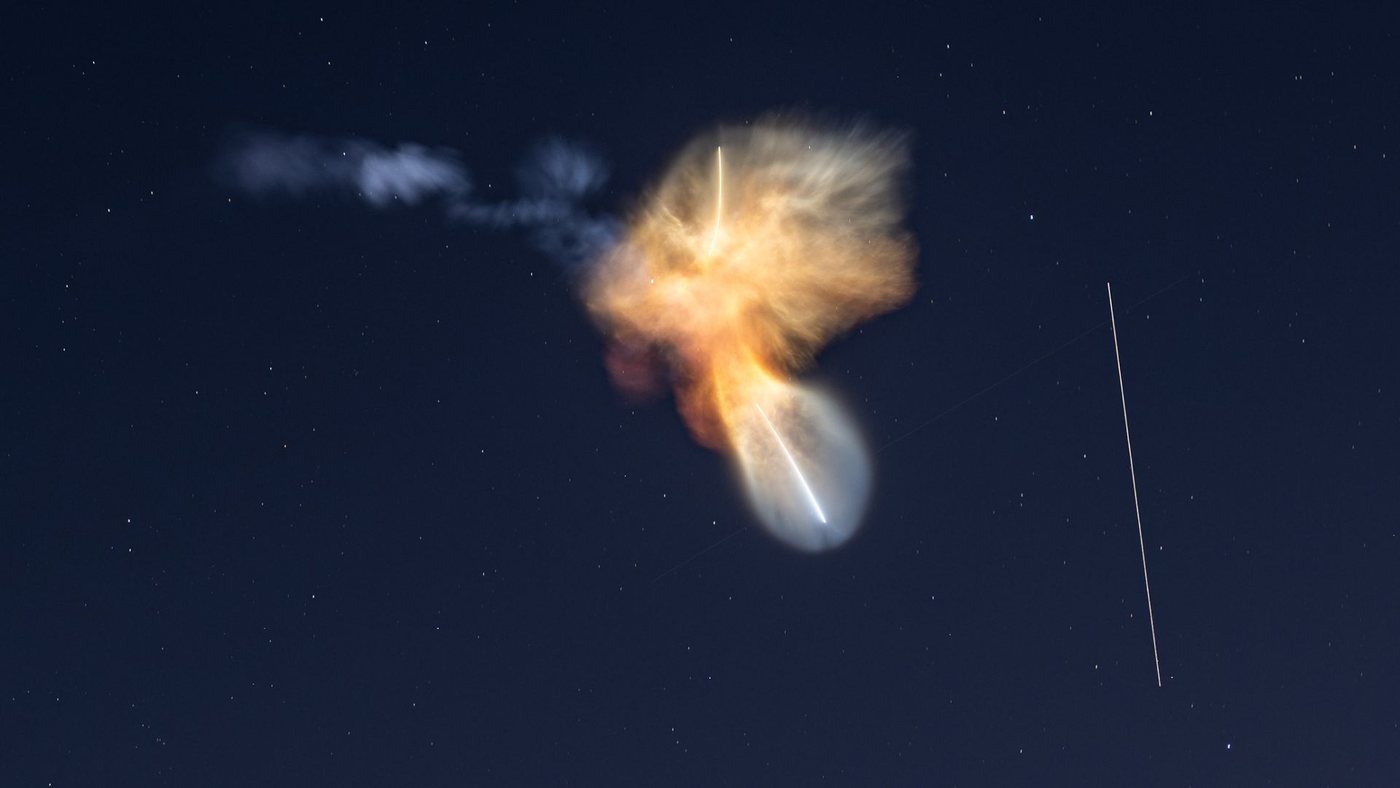
A SpaceX cargo launch from Cape Canaveral Space Force Station in Florida left behind a luminous, jellyfish-shaped plume that was visible from as far away as Washington, D.C., and quickly went viral on social media. NASA has now released its own photographs of the event and explained the atmospheric conditions that turned a routine resupply mission into a spectacle seen across the eastern United States.
The Falcon 9 rocket lifted off at 6:33 a.m. ET on October 13, carrying a Dragon spacecraft loaded with supplies and equipment for the International Space Station. The launch occurred just before sunrise, a timing that proved decisive. While the ground and lower atmosphere remained in darkness, the upper atmosphere was already catching the first rays of sunlight. That early light backlit the rocket's exhaust plumes, making them far more visible than they would be during a daylight launch.
NASA photographer John Kraus captured the phenomenon in a series of long-exposure images. One photograph, a 480-second exposure, shows the rocket's path as its exhaust plumes glow blue against the brightening sky, with the sun rising behind clouds. A separate 15-second exposure captures the jellyfish shape expanding outward, while a streak of light in the bottom corner marks the International Space Station in the distance. Another image shows an orange glow from the Falcon 9's first stage during its re-entry burn.
The result was a brightly colored, expanding shape that hung suspended in the sky for several minutes, resembling a jellyfish with a central body and trailing tendrils. The sight was reported from locations up to 800 miles from the launch site, and videos from multiple observers spread rapidly online. NASA's own images, released alongside its explanation, have added to the viral attention.
According to NASA, the effect occurs when a rocket launches near sunrise or sunset. At those times, the sun illuminates the upper atmosphere while the ground remains in shadow. The exhaust plumes, which are normally difficult to see, become dramatically visible because they are lit from behind. The same principle applies in photography, where backlighting rain or using a fog machine near a window can make otherwise invisible particles or beams of light stand out.
The mission itself, SpaceX CRS-35, was a routine cargo resupply flight for NASA. The Dragon spacecraft carried supplies and equipment to the space station. But the launch's timing transformed it into a public spectacle, with skywatchers far from Florida treated to an unexpected light show. The space jellyfish is not a new phenomenon, but it requires a specific combination of launch time, atmospheric conditions, and viewing angle to be seen over such a wide area.
NASA's release of Kraus's photographs and its scientific explanation have helped turn a viral moment into an educational one, illustrating how atmospheric optics can make rocket launches visible in unexpected ways. The images also highlight the growing intersection of spaceflight and astrophotography, as more people attempt to capture launches and their aftereffects. For observers along the East Coast, the October 13 event was a reminder that the science behind a launch can be as striking as the mission itself.
14