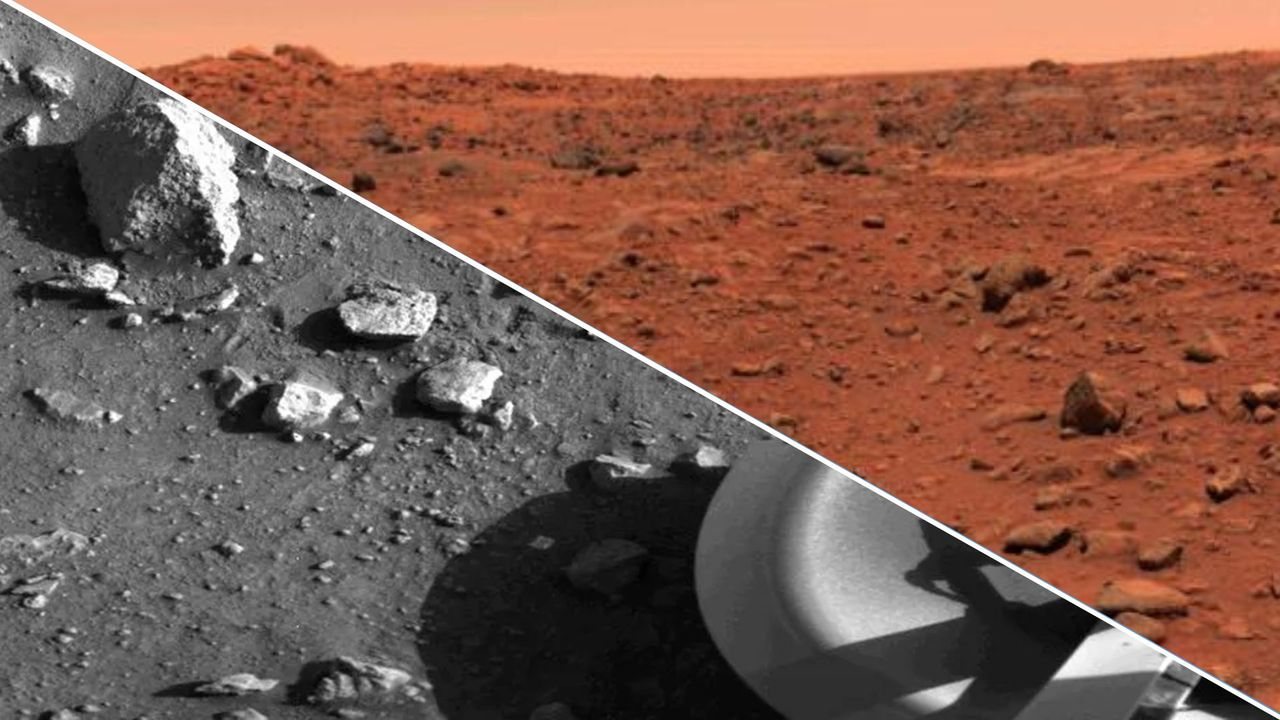
Fifty years ago, NASA's Viking 1 lander became the first spacecraft to successfully transmit an image from the surface of Mars, offering humanity its first direct look at another planet's terrain. To mark the golden anniversary of that historic moment, the space agency released a newly processed version of the iconic photograph, highlighting the enduring significance of a mission that reshaped our understanding of the solar system.
The original image, captured on July 20, 1976, just seconds after touchdown on the Chryse Planitia region, showed a desolate, rocky landscape bathed in a salmon-pink sky — a view that simultaneously thrilled scientists and raised profound questions about the possibility of life beyond Earth. The Viking program, consisting of two orbiters and two landers, was NASA's first attempt to conduct a long-term investigation of Mars from both orbit and the surface. Viking 1 launched on August 20, 1975, and traveled nearly 500 million miles before entering Mars orbit and eventually descending to the surface.
Its lander carried a suite of instruments designed to search for microbial life, measure atmospheric composition, and study the planet's geology. The first image, transmitted minutes after landing, revealed a surface littered with rocks and fine-grained soil, with no obvious signs of vegetation or water — a stark contrast to the lush, Earth-like Mars imagined by earlier generations. That initial picture, taken by the lander's two facsimile cameras, was actually a low-resolution black-and-white scan that had to be painstakingly reconstructed line by line.
Engineers at NASA's Jet Propulsion Laboratory worked through the night to assemble the partial image into the first published view, which appeared in newspapers worldwide the following day. Over the following weeks, the lander sent back thousands of full-color panoramas, showing a landscape tinted reddish-brown by iron oxide dust. The images confirmed that Mars is a cold, dry desert world, but also hinted at a more dynamic past, with channels and floodplains suggesting that liquid water once flowed across its surface. The scientific legacy of Viking 1 extends far beyond its iconic photographs.
The lander operated for more than six years — until May 1983 — making it the longest-lasting surface mission of its era. Its experiments on soil chemistry and weather patterns provided baseline data for every subsequent Mars mission. Although the Viking life-detection tests returned ambiguous results, they established rigorous protocols for astrobiology that inform current searches for biosignatures. The mission also demonstrated critical landing technologies — parachute deployment, retro-rocket braking, and hazard avoidance — that later enabled the successful landings of rovers like Spirit, Opportunity, Curiosity, and Perseverance.
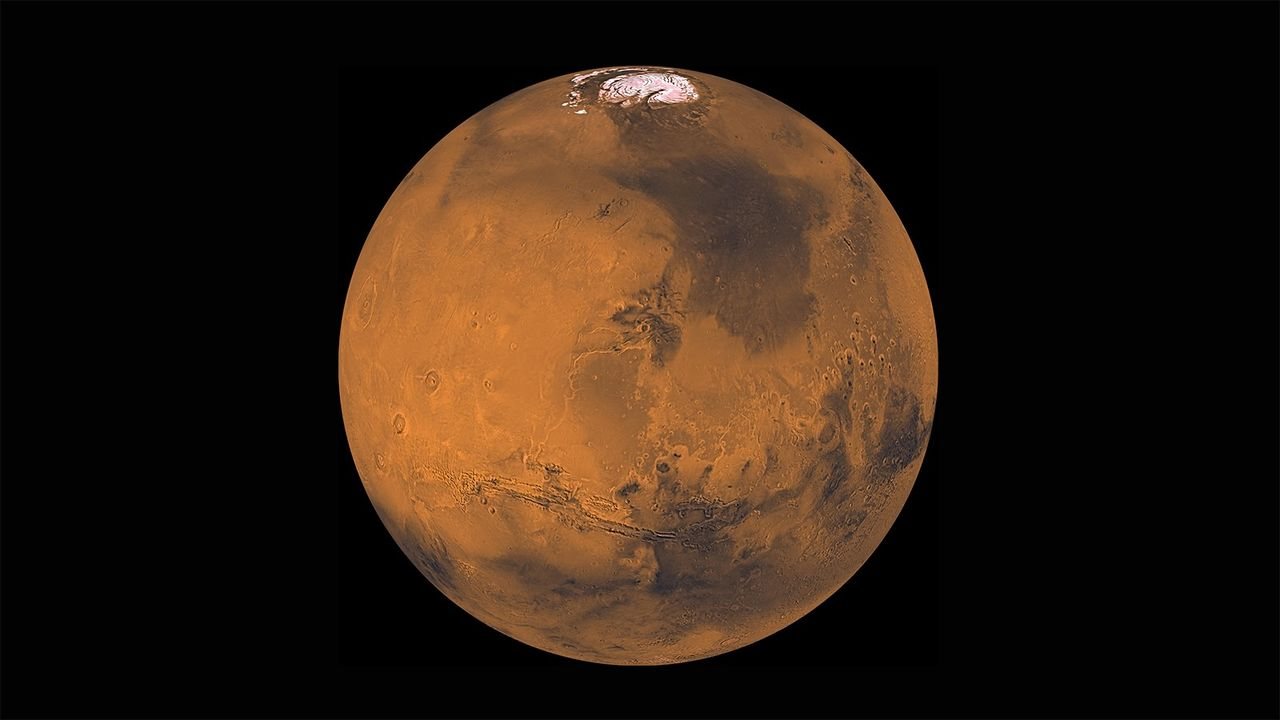
Fifty years later, Mars exploration has advanced dramatically. NASA's Perseverance rover is currently caching rock samples for eventual return to Earth, while the Ingenuity helicopter has proven powered flight is possible in the thin Martian atmosphere. Yet the image from Viking 1 remains a touchstone — the moment when a distant, mysterious planet became a place we could actually see. In commemorating the anniversary, NASA officials emphasized that the Viking missions laid the foundation for today's ambitious plans, including the goal of sending humans to Mars in the 2030s.
The newly released commemorative image, processed to enhance details and correct color, offers a clearer version of the scene that captivated the world half a century ago. It shows the same rocky plain, the same pink sky, and the same sense of wonder — a reminder that even the most advanced exploration begins with a single, grainy photograph. As NASA Deputy Administrator Pam Melroy noted in a statement, « Viking 1 opened a window onto a world we had only dreamed of visiting. That first image sparked a curiosity that continues to drive us toward the Red Planet today.