A Russian Progress cargo mission to the International Space Station has moved into a small but important scheduling gray area. NASA’s September 3 news release said Progress 96 was scheduled to launch on September 9 from Baikonur with about three tons of food, fuel and other supplies. The agency’s current launch-schedule page, however, now labels the mission “Under Review,” while a separate NASA event page still shows the September 9 date.
That does not necessarily mean the launch has been postponed. Spaceflight schedules frequently change as mission managers work through technical checks, range availability, weather and station-traffic constraints. But it does mean the published target should no longer be treated as unconditional until NASA or Roscosmos updates the status.
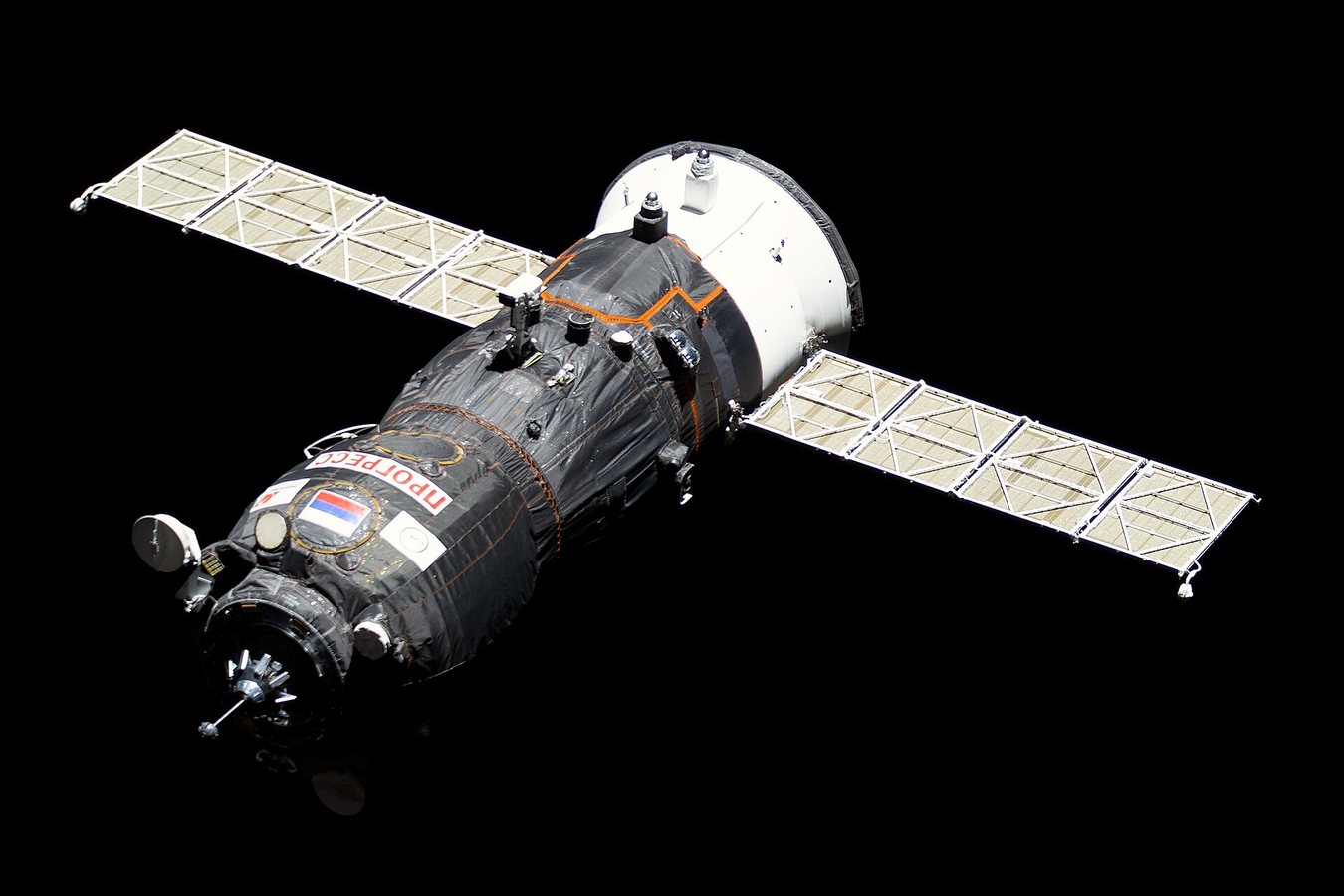
The mission also illustrates the multiple naming systems used for Progress spacecraft. NASA refers to the vehicle as Progress 96, a numbering convention based on the sequence of Russian cargo missions to the ISS from the agency’s perspective. Independent launch databases identify the same mission as Progress MS-35, following the Russian spacecraft designation. The two labels refer to the same general resupply flight, not separate vehicles.
Under the September 3 plan, the spacecraft would lift off on a Soyuz rocket from Baikonur Cosmodrome in Kazakhstan and begin a roughly two-day journey to the station. NASA said docking was targeted for September 11 at the Poisk module. The cargo manifest was described in broad terms as about three tons of food, fuel and supplies for the orbital laboratory and its crew.
Progress vehicles are uncrewed descendants of the Soyuz spacecraft architecture and are one of the routine logistical systems that keep the ISS operating. They carry propellant, water, compressed gases, food, equipment and experiments. After unloading, crews can fill the spacecraft with waste and unneeded equipment before it undocks and burns up during atmospheric reentry.
NASA’s release said Progress 96 was expected to remain at the station for about five months. That long stay is normal for Progress missions and gives controllers flexibility in station logistics. A docked Progress can also contribute to orbital reboost operations, helping maintain the station’s altitude as atmospheric drag slowly lowers its orbit.
The scheduling uncertainty is therefore operational rather than a sign that the mission itself has been canceled. The best reading of the available information is that NASA published a September 9 target, then later flagged the launch for further review on its consolidated schedule. Until a revised time or confirmation appears, any countdown should be described as provisional.
This distinction matters for viewers as well as mission planners. NASA had planned coverage of the launch and docking, and a shift of even a day can change broadcast schedules and station operations. It also matters for researchers tracking ISS logistics, because cargo arrivals are coordinated with other visiting vehicles and crew work.
The Progress system remains a core part of ISS support even amid deep geopolitical tension on Earth. NASA and Roscosmos continue operational cooperation on the station because the laboratory’s systems and crews depend on tightly coordinated work. Cargo flights are among the most visible examples of that practical interdependence.
For now, the mission is a reminder that launch dates are targets rather than promises. NASA’s detailed release provides the original plan: September 9 launch, September 11 docking and roughly three tons of cargo. Its live schedule provides the newer caution: “Under Review.” The next authoritative update from NASA or Roscosmos should determine whether Progress 96, or Progress MS-35, keeps the September 9 slot or moves to a new date.
181