NASA's Nancy Grace Roman Space Telescope may have enough fuel to conduct science for at least 22 years, more than double its original 10-year design life, according to mission planners. The extension would allow the powerful observatory to keep studying dark energy, exoplanets, and the broader universe for decades longer than expected.
The gain comes from a combination of factors: an extremely precise course correction after launch, additional fuel carried on board, and further savings anticipated during operations. Together, these have pushed the mission's fuel budget well beyond the baseline used when the telescope was designed.
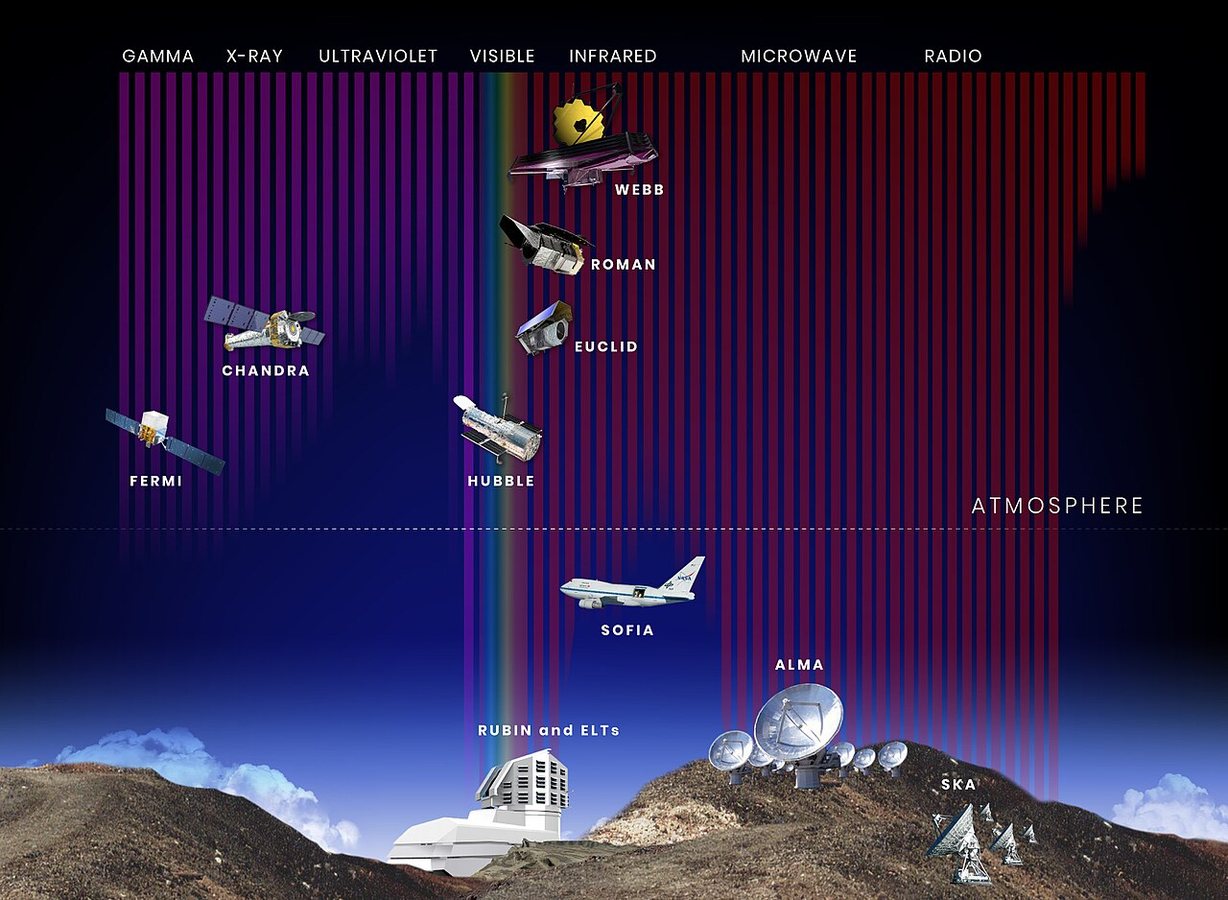
Roman is designed to survey the sky with a field of view roughly 100 times larger than the Hubble Space Telescope's infrared view, while matching Hubble's resolution. Its primary mission includes investigating dark energy, the mysterious force accelerating the universe's expansion, and conducting a microlensing survey to discover thousands of exoplanets. The telescope is also expected to study galaxy formation and evolution, and to test new technologies such as coronagraphs for imaging planets around other stars.
Fuel is a critical constraint for any space observatory. Once a spacecraft exhausts its propellant, it can no longer maintain its orbit or pointing, ending its science operations regardless of the health of its instruments. Missions such as Hubble and Chandra have had their lifetimes extended through careful fuel management, but the Roman team's early precision has given the observatory a much larger margin than originally planned.
The course correction that helped make this possible was executed with extreme accuracy, leaving more propellant for future use. Additional fuel loaded before launch provided a further cushion, and mission planners now expect to find more efficiencies as they learn how the spacecraft performs in flight. The result is a projected science lifetime of at least 22 years, though the actual duration will depend on how the mission is operated and what observations are prioritized.
A longer mission would be significant for astronomy. Roman's wide-field surveys are designed to build a massive dataset that grows more valuable over time, especially for rare or transient phenomena that require years of monitoring to detect. A two-decade-plus baseline would allow researchers to track changes in the universe that a 10-year mission could only glimpse.
The telescope is named after Nancy Grace Roman, NASA's first chief of astronomy and a key advocate for space-based observatories. It is scheduled to launch in the coming years and will operate from a position roughly 1.5 million kilometers from Earth, where it can maintain a stable environment for its sensitive infrared instruments.
While the extended lifetime is not guaranteed, the fuel margin gives the mission a strong foundation. Mission managers will continue to monitor consumption and adjust operations to preserve propellant. If the current projections hold, Roman could remain scientifically productive well into the 2040s and beyond, providing a long-term legacy for dark energy and exoplanet research.