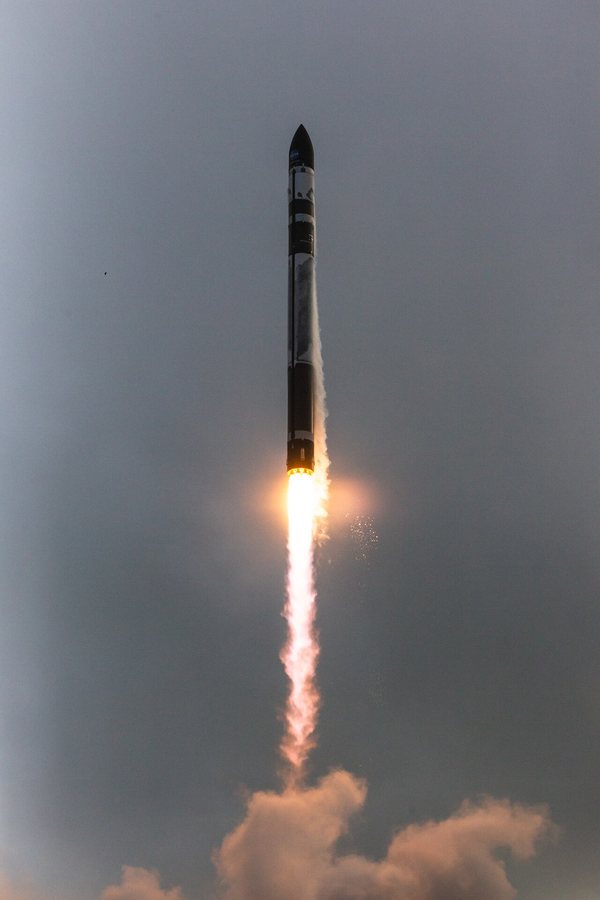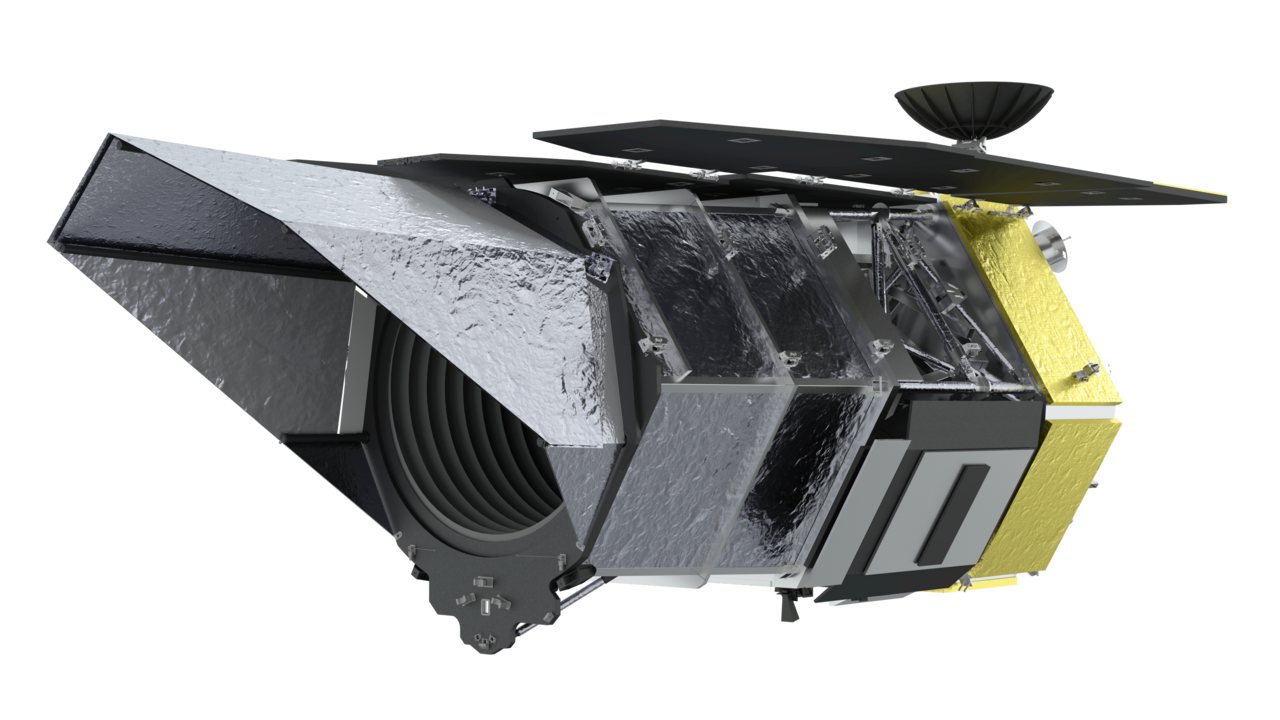
NASA's Nancy Grace Roman Space Telescope launched on August 30, 2026, from the Kennedy Space Center in Florida aboard a SpaceX Falcon Heavy rocket. The telescope separated from its carrier 31 minutes after liftoff and is now on a three-month journey to the second Sun-Earth Lagrange point, L2, located 1.5 million kilometers from Earth. Once it arrives in late November, the gravitational balance at L2 will allow Roman to maintain its orbit with minimal fuel, while a single shield blocks light and heat from the Sun, Earth, and Moon, keeping the telescope cold and stable.
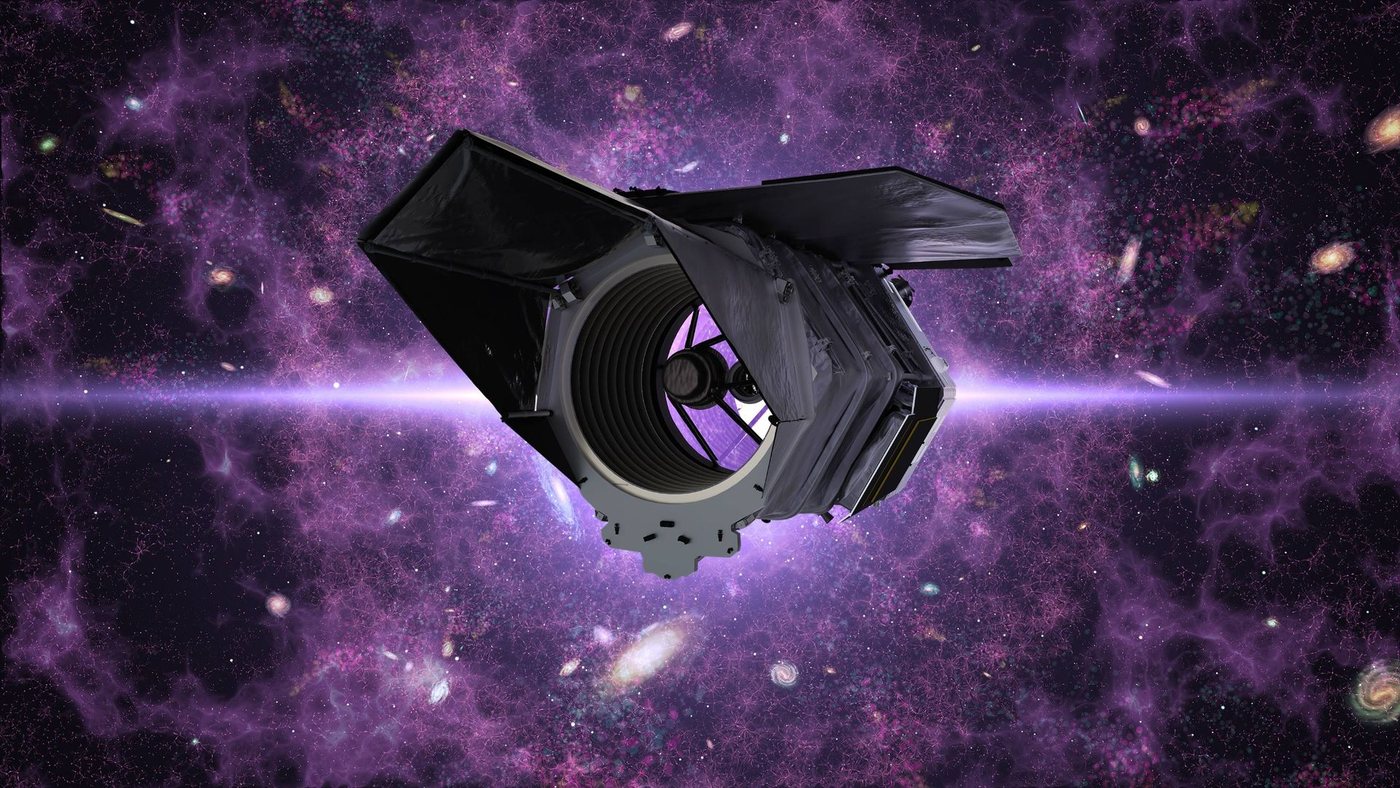
Named after NASA's first chief astronomer, Nancy Grace Roman, the telescope carries a 2.4-meter primary mirror that produces images as sharp as those from the Hubble Space Telescope. However, its Wide Field Instrument can cover at least 100 times as much sky in a single pointing. This combination of sharpness and breadth will allow astronomers to study entire cosmic ecosystems in detail, from individual galaxies to the large-scale distribution of matter. NASA administrator Jared Isaacman described the mission as studying the «ecology of the universe», comparing it to cameras that can both provide an overview of a forest and zoom in on individual birds and leaves.
Roman's launch marks a significant acceleration of a shift already underway in astronomy: from observing carefully selected targets to systematically mapping the sky. Traditionally, astronomers proposed to study specific objects, collected data, and retained exclusive access during a proprietary period. While that model persists with Hubble and the James Webb Space Telescope, a new approach has become increasingly important. The European Space Agency's Gaia mission, for example, took more than three trillion observations of roughly two billion stars between 2014 and 2025, producing public catalogues that researchers have used to reconstruct the Milky Way's structure and identify rare objects without applying for new telescope time.
Roman will take this trend much further. Its surveys will generate enormous datasets that require machine-learning techniques to classify and analyze. Gaia's third data release in June 2022 included 10.5 million variable sources, all classified using supervised machine-learning algorithms. No astronomer could have inspected that many light curves manually. Roman will produce even larger volumes of data, enabling discoveries that no single observer could find by eye. The telescope's first images are expected in early 2027, and they will begin to transform the sky into a vast, reusable dataset.
Beyond its wide-field surveys, Roman will also carry a coronagraph designed to test active optics that suppress starlight far more effectively than existing space-based coronagraphs. This instrument will image giant planets orbiting nearby stars and pave the way for future missions to photograph smaller, Earth-like worlds. The mission thus combines targeted astronomy with population surveys, allowing scientists to study both individual objects and the cosmic environments to which they belong.
Nancy Grace Roman, born in 1925, was NASA's first female executive and served as the agency's first chief of astronomy throughout the 1960s and 1970s. She created NASA's space astronomy program and is known as the «Mother of Hubble» for her role in planning the Hubble Space Telescope. The telescope that now bears her name will continue her legacy by turning the sky into a dataset, enabling astronomers to study dark energy, exoplanets, and the evolution of the universe on an unprecedented scale.
12