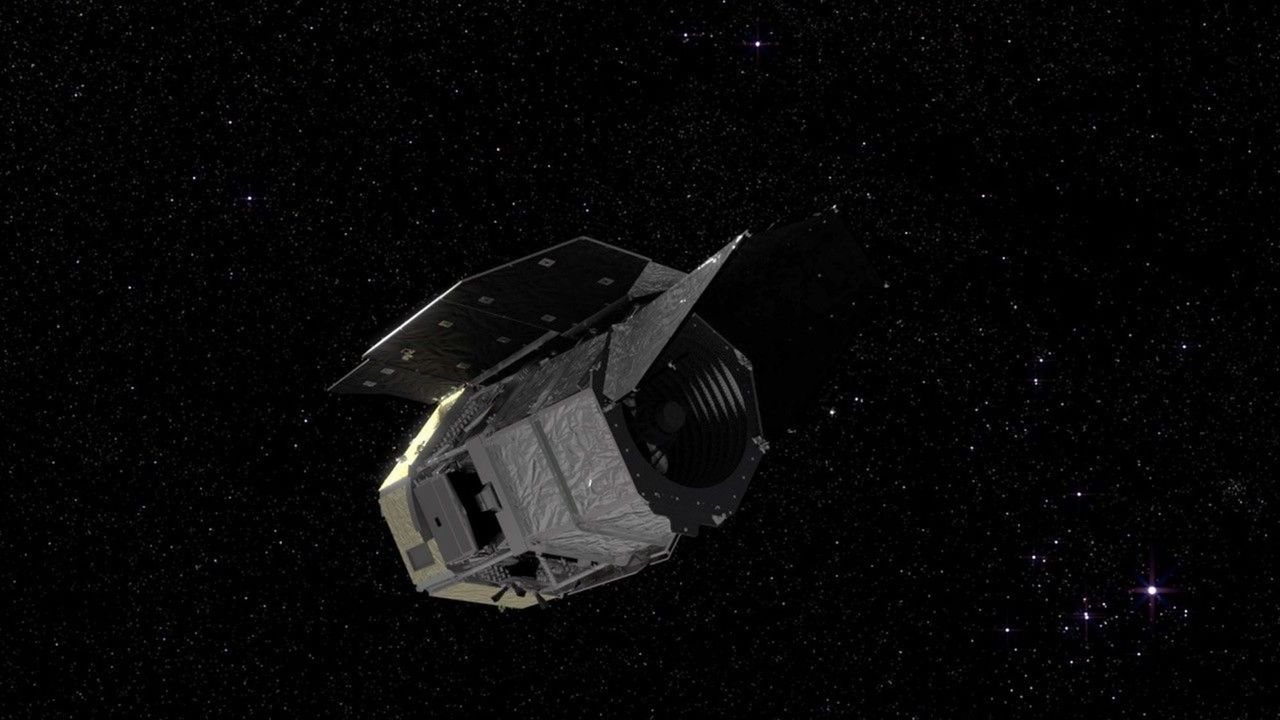
The Nancy Grace Roman Space Telescope, NASA's next major astrophysics observatory, is fully prepared for its scheduled launch on August 30. Named after the agency's first chief astronomer, the Roman telescope will bring capabilities that its predecessors could not achieve, particularly in wide-field infrared surveys.
«It's going to do things that currently are impossible,» a NASA official said, referring to the telescope's ability to observe vast areas of the sky in a single exposure. Roman will have a field of view 100 times larger than the Hubble Space Telescope, enabling rapid surveys of galaxies, dark matter, and exoplanets.
The observatory is designed to address fundamental questions in cosmology, including the nature of dark energy and the evolution of the universe. It will also carry a coronagraph instrument to directly image exoplanets, blocking out starlight to reveal planets in orbit around other stars.
Roman is currently at NASA's Goddard Space Flight Center undergoing final integration and testing. The launch window opens on August 30 from Cape Canaveral, Florida, aboard a SpaceX Falcon Heavy rocket. Once in orbit at the Sun-Earth Lagrange point 2, it will begin a five-year primary mission.
The telescope's wide-field instrument will survey billions of galaxies, mapping the distribution of dark matter and measuring the expansion history of the universe. This data will help scientists understand why the universe's expansion is accelerating, a mystery that has driven decades of research.
In addition to dark energy, Roman will survey our Milky Way galaxy to detect thousands of exoplanets via microlensing, a technique that reveals planets by the way they warp the light of distant stars. The telescope's resolution and sensitivity will allow it to find planets as small as Mars, expanding the census of worlds beyond our solar system.
The Roman mission represents a collaboration between NASA, the European Space Agency, and several research institutions. Its development cost about $4.3 billion, positioning it as a centerpiece of American space science for the next decade.
Astronomers have been preparing for Roman's data for years, developing analysis tools and planning large surveys. The telescope's massive data output will require new approaches to processing and archiving, which will be handled by a dedicated science center.
With launch just weeks away, the space community is eager for Roman to begin its observations. The telescope is expected to produce transformative results, potentially rewriting textbooks on galaxy formation, dark matter, and planetary systems. For now, engineers continue final checks, ensuring that every system is ready for the journey into space.