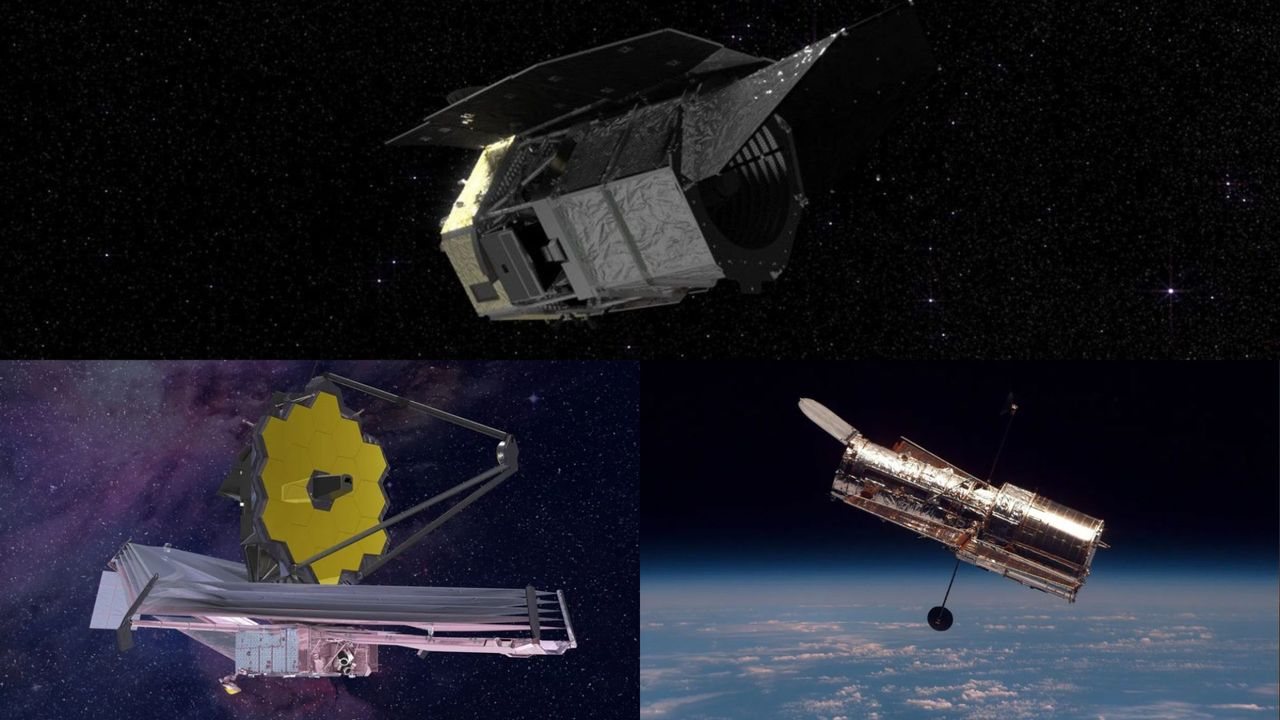
NASA's Nancy Grace Roman Space Telescope is scheduled to launch on August 30, 2026, from Kennedy Space Center in Florida, marking a new chapter in space observation. With a field of view far wider than that of the Hubble or James Webb Space Telescopes, Roman will scan the sky in visible and near-infrared light, aiming to answer fundamental questions about dark energy, dark matter, and the prevalence of exoplanets.
The mission, led by NASA with significant contributions from the European Space Agency, will lift off at 07:26 EDT (12:26 BST, 13:26 CEST). Its advanced optical design allows it to capture large swaths of the cosmos in a single image, enabling surveys that would take other observatories years to complete. This wide-field capability is central to Roman's primary goals: probing the nature of dark energy, mapping dark matter distribution, and discovering new worlds beyond our solar system.
Roman's approach complements the work of Hubble and Webb. While Hubble has provided detailed visible-light images of galaxies and nebulae, and Webb has peered deep into the infrared universe with unprecedented sensitivity, Roman will offer a broader perspective. Its surveys will cover vast regions of sky, helping astronomers identify targets for follow-up observations by other telescopes. For instance, Roman's ability to detect faint signals from distant supernovae will help measure the expansion rate of the universe, shedding light on dark energy's role in cosmic acceleration.
The telescope is named after Nancy Grace Roman, NASA's first chief of astronomy, who was instrumental in developing the Hubble Space Telescope. Her legacy continues with this mission, which aims to address some of the most pressing questions in cosmology. Roman will also contribute to the study of exoplanets through microlensing, a technique that detects planets by the way their gravity bends and magnifies light from background stars. This method is particularly sensitive to planets in the habitable zones of their stars, offering a unique complement to transit and direct imaging methods used by other missions.
Beyond dark energy and exoplanets, Roman's surveys will generate a treasure trove of data for the broader astronomical community. Its wide-field images will capture transient events, such as supernovae and gamma-ray bursts, and will map the distribution of galaxies and dark matter across cosmic time. The mission is expected to produce enormous datasets that will be made publicly available, enabling discoveries far beyond its primary objectives.
The launch date, August 30, 2026, is set for a morning window, with the telescope being placed into a halo orbit around the Sun-Earth L2 Lagrange point, a stable region about 1.5 million kilometers from Earth. From there, Roman will observe the universe without the interference of Earth's atmosphere, providing crisp, detailed images across its wide field of view. The mission is designed to operate for at least five years, with the potential for extension.
As Roman prepares for launch, astronomers are already planning how to use its capabilities to answer questions that have long been out of reach. From the nature of dark energy to the search for habitable planets, the telescope promises to transform our understanding of the cosmos, building on the legacy of Hubble and Webb while opening new frontiers in space science.
114