Archaeologists have identified intact archaeological layers in a mountain cave overlooking the northern Adriatic Sea that preserve evidence of a Mesolithic hunter-gatherer camp lying directly beneath artifacts left by the region's first Neolithic farmers. The site, known as Tina Jama, is located near Trieste in northeastern Italy, and the discovery offers a rare stratified record of the shift from hunting and gathering to agriculture in the region.
Federico Bernardini of Ca' Foscari University and Elena Leghissa of the Slovenian Academy of Sciences and Arts, along with their colleagues, suggest that farmers arrived in the area approximately 7,500 years ago. Before that arrival, hunter-gatherers occupied the cave and built a hearth in its most sheltered section. They also deliberately closed off the cave entrance with stones and blocks, a modification that may have served to protect the living space or to control access to the site.
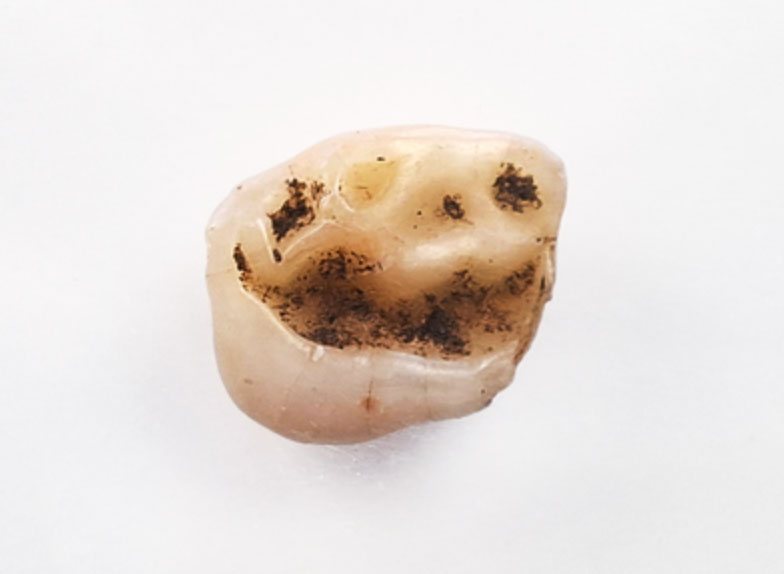
The hunter-gatherer layer yielded a rich assemblage of artifacts, including stone tools, waste flakes from tool production, bone points, ornaments fashioned from marine and freshwater shells, and pendants made from deer teeth. Researchers also identified ocher and adhesives throughout the site, materials that suggest a range of domestic and possibly symbolic activities. Among the finds was an unfinished deer antler ax, indicating that tool-making took place within the cave.
A smaller piece of antler, measuring about four inches long, had two holes drilled into it. Archaeologists believe this object was used to straighten arrow shafts, a specialized tool that points to the importance of hunting in the daily life of the cave's Mesolithic occupants. The presence of such a device alongside ornaments and ocher suggests a community with a developed material culture and a deep familiarity with the surrounding landscape and its resources.
The stratigraphic sequence at Tina Jama is significant because it places the hunter-gatherer occupation directly below the earliest farming evidence, with intact layers separating the two periods. This kind of undisturbed superposition is uncommon in the region and provides a clear chronological framework for examining how the transition unfolded. Radiocarbon dating of the site is expected to help researchers determine the timing and pace of the shift from hunting and gathering to farming.
The transition from foraging to agriculture is one of the most consequential developments in human history, reshaping diets, settlement patterns, social organization, and the relationship between people and their environment. In the Adriatic region, the arrival of farming communities is thought to have involved both the movement of people and the spread of ideas, but the specific dynamics remain debated. Sites like Tina Jama, where both ways of life are preserved in sequence, are therefore valuable for testing models of how the transition occurred.
The cave's location on the northern Adriatic coast places it within a broader corridor of interaction between the Italian peninsula and the Balkans. The marine and freshwater shell ornaments recovered from the Mesolithic layer indicate that the cave's inhabitants were connected to both coastal and inland resource networks, while the deer teeth and antler tools reflect a reliance on terrestrial game. Together, these finds paint a picture of a community that was well adapted to a diverse environment on the eve of one of prehistory's major transformations.
Researchers will continue to analyze the materials from the site, with radiocarbon dating expected to refine the chronology of both occupations. The results could clarify how quickly farming took hold in the region and whether hunter-gatherers and farmers overlapped in time or replaced one another. For now, the intact layers at Tina Jama stand as a rare and detailed record of two ways of life separated by a few feet of sediment and a turning point in human history.
11