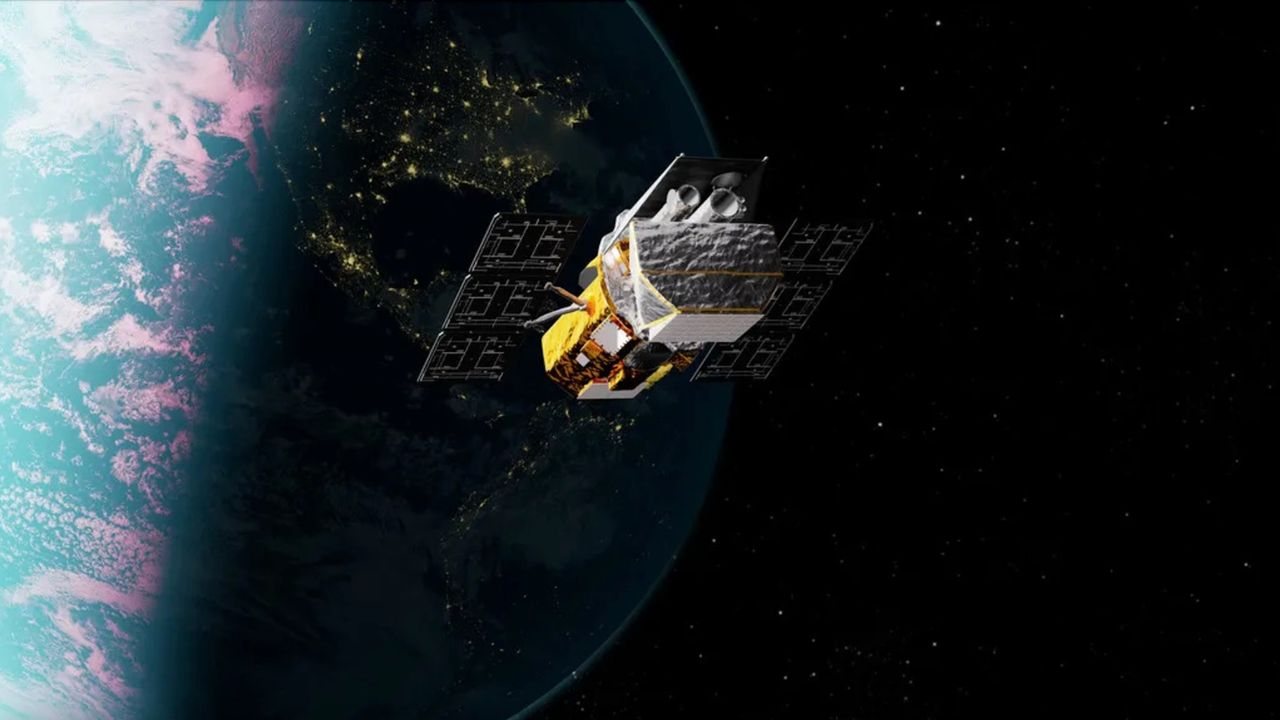
NASA's Swift space telescope, a workhorse observatory that has spent two decades scanning the cosmos for gamma-ray bursts, is now expected to crash back to Earth in an uncontrolled reentry after a privately funded rescue mission failed. The mission, which was designed to demonstrate the growing field of satellite servicing, was unable to dock with the aging spacecraft and boost it to a higher orbit, leaving the telescope to succumb to atmospheric drag.
The failed rescue attempt highlights the realities and risks of the burgeoning satellite-servicing industry. While the concept of extending the life of valuable orbital assets through refueling, repair, or reboosting has gained traction in recent years, the Swift mission's outcome serves as a reminder that these operations remain complex and technically challenging. The telescope, which has been instrumental in studying some of the most violent explosions in the universe, will now meet its end somewhere on Earth, though the exact time and location of its reentry remain uncertain.
Swift, launched in November 2004, was designed to detect and rapidly point toward gamma-ray bursts, the most powerful explosions known in the universe. Over its long mission, it has provided critical data on these events, as well as on black holes, supernovae, and other high-energy phenomena. Its unique ability to quickly reposition itself has made it a cornerstone of multi-wavelength astronomy, often alerting other observatories to transient events. The telescope's longevity has far exceeded its original design life, but orbital decay has become an unavoidable issue in recent years.
The rescue mission was part of a broader push to develop commercial capabilities for servicing satellites in low Earth orbit. Proponents of such services argue that they could reduce space debris, lower the cost of space operations, and extend the useful life of expensive infrastructure. However, the Swift attempt encountered technical difficulties that ultimately proved insurmountable, underscoring the steep learning curve involved in rendezvous and docking procedures with uncooperative or aging targets. The failure does not necessarily doom the industry, but it provides a sobering case study for future missions.
NASA and its partners are now monitoring Swift's descent, though predicting the precise impact zone is difficult due to variations in atmospheric density and the spacecraft's tumbling motion. Much of the telescope is expected to burn up during its fiery passage through the atmosphere, but some components may survive to reach the surface. The agency has stated that the risk to human populations is very low, as the vast majority of Earth's surface is covered by water or sparsely populated land.
The loss of Swift will leave a significant gap in the astronomical community's ability to monitor transient cosmic events. While newer missions, such as the recently launched Nancy Grace Roman Space Telescope, are set to take on some of these duties, Swift's rapid-response capability and its established network of ground-based follow-up observations will be difficult to replace in the short term. The telescope's legacy, however, is secure: it has fundamentally changed our understanding of gamma-ray bursts and the high-energy universe.
As the satellite-servicing sector continues to evolve, the lessons learned from this failed rescue will likely inform the design of future missions, including the development of more robust docking mechanisms and better strategies for approaching spacecraft that were not originally built to be serviced. For now, the scientific community watches and waits as one of its most reliable sentinels prepares to make its final, uncontrolled return to the planet it has observed from above for more than twenty years.
69