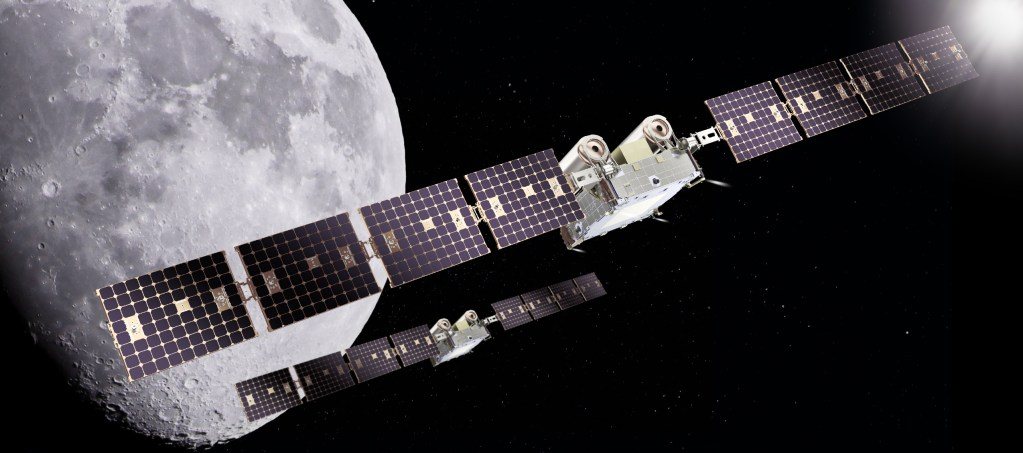
NASA has chosen Advanced Space, the company behind the successful CAPSTONE cubesat, to build and fly a follow‑on mission that will demonstrate rendezvous and proximity operations around the Moon. The new mission, announced by the agency, builds on the pioneering work of CAPSTONE and aims to mature the autonomous maneuvering technologies critical for the Artemis lunar exploration campaign.
The original CAPSTONE spacecraft, launched in June 2022, was a pathfinder designed to validate the unique near‑rectilinear halo orbit planned for NASA’s Gateway outpost. Over the following months, the small satellite successfully entered and maintained this orbit, proving its stability and the navigation techniques needed for future crewed and robotic missions. Now NASA wants to take the next step by testing the ability of a small spacecraft to safely approach and operate near another vehicle in cislunar space.
Rendezvous and proximity operations — or RPO — are essential building blocks for a sustainable human presence beyond low Earth orbit. They enable spacecraft to dock with lunar orbiters, deliver cargo to a station like Gateway, and support satellite servicing or inspection missions. By performing such maneuvers around the Moon, the new Advanced Space mission will help engineers refine the guidance, navigation, and control systems that will be used by Orion, the Human Landing System, and other Artemis elements.
Advanced Space, based in Westminster, Colorado, already has deep experience with cislunar smallsats. The company not only built CAPSTONE but also operated it from a ground station network, demonstrating that small, cost‑effective spacecraft can perform complex tasks far from Earth. The successor mission will leverage this heritage while introducing new sensor and propulsion technologies to handle the closer‑range operations that CAPSTONE did not attempt.
NASA’s selection is part of a broader push to develop innovative, low‑cost solutions for lunar exploration. The agency has increasingly turned to commercial smallsat providers for risk‑reduction demonstrations that can be flown quickly and at a fraction of the cost of traditional large‑scale missions. CAPSTONE, for instance, was developed under NASA’s Small Spacecraft Technology program and cost roughly $30 million, including launch. The new mission’s budget and timeline have not been disclosed, but it is expected to follow a similar streamlined approach.
Industry observers note that successful on‑orbit RPO testing could also open doors for future services such as satellite refueling, debris removal, or the assembly of large structures in lunar orbit. For NASA, the goal is to reduce reliance on Earth‑based tracking and give spacecraft the autonomy to perform these operations on their own, a necessity given the communications delays inherent in deep‑space flight.
The announcement comes as the Artemis program accelerates toward landing the first woman and the next man on the lunar surface as early as 2025, with Gateway deployment planned later this decade. Every capability that can be tested with small, affordable orbiters helps lower risk for those high‑profile missions. Advanced Space’s latest contract signals that NASA sees cislunar smallsats not as one‑off experiments but as a permanent component of the lunar infrastructure.
With the CAPSTONE precedent already giving engineers confidence in the near‑rectilinear halo orbit, the next step is to prove that vehicles can move safely and precisely around the Moon. If the new mission succeeds, it will mark another milestone in humanity’s return to the lunar environment and lay the groundwork for even more ambitious operations, from orbital assembly to deep‑space transport.