NASA has decided to switch the launch vehicle for an upcoming space weather mission from the Vulcan Centaur rocket to SpaceX's Falcon Heavy, marking another change in the mission's launch plans. The decision, announced recently, reflects ongoing adjustments in the agency's launch procurement strategy as it seeks reliable and timely access to space for critical scientific payloads.
The mission, designed to study space weather phenomena that can affect satellites, communications, and power grids on Earth, was originally slated to fly on United Launch Alliance's (ULA) Vulcan Centaur rocket. However, delays in Vulcan Centaur's development and certification process prompted NASA to reassign the launch to SpaceX's Falcon Heavy, a proven heavy-lift vehicle with a strong track record of successful missions.
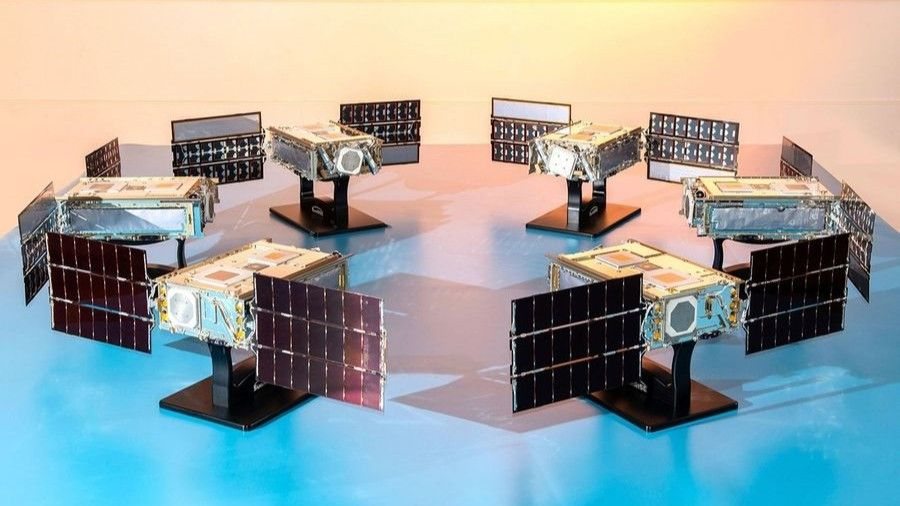
Space weather missions are vital for understanding and predicting solar activity, such as solar flares and coronal mass ejections, which can disrupt technology and infrastructure. The payload, which includes instruments to monitor solar wind and magnetic fields, will provide data to improve forecasting models and protect both space-based and ground-based systems.
This is not the first time the Vulcan Centaur has been swapped out for a mission. The rocket, which is still undergoing its certification process for national security and NASA launches, has faced multiple delays since its initial development. ULA has been working to complete the rocket's first launch and subsequent certification flights, but the timeline has slipped, leading some customers to seek alternative launch providers.
SpaceX's Falcon Heavy, which first flew in 2018, has become a go-to option for heavy-lift missions, including NASA's Psyche asteroid mission and the GOES-U weather satellite. Its reliability and performance have made it an attractive choice for high-priority payloads, especially when schedule certainty is a concern.
The decision to switch to Falcon Heavy underscores the competitive dynamics in the launch industry, where multiple providers vie for government contracts. NASA's Launch Services Program, which procures launches for scientific missions, evaluates factors such as cost, schedule, and vehicle readiness when selecting rockets. In this case, the agency determined that Falcon Heavy offered the best path forward for meeting the mission's timeline.
The space weather mission is part of a broader effort to enhance the nation's resilience to space weather events. The National Oceanic and Atmospheric Administration (NOAA) and NASA collaborate on such missions, which are increasingly important as reliance on satellite technology grows. Solar storms can cause widespread disruptions, from GPS errors to power outages, making accurate forecasting a national priority.
ULA, a joint venture between Boeing and Lockheed Martin, has been developing the Vulcan Centaur to replace its Atlas V and Delta IV rockets. The rocket uses a new first stage powered by Blue Origin's BE-4 engines and a Centaur upper stage. While ULA has secured several contracts for Vulcan Centaur, including for national security launches, the vehicle has yet to complete its first flight, which is now expected in early 2024.
SpaceX, meanwhile, has continued to expand its launch manifest with Falcon 9 and Falcon Heavy, as well as the fully reusable Starship system under development. The company's ability to offer competitive pricing and rapid launch cadence has made it a dominant player in the commercial and government launch markets.
The reassignment of the space weather mission to Falcon Heavy is expected to proceed smoothly, with launch preparations underway. NASA and SpaceX will work together to integrate the payload and ensure all mission requirements are met. The launch date has not been finalized, but it is anticipated within the next few years.
This development highlights the evolving landscape of space launch services, where flexibility and reliability are paramount. As NASA continues to pursue its scientific objectives, the agency will likely continue to leverage a mix of launch providers to ensure mission success.