Nine orbital launches are scheduled worldwide this week, spanning Earth observation, cargo resupply, classified national security missions, and commercial satellite deployments. The manifest includes two Falcon 9 flights from California, a Vega C from French Guiana, a Soyuz carrying supplies to the International Space Station, and five launches from China.
The week opened with a Vega C lifting off from the Ensemble de Lancement Vega complex at the Guiana Space Centre on Tuesday, Sept. 15, at 01:21 UTC. The medium-lift rocket flew a northerly trajectory to Sun-synchronous orbit, carrying two payloads built by Thales Alenia Space. The primary passenger, Sentinel-3C, is a 1,143-kilogram Earth observation satellite developed by the European Space Agency under the Copernicus program. Its companion, FLEX, also an ESA mission, will study the health of the world's vegetation. The four-stage Vega C can deliver up to 2,300 kilograms to Sun-synchronous orbit, using solid rocket motors for its first three stages and a liquid-fueled upper module for precise orbital insertion.
China accounted for five of the week's scheduled launches. A ZhuQue-2E from Landspace lifted off from Site 96A at the Jiuquan Satellite Launch Center on Sept. 15 at 06:26 UTC, flying southward to polar orbit with ten communications satellites for the SpaceSail Polar Group. The methane-fueled rocket produced 3,312 kilonewtons of thrust at liftoff. Later that day, Orienspace's Gravity 1 was expected to launch from the Haiyang offshore platform in the Yellow Sea during a window opening at 09:50 UTC, targeting low-Earth orbit with an undisclosed payload. The four-stage vehicle relies on seven solid rocket boosters and generates 5,880 kilonewtons at liftoff.
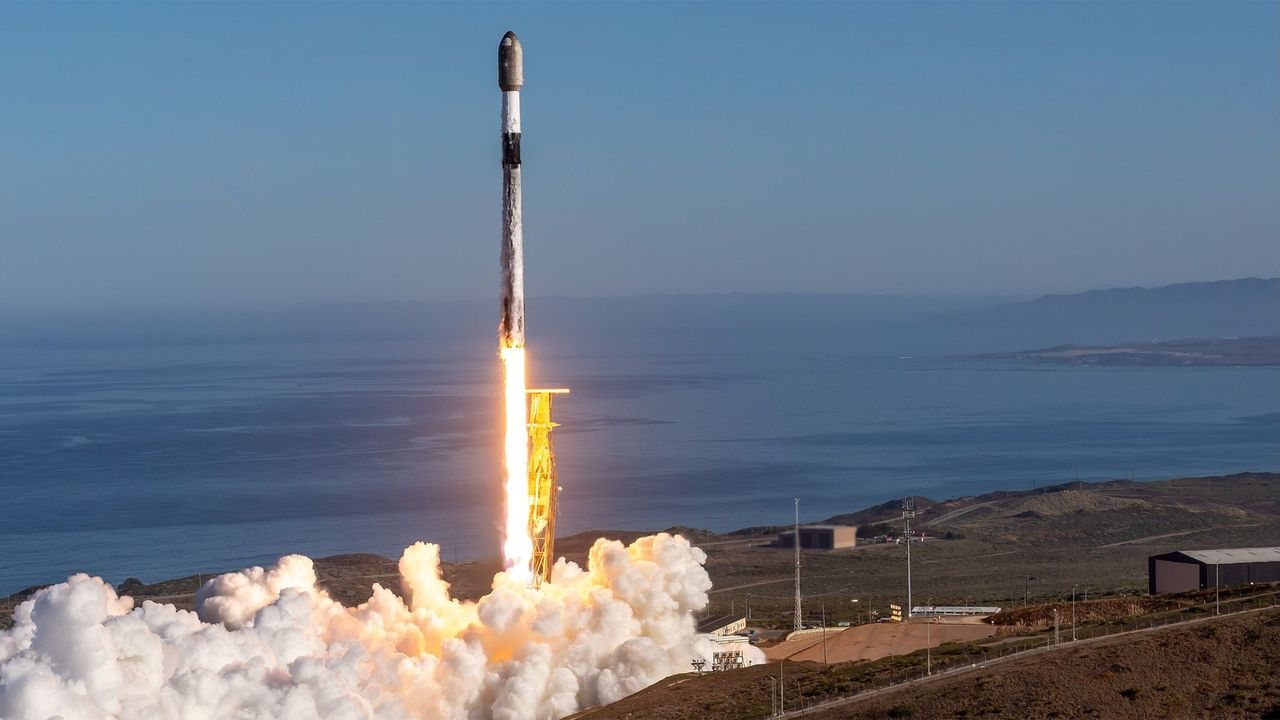
SpaceX planned its first mission of the week from Space Launch Complex 4 East at Vandenberg Space Force Base in California on Sept. 15. A Falcon 9 was set to fly a southerly trajectory during a four-hour window opening at 6:00 PM PDT, delivering the classified USSF-259 payload for the U.S. Space Force. The first stage, booster B1097, was making its 13th flight and was to be recovered on the droneship Of Course I Still Love You in the Pacific Ocean. The mission marks SpaceX's 720th overall launch and its 106th Falcon 9 flight of the year.
On Sept. 16, a Russian Soyuz 2.1b is scheduled to launch the Progress MS-35 cargo vehicle from Site 31/6 at the Baikonur Cosmodrome in Kazakhstan. The instantaneous launch window opens at 13:33:53 UTC, with the rocket flying a northeasterly trajectory toward the International Space Station. Progress MS-35 will dock to the Poisk module on the station's Russian segment. The three-stage Soyuz 2.1b uses kerosene and liquid oxygen propellants and will be flying its sixth mission of 2026 and 105th overall.
Two more Chinese launches round out the week. A Chang Zheng 12 is set to lift off from Commercial Launch Complex 2 at the Wenchang Space Launch Site on Sept. 17 during a 29-minute window opening at 12:25 UTC, carrying an undisclosed payload to an undisclosed orbit. The two-stage medium-lift rocket can deliver up to 12,000 kilograms to low-Earth orbit. A Kuaizhou 11 is also expected from Site 95A at the Jiuquan Satellite Launch Center, though its payload and timing were not immediately detailed.
The week's schedule reflects the continued expansion of global launch activity, with government agencies, commercial operators, and national security programs all competing for orbital access. Earth observation, communications, and resupply missions dominate the manifest, underscoring the growing demand for both scientific data and orbital infrastructure.