Engineers are working urgently to save a commercial spacecraft that was supposed to give NASA's long-serving Swift observatory a new lease on life, after the vehicle began spinning out of control in orbit. The mission team has not ruled out recovery, saying simply: «We are not giving up yet.»
Swift is one of NASA's most productive space telescopes. Launched in 2004 and later renamed the Neil Gehrels Swift Observatory, it was built to detect gamma-ray bursts, the most violent explosions in the universe, and then quickly turn to study their glowing afterglows in X-ray, ultraviolet, and optical light. Over more than two decades, it has helped researchers investigate black holes, neutron stars, supernovae, and the distant early universe. It also alerts a worldwide network of telescopes when sudden cosmic events occur.
The private rescue mission was intended to solve a problem that has been growing for years. Swift's orbit is slowly decaying under the influence of atmospheric drag, and the telescope does not have enough propellant to keep raising itself indefinitely. Without help, the observatory could eventually lose altitude to the point where it would no longer be able to function safely.
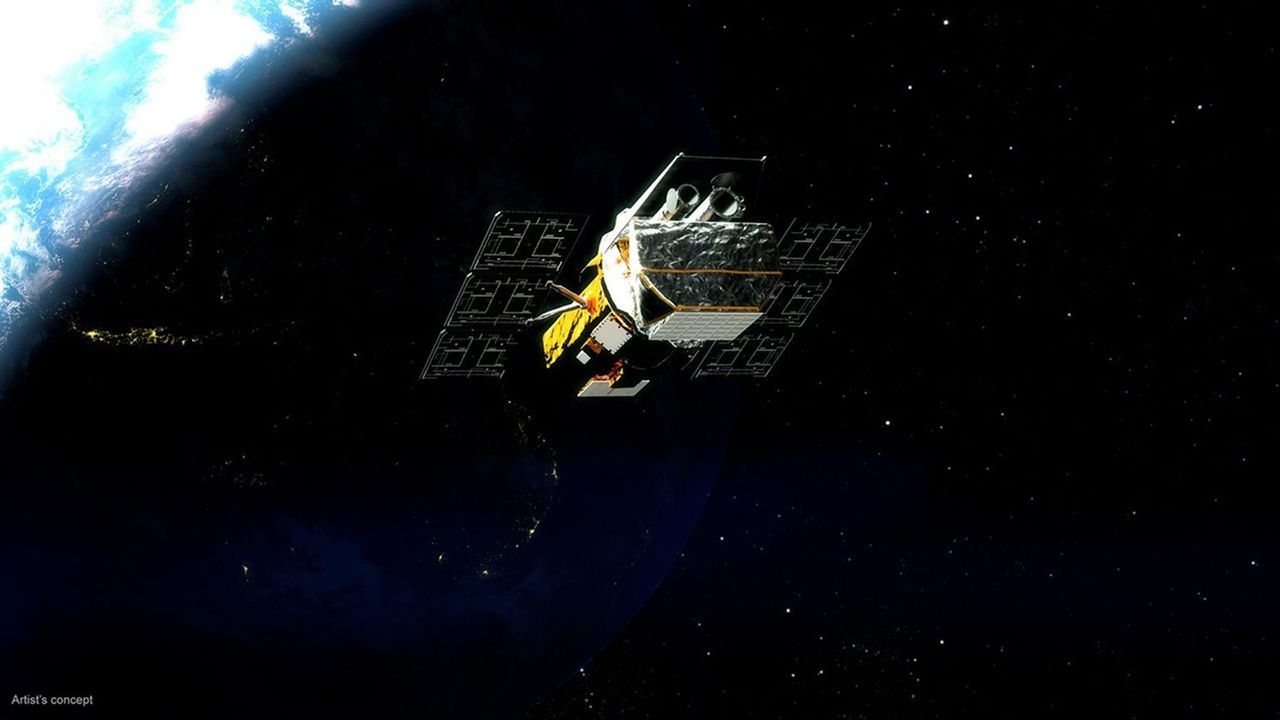
The plan called for a commercial servicing vehicle to reach Swift, match its path around Earth, and use the spacecraft's own propulsion to lift the telescope to a more stable orbit. Such a maneuver would extend the mission by potentially years and allow astronomers to continue using an instrument that has become a cornerstone of time-domain astronomy.
That plan now faces a serious challenge. Shortly after mission operations got under way, the servicing vehicle suffered an anomaly and started tumbling. Attitude control is critical for any mission that involves close approach and coordinated motion with another satellite. A spinning spacecraft cannot point its antennas, sensors, or thrusters accurately, which makes the planned rendezvous and boost impossible to attempt until engineers regain stable pointing.
Ground teams are analyzing telemetry from the vehicle and have begun working through recovery procedures. The fact that they remain in contact with the spacecraft is seen as an encouraging sign, but the outcome is still unknown. Engineers have not yet explained what triggered the spin or how long it will take to correct it.
For NASA, the situation raises the stakes beyond a single satellite. Swift has spent more than twenty years watching the sky for transient events, often detecting the first signs of explosions that other observatories then study in greater detail. Losing that capability, even for a short time, would weaken the global network of telescopes that rely on quick alerts from orbit.
If the rescue vehicle cannot be stabilized, the servicing campaign will suffer a major setback, though Swift itself would remain in orbit for the time being and could continue some science operations. In the longer term, orbital decay would eventually bring the mission to an end unless another way is found to raise the satellite.
The situation also illustrates how difficult in-orbit servicing really is. Several companies are trying to build spacecraft that can approach, inspect, refuel, or reposition satellites already in orbit. Those efforts are meant to reduce debris, extend the life of existing assets, and open a new market for commercial space services. But the technology is still young, and even small errors can put a mission in danger.
For now, engineering teams are focused on one goal: steadying the private spacecraft and returning it to a condition that would allow the rescue attempt to continue. Mission managers are expected to provide more details as they learn more about the vehicle's health. As the team put it, the effort is not over.