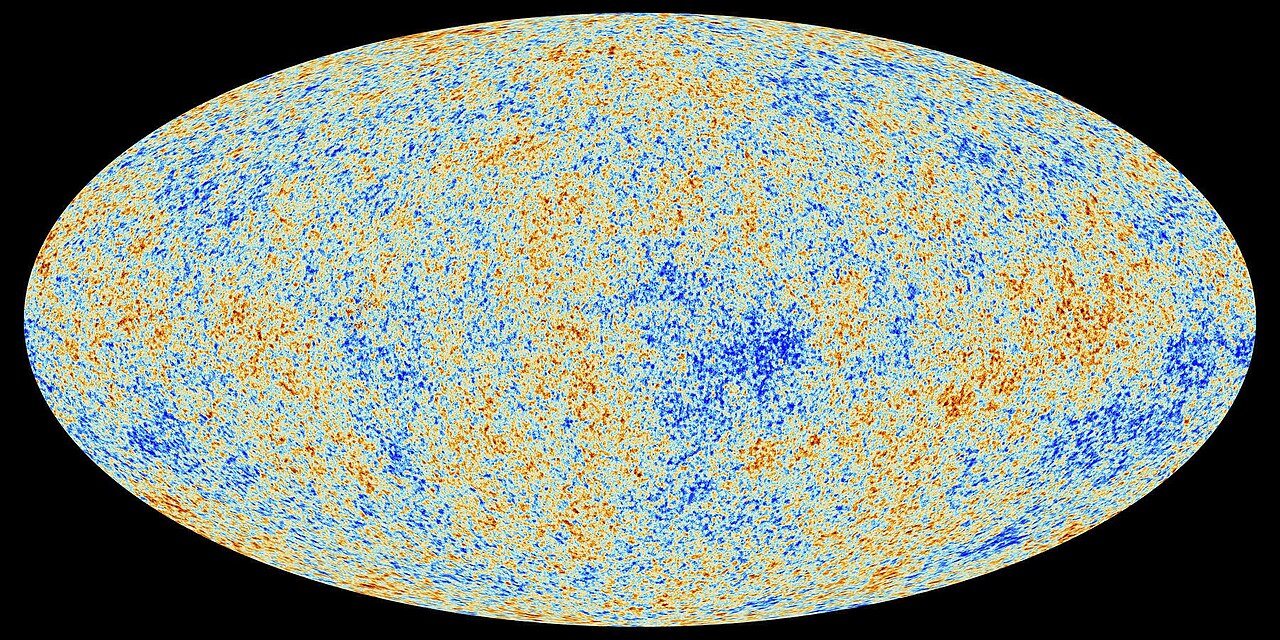
Scientists studying the oldest light in the universe have reported faint hints of a rotation in that ancient glow, a pattern that could point to physics beyond the current standard model. The signal is tentative, but if it holds up, it could offer a rare clue about the mysterious forces thought to shape the cosmos, including dark matter and dark energy.
The light in question is the cosmic microwave background, the radiation left over from roughly 380,000 years after the Big Bang. Its patterns are closely studied because they encode information about the early universe. Researchers have long searched it for subtle features that existing theories cannot easily explain, and the reported rotation is one such anomaly. Researchers at the University of California, San Diego, have now developed a new analytical technique designed to test it more rigorously.
The central challenge is that the faint effect is small enough to be mimicked by errors in the telescopes used to observe it. Instruments can introduce distortions, and distinguishing a genuine cosmic signal from a measurement artifact is notoriously difficult. The new method is intended to rule out those instrumental explanations, which the researchers consider the leading alternative at present. Only if such errors can be excluded would the signal merit serious consideration as evidence of new physics.
For now, the finding remains unconfirmed. Scientists emphasize that the rotation has not been established as real, and further observations and analysis will be needed before any conclusion can be drawn. Should the signal survive these tests, it could open a new line of inquiry into how the universe evolved and what unseen components drive its expansion. Until then, the work stands as a careful step toward separating a possible discovery from an observational mistake.
Credit. Based on reporting for ScienceDaily. Is this your work? Write to us.
27