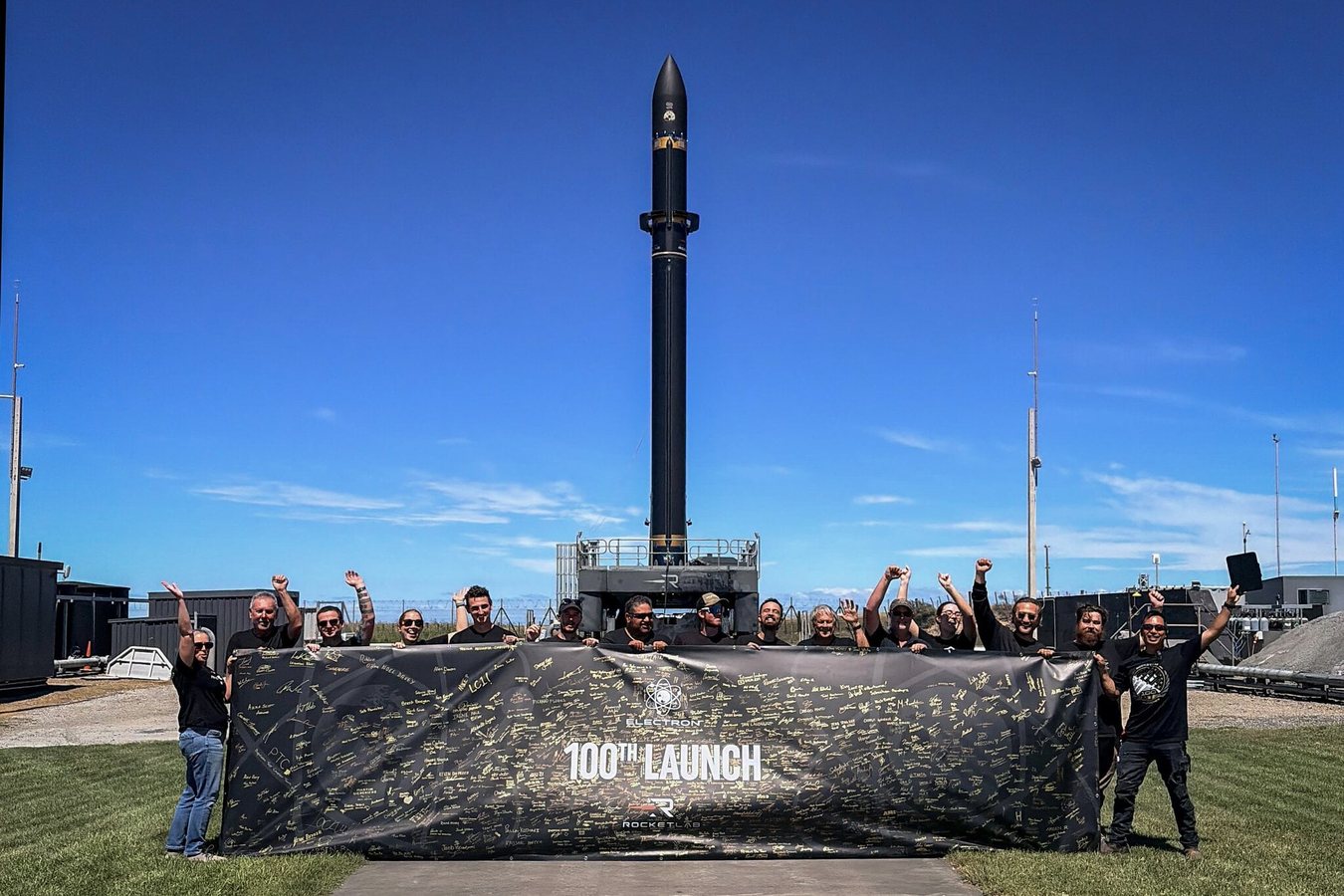
Rocket Lab's Electron rocket has flown its 100th mission, making it the fastest commercial rocket to reach that milestone. The launch took place on November 14 from the company's LC-1 site in New Zealand and carried the iQPS YAMATSUMI-II radar satellite into low-Earth orbit. The flight marks a significant step for a vehicle that has become a workhorse for small satellite operators seeking regular access to orbit.
Electron has maintained a reliability rate of about 96 percent across its orbital and HASTE flights, according to the company's reporting. Rocket Lab says it already has another 100 launches on its manifest, a backlog that points to sustained demand for dedicated small-rocket service. The steady cadence has allowed the company to build a track record that many newer launch providers are still working to establish.
Attention is also turning to Neutron, the company's larger reusable rocket. Its debut flight is now expected no earlier than 2027 from Wallops Island in Virginia. The second stage and thrust module have arrived at LC-3 for testing, and the stage 1 forward dome has been built and is undergoing material analysis, all steps toward the first launch.
The company's commercial position has strengthened alongside its hardware progress. Rocket Lab signed eight new Neutron contracts in the third quarter, worth about $1 billion in total, and reported a record backlog of $3.57 billion. Those figures suggest growing customer confidence as the company prepares to move beyond Electron's payload class.
Rocket Lab also has ambitious work planned beyond launch services. A robotic arm designed for in-orbit servicing is scheduled for a NASA demonstration in late 2027. Separately, twin Blue and Gold spacecraft are on track to reach Mars orbit in September 2027, extending the company's reach from Earth orbit into deep space.
Credit. Based on reporting by Eleanor Day for NASASpaceflight. Is this your work? Write to us.
33