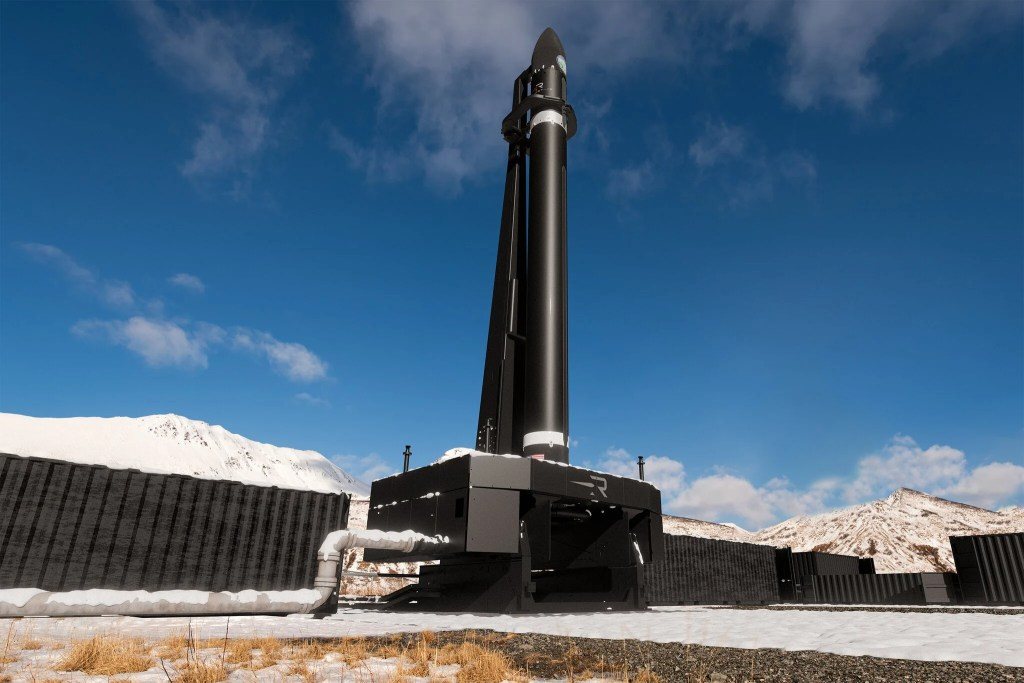
Rocket Lab has announced plans to open a new launch site in Alaska under a $266 million contract with the U.S. Space Force, significantly expanding the company’s role in national security space operations. The facility, located on Kodiak Island, will be dedicated to suborbital missions aimed at testing military technologies and systems.
The agreement covers up to 18 suborbital launches, providing the Space Force with a dedicated and responsive launch capability for experiments and demonstrations. These missions are expected to support a range of defense-related objectives, including the testing of sensors, communications equipment, and other payloads in near-space environments.
Rocket Lab, best known for its Electron rocket and small satellite launch services, has been increasingly focused on government and military contracts. The company already operates Launch Complex 1 in New Zealand and Launch Complex 2 at Wallops Island, Virginia, the latter of which is designed for responsive launch needs of the U.S. defense and intelligence communities.
The new Alaska site will be built at the Pacific Spaceport Complex – Alaska on Kodiak Island, a location that offers unique advantages for polar and high-inclination orbits. The site’s geographical position allows for direct access to trajectories over the Pacific Ocean, which is particularly valuable for certain types of classified military tests and space situational awareness missions.
Rocket Lab’s chief executive, Peter Beck, described the contract as a milestone for the company’s growth in the defense sector. The deal also underscores the Space Force’s push to diversify its launch infrastructure and reduce reliance on traditional government-operated ranges. By partnering with commercial providers like Rocket Lab, the military aims to achieve faster turnaround times and lower costs for suborbital testing.
Suborbital launches, while not reaching orbital velocity, are critical for validating technologies that will later fly on orbital or deep-space missions. They allow engineers to test hardware under realistic flight conditions without the complexity and expense of a full orbital insertion. The ability to conduct these tests from a remote, secure location like Kodiak Island adds an extra layer of operational flexibility.
Rocket Lab has already demonstrated its suborbital capability with the Electron rocket’s variants, including a dedicated suborbital configuration known as HASTE (Hypersonic Accelerator Suborbital Test Electron). That vehicle is designed to support hypersonic research and other high-speed flight tests for the Department of Defense. The Alaska site will likely support similar missions, although specific payloads have not been disclosed.
The Space Force’s investment in the Alaska facility aligns with broader efforts to modernize the United States’ space launch infrastructure. In recent years, the military has awarded multiple contracts to commercial launch providers to develop new capabilities and launch sites, particularly in remote northern locations that offer favorable conditions for polar orbits and overflight safety.
Construction of the new launch pad and associated facilities on Kodiak Island is expected to begin in the near future, with operations commencing within the contract timeline. Rocket Lab has not provided a specific construction schedule but noted that the site will leverage existing infrastructure at the Pacific Spaceport Complex to reduce costs and accelerate development.
The deal is one of the largest single contracts Rocket Lab has secured to date and signals growing trust from the U.S. military in the company’s ability to deliver reliable, cost-effective launch services. It also highlights the increasing importance of commercial partnerships in achieving national security space objectives. With the Alaska site, Rocket Lab adds another high-latitude launch capability to its portfolio, complementing its existing facilities and positioning the company for further growth in the defense market.