Astronomers have confirmed a striking new weather pattern on Saturn: a decagon-shaped atmospheric feature near the planet's south pole, a discovery that adds a fresh layer of complexity to our understanding of the gas giant's dynamic climate system. The geometric structure, with 10 clearly defined sides shaped by powerful winds, was first spotted by amateur astronomers in 2024 and has now been verified using images from the Hubble Space Telescope taken between 2023 and 2025.
The feature is reminiscent of the famous hexagonal weather pattern that has been observed at Saturn's north pole for more than four decades, but it is not identical. According to Amy Simon of NASA's Goddard Space Flight Center in Maryland, the southern decagon is larger than its northern counterpart and appears to move more in sync with the planet's rotation. The team's findings were published in the journal Science Advances.
«We confirmed the existence of the decagon with absolute clarity,» said Agustín Sánchez-Lavega of the University of the Basque Country in Spain, a member of the research team. The structure measures approximately 13,000 kilometers across, making it slightly wider than Earth. Its discovery was entirely unexpected, as no similar feature had been observed at the south pole in decades of monitoring. «It most certainly wasn't expected,» Simon said. «The hexagon has been there for decades, but this is something new.»
The exact origins of the decagon remain unclear. Researchers believe it likely results from a large atmospheric wave shaped by wind from a powerful jet stream that meanders near the planet's south pole. Its formation may be linked to a large nearby storm, although the precise mechanism is still a mystery. «It's a very complicated fluid dynamics sort of thing,» Simon explained. «It's telling us something about what's going on deeper below the clouds.»
The discovery was made possible by a combination of amateur observations and archival Hubble data. Because no spacecraft has orbited Saturn since the Cassini mission ended in 2017, scientists have had to rely on Earth-based and Earth-orbiting telescopes to track changes in the planet's atmosphere. This gap in continuous monitoring means the exact date of the decagon's formation is unknown, but its appearance marks a significant shift in the planet's observable weather patterns.
Andrew Ingersoll of the California Institute of Technology, who was not involved in the study, said the discovery highlights that Saturn is a dynamic, changing world. «It's very interesting to see these features,» he said. No similar polygonal pattern has been observed on any other planet, although Jupiter does have an arrangement of cyclones at its poles. «People didn't really predict that such an organised, polygonal pattern would exist on another planet,» Ingersoll added.
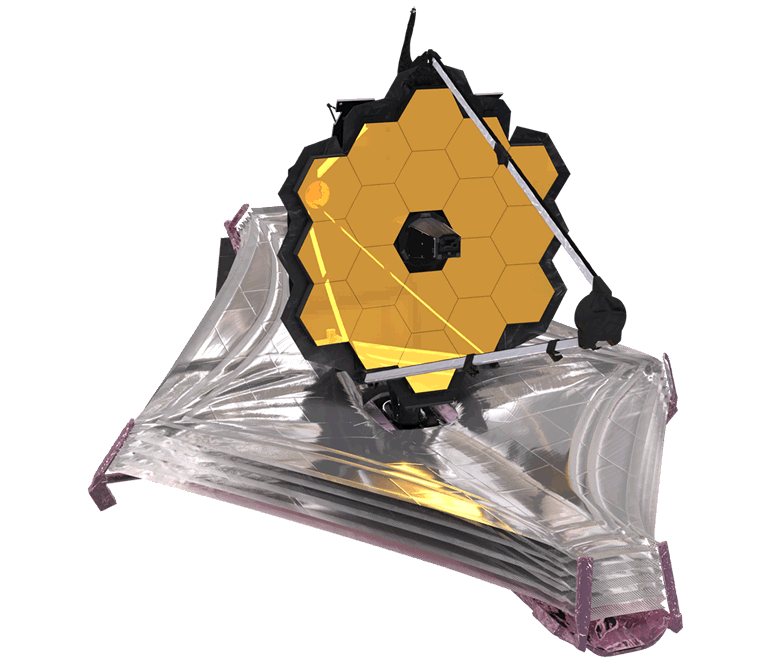
The longevity of the decagon is uncertain. Other telescopes, including the James Webb Space Telescope, are positioned to study the feature in greater detail, though competition for observation time is intense. «We'll look as frequently as anyone will let us,» Simon said. The discovery underscores the value of continued monitoring of planetary atmospheres and raises new questions about the fluid dynamics at work deep within Saturn's cloud layers.
83