The upper stage of a SpaceX Falcon 9 rocket, abandoned in a highly eccentric orbit around Earth since January 2025, is on a collision course with the Moon and will impact the lunar surface on Wednesday, August 5, 2026, at approximately 06:35 UTC. The impact site is located near the Einstein crater, a 170-kilometer-wide feature on the eastern edge of the Moon's visible hemisphere. The event marks the latest chapter in the history of artificial objects striking the Moon, following deliberate crashes by Soviet and NASA probes and accidental impacts by Chinese rocket stages.
The Falcon 9 upper stage, designated 2025-010D or Norad 62719, was used on January 15, 2025, to launch the Blue Ghost-1 and Hakuto-R Resilience landers toward the Moon. After deploying those payloads, the rocket stage was left in a highly elliptical orbit with a perigee beyond the Moon's orbit, making a future collision inevitable. The impending impact was first predicted in May 2026 by astronomer Bill Gray, creator of the Find_Orb software, who also correctly forecast the accidental lunar crash of a Chinese Long March 3C rocket stage in March 2022.
The rocket stage is essentially a metal cylinder about 12 meters long, 4 meters wide, and weighing roughly four metric tons. It will strike the lunar surface at a speed of approximately 2.43 kilometers per second, at an angle of 34 degrees from the vertical. The impact is expected to produce three distinct phases: a brief flash of light lasting less than a second, caused by the vaporization of the rocket material and lunar soil; a plume of dust and vapor that will expand over several minutes; and the formation of a final impact crater estimated to be between 20 and 30 meters in diameter. There is also a possibility of a double crater, similar to what occurred with the Long March 3C impact, if the rocket structure fragments upon first contact.
The flash's apparent brightness is uncertain, with optimistic models estimating it around magnitude +3, but it will be challenging to observe because the impact occurs on the sunlit side of the Moon. At the time of impact, the Moon will be near its last quarter phase, with 56 percent illumination, and the Einstein crater region will be in daylight. For observers in Italy, the Sun will be about 25 degrees above the horizon, and the Moon will be at an altitude of about 48 degrees toward the southwest, making the intense daylight likely to reduce the signal-to-noise ratio of the impact flash. No impact flash has ever been recorded on the sunlit side of the Moon, so this event represents a significant observational challenge.
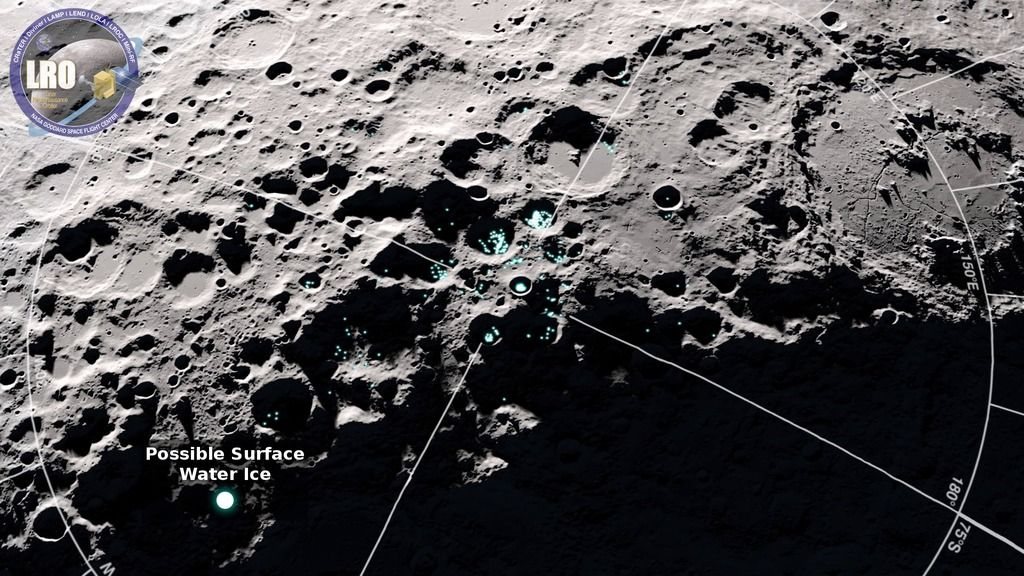
The Moon's surface bears the marks of billions of years of impacts from asteroids and meteoroids, with about 300,000 craters larger than one kilometer in diameter and 234 larger than 100 kilometers. The lunar maria are ancient impact basins filled by lava flows. In modern times, most impacts are from small meteoroids of cometary or asteroidal origin. The first artificial object to hit the Moon was the Soviet probe Luna 2 in 1959, followed by deliberate crashes of Saturn IV-B rocket stages and Apollo lunar modules used to calibrate seismometers. More recent impacts include the European Space Agency's Smart-1 in 2006, NASA's LCROSS mission in 2009, and the accidental crash of the Chinese Long March 3C stage in 2022. The Falcon 9 impact will be the second accidental lunar crash by a human-made object.
Researchers plan to attempt observations of the event despite the difficulties. The impact flash, though brief, could provide valuable data on the properties of the lunar regolith at the impact site. The subsequent plume of debris may also offer insights into the composition of the subsurface material. The event underscores the growing issue of space debris and the need for better tracking and mitigation of abandoned rocket stages in high orbits. As lunar exploration intensifies, with multiple missions planned by NASA, China, and private companies, the risk of accidental impacts is likely to increase, making predictive modeling and observation of such events increasingly important.