A four-tonne piece of a SpaceX Falcon 9 rocket is set to crash into the moon on Wednesday at about 5,400 miles per hour, an unintentional collision that poses no danger to Earth but will leave a new crater on the lunar surface and give scientists an opportunity for further research.
The object, which is roughly the size of a school bus, is the discarded second stage of the Falcon 9 rocket that launched a lunar lander built by Firefly Aerospace toward the moon in January 2025. A rocket's second stage is the part that finishes the climb after the main booster separates, and in this case it was left in space once its job was done. The stage has been floating there since last year, and its orbit has now put it on a direct collision course with the moon.
The impact is not part of any planned mission. Upper stages of rockets are typically left in orbit after releasing their payloads, and this one followed that pattern. With no way to adjust its own course, the stage's path has been shaped entirely by the gravitational pull of the Earth, the moon and the sun. Over the months that followed the launch, those forces gradually changed its trajectory, eventually sending it toward the lunar surface.
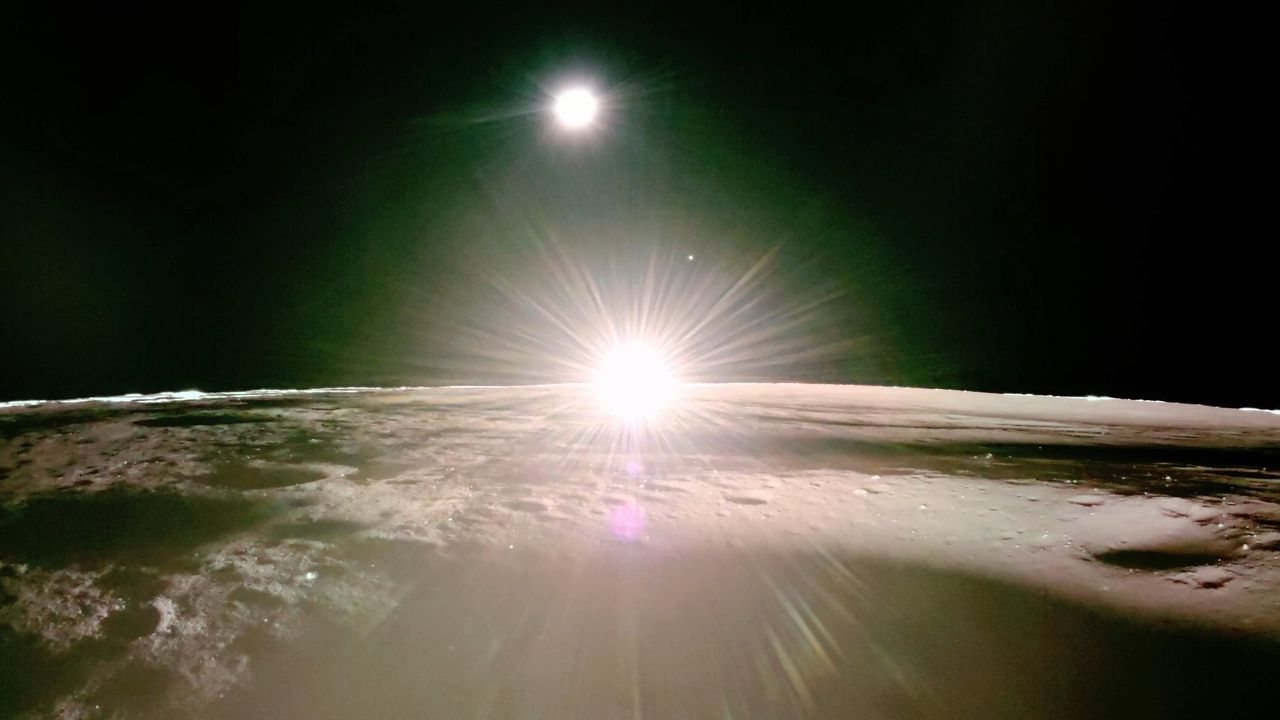
Because the moon has no atmosphere to slow the object down or break it up, the stage will strike the ground at its full speed of 5,400 miles per hour. The energy released by the collision will be considerable, and the impact is expected to dig out a fresh crater and fling lunar material across the surrounding area.
For researchers, that accidental excavation is a rare chance to inspect material from below the lunar surface. The stage will leave behind a newly formed crater, and the ejected soil and rock around it can be studied to learn more about the moon's composition. Because the event has been predicted rather than detected after the fact, scientists can in principle compare observations of the region taken before and after the crash and measure the exact effects of a known impact.
While the crash is dramatic, it carries no risk for people on Earth. The moon is a natural final destination for hardware left drifting in space, and the stage will simply add one more crater to a surface already covered with impact scars from natural objects. The moon has been shaped by collisions for billions of years, and the craters that cover its surface are among the most studied features in planetary science. The new crater will be small next to the vast basins formed by giant impacts in the moon's early history, but unlike those ancient features, this one will have a known time and cause.
The event also draws attention to the growing amount of debris in orbit around the Earth. Discarded rocket stages, spent satellites and other fragments remain in space long after their missions end, and tracking them is an increasing focus for space agencies and private operators. Most objects eventually fall back to Earth and burn up in the atmosphere, but those left in higher, more elongated orbits can, over time, be pushed onto very different paths.
For the commercial space industry, the episode is a reminder that even a routine launch can have consequences that appear more than a year later. The Falcon 9 stage completed its task in January 2025, sending Firefly Aerospace's lunar lander on its way to the moon. Its final contribution will now be a new crater on the lunar surface, along with whatever scientific information researchers can gather from the impact.