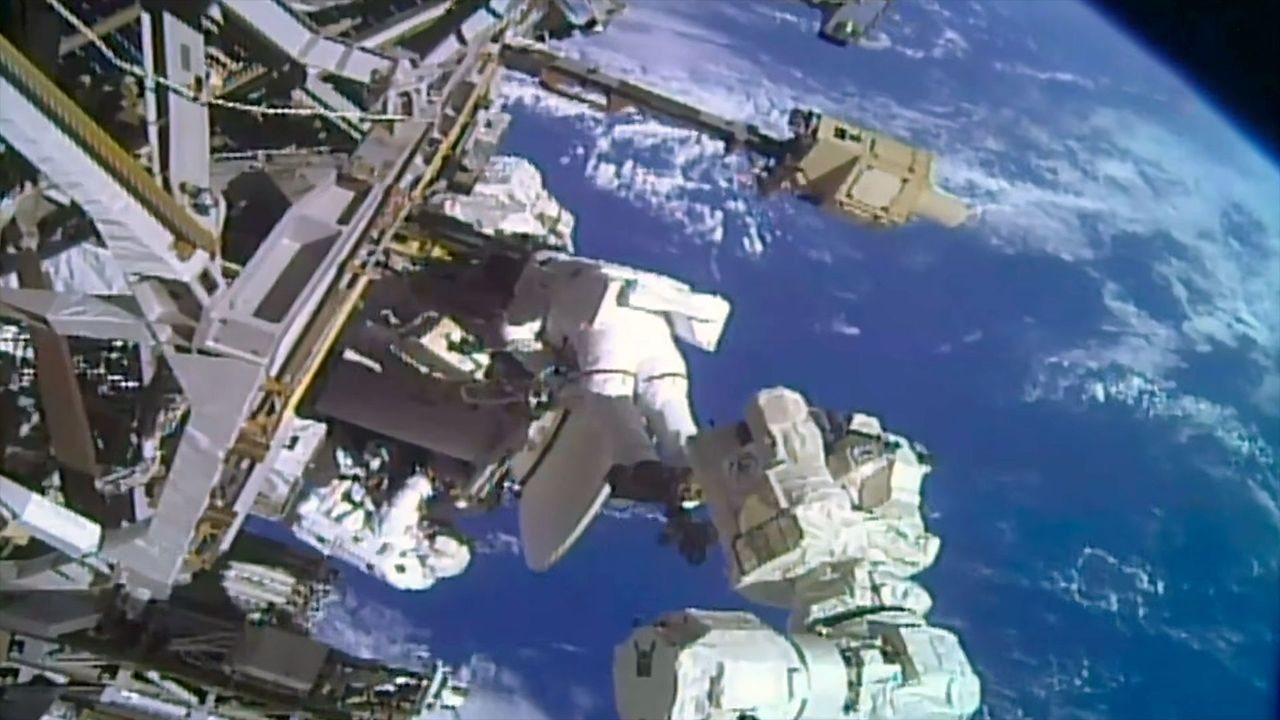
Two astronauts completed a spacewalk outside the International Space Station on Thursday to replace a faulty antenna, restoring a critical video transmission link that had been degraded for months. The repair ensures the station can continue sending high-definition video of operations, experiments, and future crew arrivals to mission control on Earth.
The spacewalk, which lasted just over six hours, focused on swapping out the failed S-band antenna assembly. The antenna is part of the station's communication system that relays video and data through NASA's Tracking and Data Relay Satellite network. Without it, the station would have been forced to rely on backup systems with limited bandwidth, reducing the quality and availability of live video feeds.
During the excursion, one astronaut remarked, «You just saved the video dish,» after the new antenna was successfully installed and checked. The comment captured the significance of the repair, which had been scheduled after engineers detected the antenna's performance had deteriorated. The faulty unit was removed and stowed for return to Earth, while the new antenna was connected and tested on the spot.
The spacewalk was the first for one of the astronauts and the fourth for the other, both of whom have been living aboard the station since their arrival earlier this year. The pair worked methodically through the replacement procedure, following a checklist that had been rehearsed extensively on the ground. Mission controllers in Houston monitored every step, providing guidance and confirming that the new antenna was functioning properly before the astronauts moved on to secondary tasks.
The station's communication system is essential not only for video but also for command and telemetry data. The S-band antenna in question handles a specific frequency range used for voice communications and medium-rate data, including video. The backup system that had been in use since the antenna began failing is capable of supporting basic operations but cannot handle the full data load required for all station activities.
NASA had prioritized the repair because the station is preparing for a busy period of crew rotations and cargo missions. The new antenna restores full redundancy to the communication system, reducing the risk of data bottlenecks during critical operations. Engineers will continue to monitor the antenna's performance over the coming weeks to confirm it operates as expected in all modes.
The successful spacewalk adds to the station's long history of on-orbit maintenance, a capability that has proven vital since the outpost became operational more than two decades ago. Astronauts regularly perform spacewalks to repair or upgrade equipment, and the ability to replace components in orbit has extended the station's lifespan well beyond its original design.
With the antenna replacement complete, the crew will return to their regular schedule of scientific research and station maintenance. The next spacewalk is not expected until later this year, when astronauts will continue upgrades to the station's power system.
155