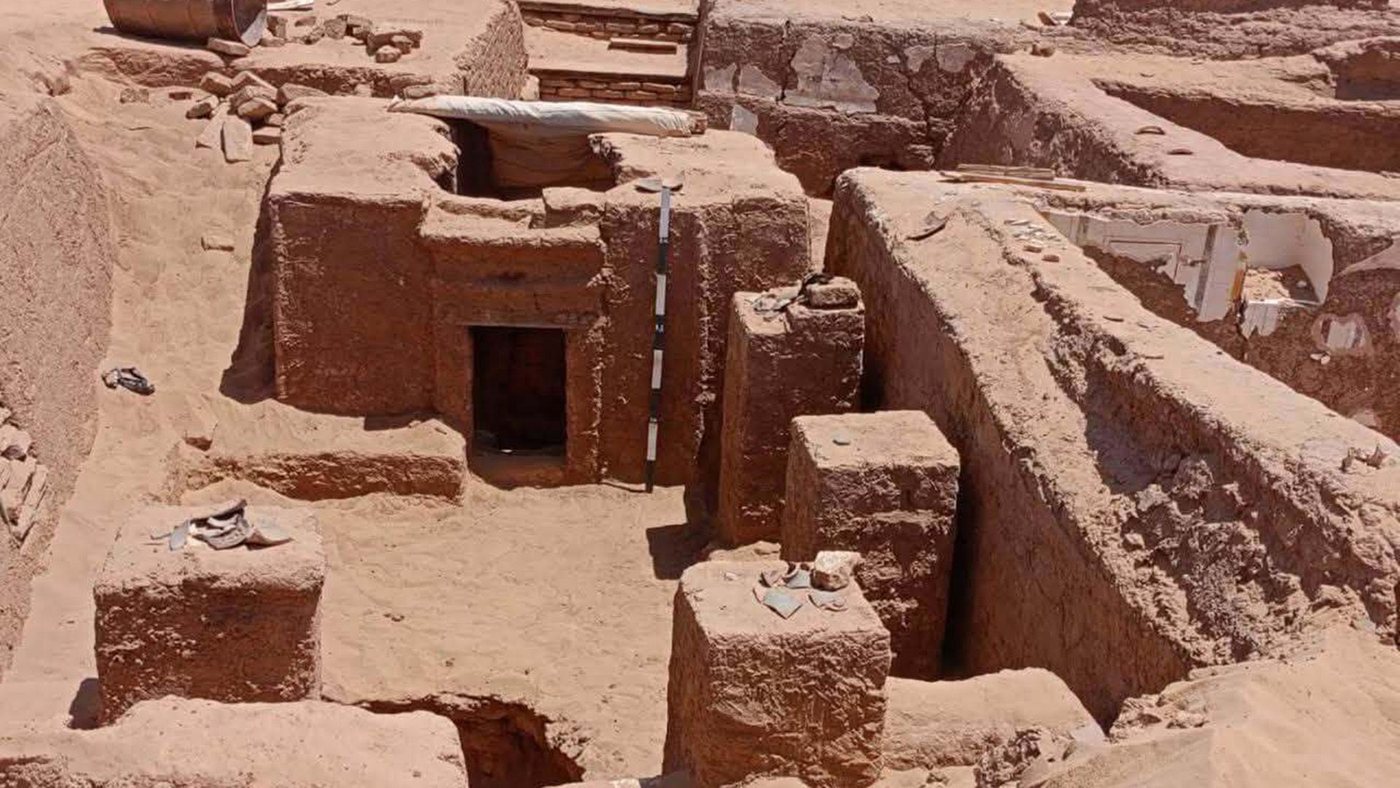
Archaeologists in Egypt have discovered a 1,700-year-old tomb containing a poem written in ancient Greek and a series of spells designed to protect the dead, according to a report in Live Science. The find sheds new light on funerary customs during Egypt's Roman period, when Greek and Egyptian cultural traditions often blended.
The tomb, dating to roughly the 4th century A.D., was found at an undisclosed location in Egypt. Inside, researchers identified a poem that begins with the words «Listen, father!» — a phrase that suggests the text was intended as a direct address, possibly from the deceased to a living relative or to a deity. The poem is written in ancient Greek, the administrative and literary language of Egypt under Roman rule.
Alongside the poem, the tomb contained a set of spells, known as magical formulae, meant to safeguard the deceased in the afterlife. Such spells were common in Egyptian funerary tradition, but the combination with a Greek poem is unusual and points to a fusion of religious and cultural practices. The spells may have been intended to ward off evil spirits, ensure safe passage through the underworld, or secure a favorable judgment.
The discovery adds to a growing body of evidence that Roman-era Egypt was a crossroads of languages and beliefs. Greek settlers, Egyptian priests, and Roman officials all left their mark on burial customs. The poem's opening invocation, «Listen, father!», could be a plea for protection or a declaration of identity, though scholars have not yet published a full translation or interpretation.
Archaeologists have not released the exact location of the tomb, likely to protect the site from looting. The team plans to analyze the inscriptions further, including the poem's meter and the specific words used in the spells, which may reveal the deceased's name, occupation, or religious affiliations. Such details are often crucial for understanding individual lives in antiquity.
The find is part of ongoing excavations that have yielded several late Roman tombs in recent years. These sites often contain a mix of Greek, Coptic, and demotic Egyptian texts, reflecting a multilingual society. The presence of a poem suggests the deceased may have been educated or wealthy, as literacy in Greek was not universal.
Funerary poems were not uncommon in the ancient world, but they rarely survive intact. This example, preserved on a tomb wall or a stone slab, offers a rare glimpse into how people mourned and remembered their dead. The spells, meanwhile, echo older Egyptian traditions, such as the Book of the Dead, which provided instructions for the afterlife.
Researchers caution that the tomb's contents have not yet been fully studied. The poem's meaning and the precise nature of the spells will require careful philological analysis. Nevertheless, the discovery underscores Egypt's role as a cultural melting pot in late antiquity, where Greek, Roman, and Egyptian influences coexisted.
The tomb is expected to be published in a peer-reviewed journal in the coming months. For now, it stands as a testament to the enduring human desire to protect loved ones beyond death, using whatever language and magic were available.
10