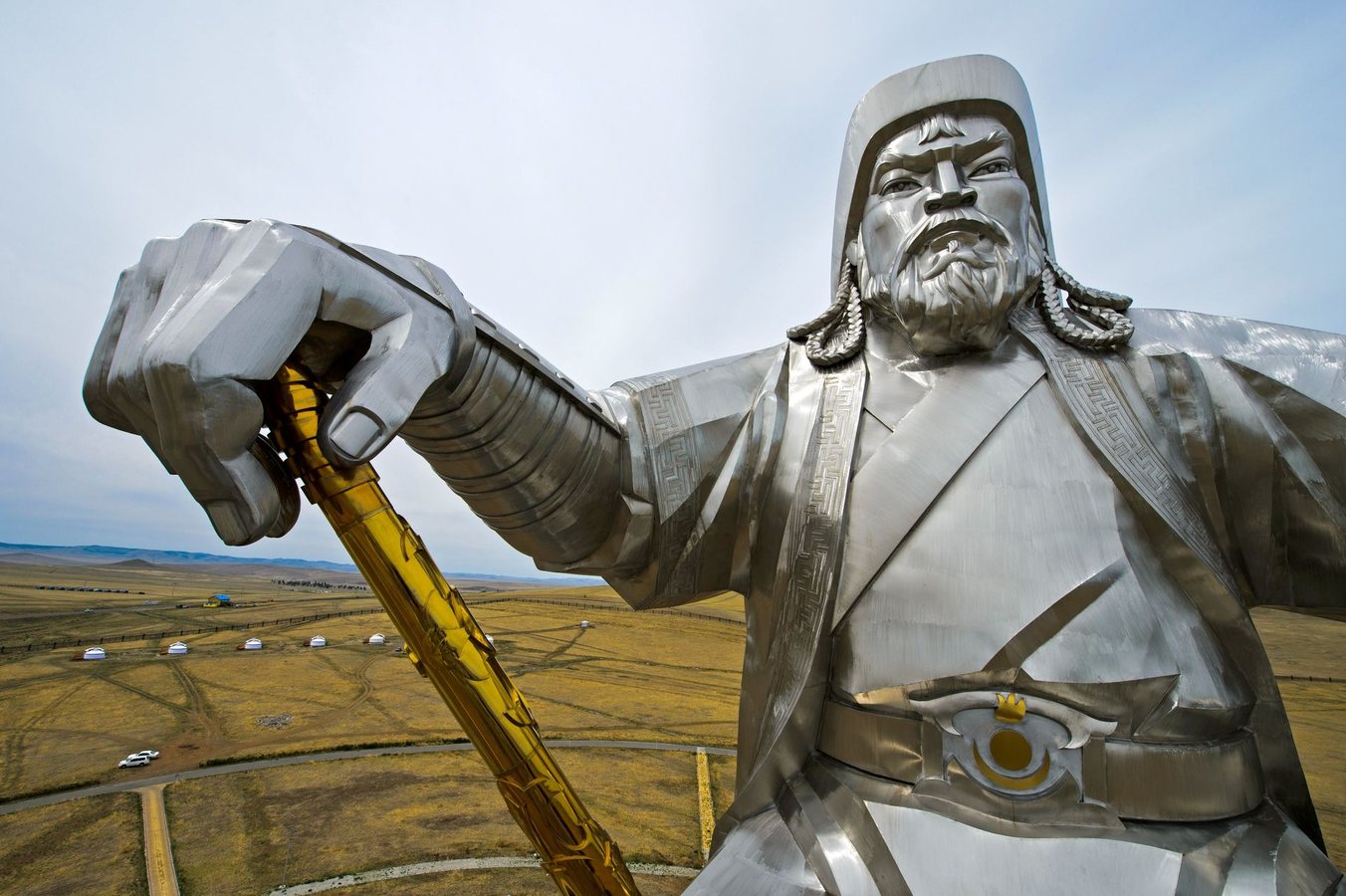
The tomb of Genghis Khan, the Mongol conqueror who founded the largest contiguous land empire in history, has never been located, and archaeologists say it may remain hidden forever. Known in his time as the «Disturber of the Universe», Genghis Khan died in 1227, but the location of his grave has eluded researchers for nearly eight centuries.
According to historical accounts, Genghis Khan was buried in secret, and those who attended his funeral were reportedly killed to protect the location. Some legends say a river was diverted over the grave, or that horses trampled the ground to obscure any trace. These stories, while unverified, reflect the extreme measures taken to keep the burial site hidden.
Modern archaeological efforts have focused on the Khentii Mountains in northeastern Mongolia, a region the Khan is believed to have held sacred. Expeditions using satellite imagery, ground-penetrating radar, and drones have surveyed large areas but have found no conclusive evidence of a tomb. In 2015, a team from the University of California, San Diego, used crowdsourced satellite imagery to search for archaeological features, but no royal burial was identified.
The search is complicated by cultural and legal factors. Many Mongolians consider the Khan's burial site sacred and oppose excavation. The Mongolian government has declared the area around the Khentii Mountains a protected zone, and disturbing it could violate both local taboos and national heritage laws. Archaeologists must therefore rely on non-invasive methods, which limits what they can discover.
Some scholars argue that the tomb may never be found because it was deliberately designed to be undiscoverable. The secrecy surrounding the burial was not only a practical measure but also a spiritual one, ensuring the Khan's final resting place would remain undisturbed for eternity. This has led some to call the hidden tomb Genghis Khan's «final victory» — a last triumph over his enemies and over time itself.
Despite the lack of success, interest in the search remains high. Each new technology brings fresh hope, but also new ethical questions about whether the tomb should be found at all. For now, the grave of the «Disturber of the Universe» stays where it has been for 800 years: hidden, protected, and silent.
10