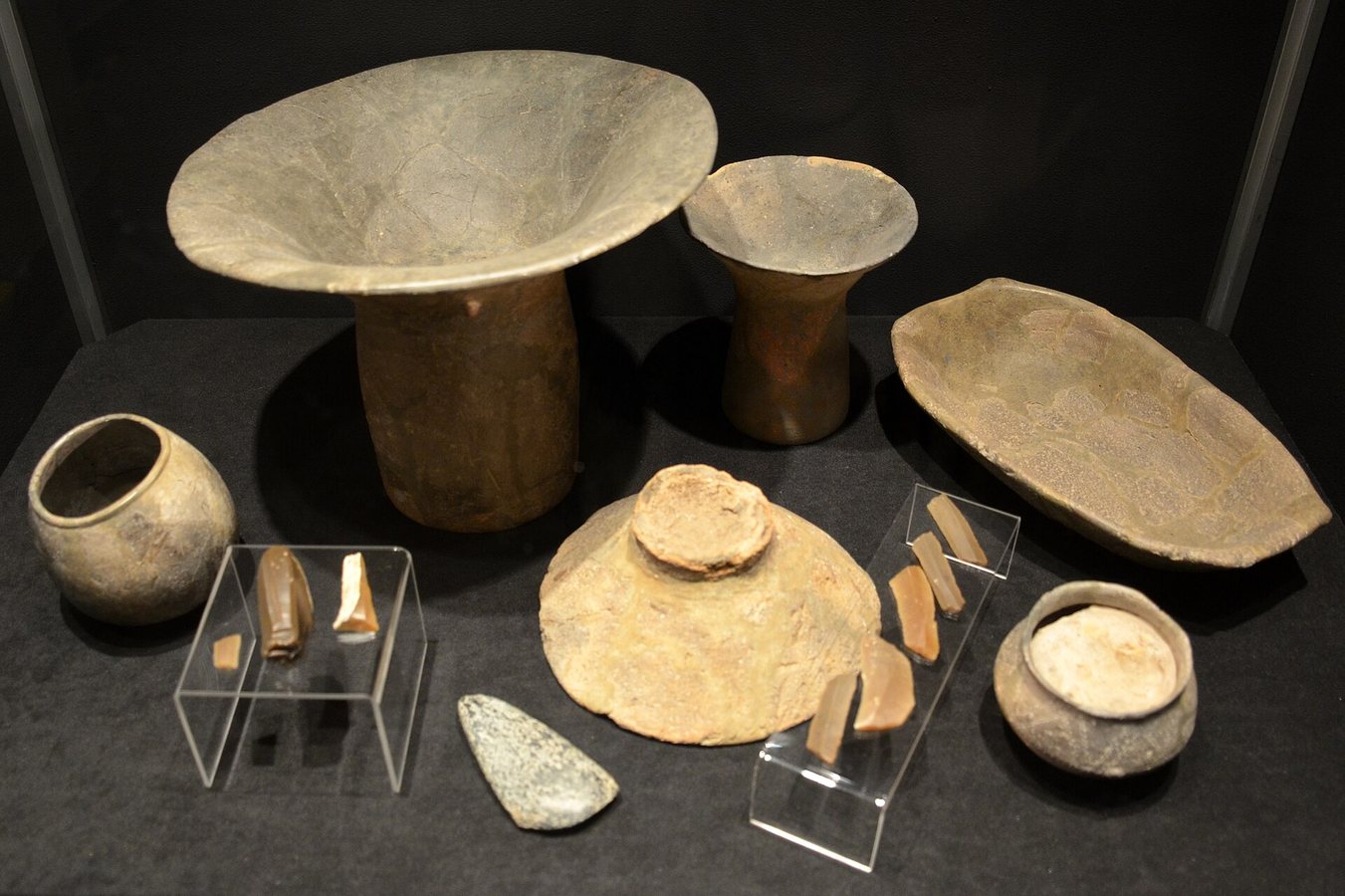
Archaeologists in southwestern Poland have uncovered a second unusual Neolithic burial within a Roman-era cemetery, a discovery that sheds new light on the region's ancient Corded Ware culture. The grave, found near Wrocław, contains the remains of a man accompanied by two human heads, amber beads, a flint blade, a battle ax made of serpentinite, and a striking necklace composed of 42 animal teeth.
Paweł Dąbrowski of the Medical University of Wrocław said the style of the serpentinite battle ax allowed researchers to date the burial to approximately 2900 B.C. The greenish rock weapon is characteristic of the Corded Ware culture, a widespread archaeological horizon known for its distinctive cord-impressed pottery and single-grave burial customs across central and eastern Europe.
«The arrangement of the 42 teeth was precise, and upon further inspection, it turned out that all of them had holes drilled through their roots. They must have formed a kind of necklace,» Dąbrowski said. All of the teeth were identified as incisors and canines from large mammals, including wolves, deer, bears, and possibly humans. The deliberate drilling and careful arrangement suggest the necklace held significant symbolic or status value.
«It's possible we've discovered the grave of a warrior or hunter, but because of this necklace, we can assume it was someone important, for example, the leader of a family clan,» Dąbrowski explained. The presence of such an elaborate ornament, combined with the weapon and the two human skulls, points to a person of elevated social standing within their community.
The two skulls are thought to have been placed in the grave as gifts or offerings. Researchers will conduct further analysis to determine whether the individuals had been decapitated before burial and whether they were related to each other. Genetic testing may also clarify their connection to the man interred with them and to the broader Corded Ware population.
This find follows an earlier unusual burial at the same cemetery, suggesting the site held particular significance for the Neolithic communities that used it. The presence of a Roman-era cemetery atop a much older Neolithic grave site indicates prolonged and layered use of the landscape over thousands of years, a pattern observed at many archaeological sites across Europe.
The Corded Ware culture, which flourished between roughly 3000 and 2350 B.C., is named for the cord-like impressions decorating its pottery. Its people are associated with the spread of Indo-European languages and the introduction of new burial practices, including individual graves beneath mounds. The culture's range extended from the Rhine River in the west to the Volga in the east, making discoveries like this one valuable for understanding regional variations in its customs.
Animal-tooth ornaments have been found in other Corded Ware contexts, including pierced dog teeth discovered in German graves, but the scale and preservation of this necklace make it an exceptional example. The precise drilling technique required to perforate 42 teeth without breaking them indicates considerable skill and investment of time, further underscoring the buried man's importance.
The excavation team plans to continue analyzing the skeletal remains and artifacts, with particular attention to the origins of the amber beads, which may have been traded from distant Baltic sources. Such trade networks were already active during the Neolithic period, connecting communities across significant distances.
Further studies will also examine the flint blade and the serpentinite ax to determine their geological origins, potentially revealing the extent of the man's community's contacts. Serpentinite sources are relatively rare, and identifying the specific quarry could map ancient exchange routes through the region.
81