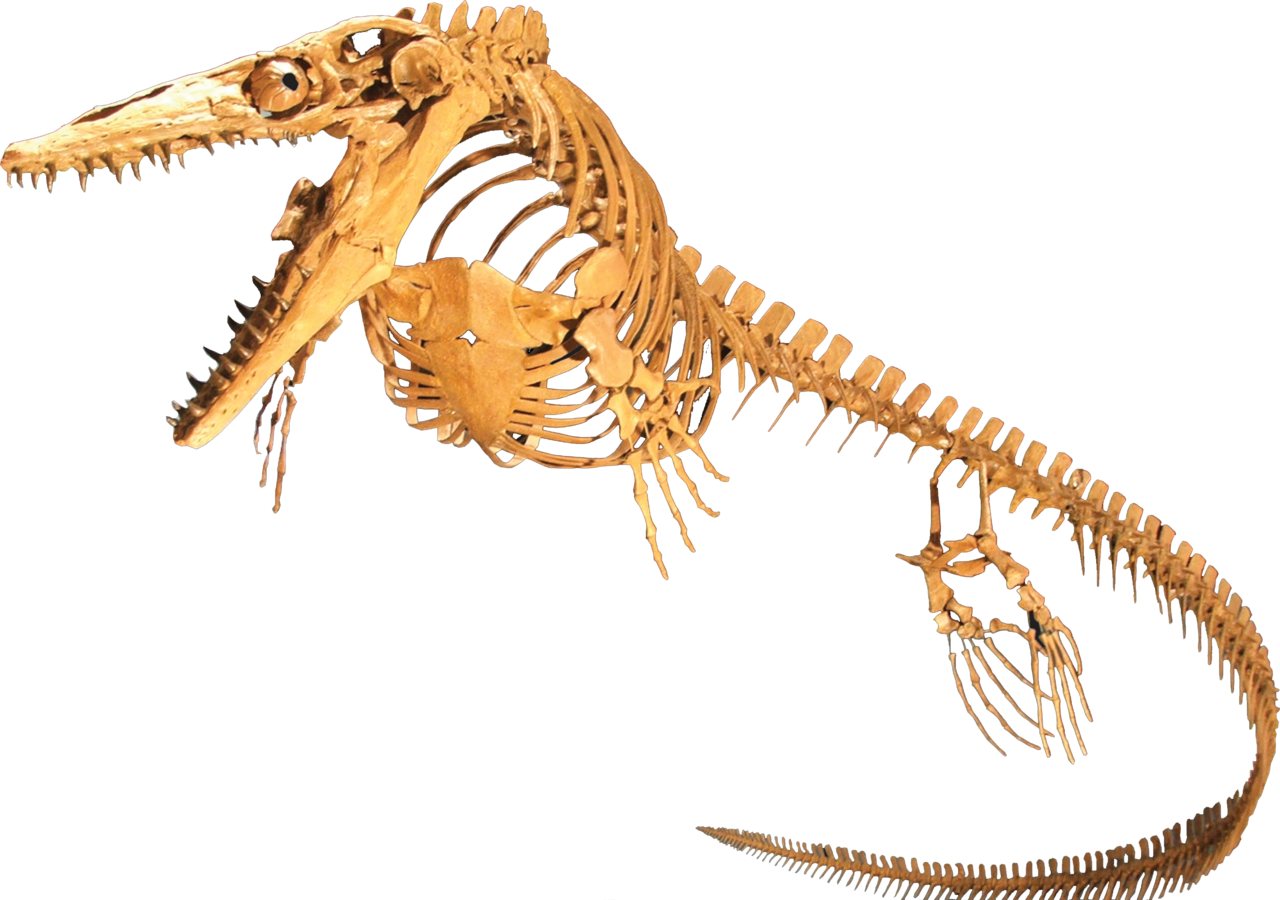
Paleontologists have described a previously unknown species of mosasaur, an extinct group of marine reptiles that hunted in Cretaceous seas while dinosaurs roamed the land, based on fossils unearthed in Egypt's Dakhla Oasis. The discovery adds a new branch to the evolutionary tree of a family of predators that dominated the oceans for millions of years before vanishing alongside the dinosaurs.
The fossils were recovered from the Western Desert, a region that has yielded a growing number of significant Cretaceous marine vertebrate finds in recent years. Mosasaurs were air-breathing reptiles, not fish, and they gave birth to live young rather than laying eggs on land. Their limbs had evolved into flippers, and their bodies were elongated and powerful, adaptations that made them formidable hunters in the shallow seas that once covered large parts of what is now North Africa.
The new species has been assigned the name Halisaurus auriculatus, according to the research team behind the description. The genus Halisaurus is known from other Cretaceous deposits around the world, including North America and Europe, but the Egyptian material represents a distinct species. The specific name auriculatus refers to an ear-shaped feature, a detail that distinguishes the new find from its closest relatives.
Mosasaur fossils from Egypt have played an outsized role in the history of paleontology. The first mosasaur ever described, Mosasaurus hoffmannii, was named in the late eighteenth century from specimens found in the Netherlands, but Egyptian deposits have since produced some of the most complete and scientifically important marine reptile remains from the Cretaceous. The Dakhla Oasis, located in the Western Desert, exposes rock layers that were deposited on the floor of a shallow sea during the Late Cretaceous, roughly 100 to 66 million years ago.
The discovery matters beyond the addition of a single name to the fossil record. Each new mosasaur species helps researchers reconstruct how these reptiles diversified, spread across the world's oceans, and partitioned resources in ancient marine ecosystems. The presence of a distinct Halisaurus species in Egypt also strengthens the case that the genus had a wider geographic range and a longer evolutionary history than previously documented.
Paleontologists working in the region continue to survey the Dakhla Oasis and surrounding areas, where erosion and excavation have exposed fossil-bearing sediments. The new species is described in a peer-reviewed study, and the fossils will join museum and research collections where they can be compared with mosasaur material from other continents. Such comparisons are essential for testing hypotheses about when and how different mosasaur lineages diverged.
For readers following the science of ancient life, the find is a reminder that the Cretaceous world was not only a time of dinosaurs on land but also of highly specialized reptiles at sea. Mosasaurs occupied the role now filled by sharks, dolphins, and killer whales, and their fossils offer a window into how large predators evolve when the ocean is the stage. The Egyptian discovery adds one more piece to that picture, and it suggests that the Western Desert still holds undescribed chapters of the Cretaceous story.