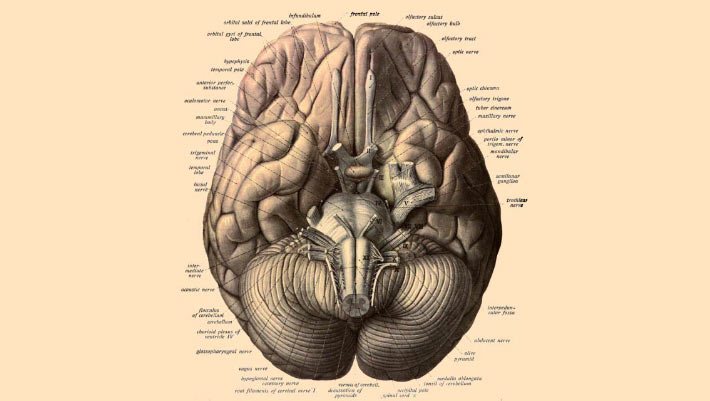
The human brain may not be a single organ at all, but the product of two separate nervous systems that evolution fused together over hundreds of millions of years, according to researchers at Stanford University. The finding challenges a long-standing assumption in neuroscience that the brain develops as one unified structure.
The team, led by neuroscientist Kyle Loh, argues that the human brain arises from two distinct cellular systems with very different jobs. Rather than forming from one developmental program, these systems appear to have evolved independently before being joined into the structure we recognize today.
The discovery carries immediate practical weight. It allowed the researchers to grow human hindbrain neurons in the laboratory, a technical advance that could give scientists a new way to study brainstem diseases. Among the conditions that could benefit are amyotrophic lateral sclerosis, commonly known as ALS, and spinal muscular atrophy, both of which involve the degeneration of motor neurons tied to the hindbrain and spinal cord.
For decades, the standard view has treated the brain as a single integrated organ built from one developmental blueprint. The Stanford work pushes back on that model, proposing instead that two ancient nervous systems — each with its own distinct functions — were brought together during evolution. If the interpretation holds, it would reshape how researchers think about brain development, organization, and the origins of neurological disease.
The ability to grow human hindbrain neurons outside the body is a significant part of the story. Such cells give researchers a living human system to probe the mechanisms of brainstem disorders, which have historically been difficult to study because the relevant neurons are hard to access and model in the lab. Better models could accelerate the search for treatments for ALS, spinal muscular atrophy, and other conditions affecting the brainstem.
The research also raises broader questions about how the human nervous system came to be organized the way it is. If two separate systems were fused over evolutionary time, the boundary between them may still shape how the brain handles different tasks — and how it fails when disease strikes. That possibility is likely to draw attention from neuroscientists studying development, evolution, and neurodegeneration alike.
The findings were described by the Stanford team as a new way of looking at the human brain, one that treats its dual origins as central rather than incidental. The work does not yet translate directly into clinical treatments, but it provides a foundation that other researchers can build on, both in understanding basic brain biology and in developing disease models.
For patients and families affected by brainstem diseases, the near-term significance lies in the research tools the discovery makes possible. Lab-grown human hindbrain neurons could help scientists test hypotheses and potential therapies more efficiently than before, narrowing the gap between basic laboratory findings and clinical application.
The study adds to a growing body of work suggesting that some of the brain's most basic organizational features are more complex than once assumed. By proposing that the human brain is effectively two organs joined together, the Stanford researchers have opened a line of inquiry that touches on evolution, development, and medicine at once.
11