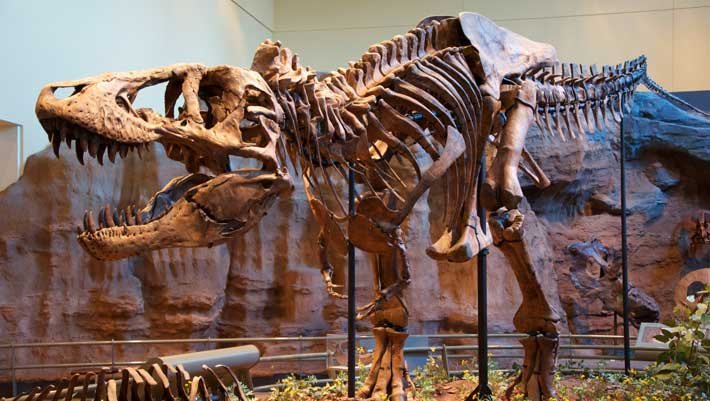
A new analysis of Tyrannosaurus rex teeth has found that the ancient predator maintained a body temperature of approximately 36.3 degrees Celsius (97.3 degrees Fahrenheit), a range comparable to that of modern Indian and African elephants and significantly higher than that of cold-blooded reptiles. The finding adds to a growing body of evidence that some dinosaurs were not sluggish, ectothermic creatures but instead regulated their internal heat in ways more typical of mammals and birds.
The study, reported by, used chemical signatures preserved in T. rex teeth to estimate the dinosaur's body temperature. Because tooth enamel forms under tightly controlled biological conditions and resists degradation over millions of years, it offers a reliable record of the temperatures at which an animal's body functioned. The researchers concluded that T. rex was able to keep its core temperature stable and elevated, a trait known as homeothermy.
The result places the iconic Cretaceous predator in a metabolic category closer to that of large mammals than to modern lizards, snakes, or crocodiles. Elephants, which maintain body temperatures in a similar range, are known for their massive size and high energy demands. The comparison suggests T. rex may have had a similarly active lifestyle, requiring a steady intake of food to fuel a warm, internally regulated body.
Body temperature is a key indicator of how an animal lives. Ectotherms, or cold-blooded animals, rely on external sources such as sunlight to regulate their heat, which limits their activity in cool conditions. Endotherms, or warm-blooded animals, generate heat internally through metabolism, allowing them to remain active across a wider range of environments. The new estimate for T. rex supports the view that at least some large dinosaurs were endothermic or had intermediate metabolic strategies.
The finding also has implications for how paleontologists reconstruct dinosaur behavior and ecology. A warm-bodied T. rex would have needed to consume substantial quantities of prey to sustain its metabolism, shaping its hunting patterns and its role in Cretaceous ecosystems. It may also have been capable of sustained activity over longer periods than a cold-blooded predator of similar size.
Previous research on dinosaur metabolism has often relied on growth rates, bone structure, and isotopic evidence. Tooth-based thermometry offers an additional line of evidence because teeth grow incrementally and preserve a chemical record of the conditions under which they formed. The new analysis of T. rex teeth therefore strengthens the case that the species was not merely a giant reptile in the modern sense but a creature with a physiology closer to that of today's birds, its closest living relatives.
The study does not resolve every question about dinosaur metabolism. Scientists continue to debate whether large dinosaurs were fully endothermic, whether they used a mixed strategy, or whether their body temperatures were partly a byproduct of their enormous size. A large body can retain heat simply because of its volume-to-surface-area ratio, a phenomenon known as gigantothermy. Even so, the estimated 36.3 degrees Celsius for T. rex is consistent with active internal regulation rather than passive warming alone.
The research adds T. rex to a list of dinosaurs for which warm-blooded traits have been proposed, including some smaller theropods and certain ornithischians. Each new measurement helps refine the picture of when and how endothermy evolved in the dinosaur lineage and how it contributed to the success of birds after the end-Cretaceous extinction.
For now, the tooth analysis offers a concrete number for one of the most famous predators in Earth's history. At roughly 36.3 degrees Celsius, T. rex ran warmer than its reptile neighbors and about as warm as a modern elephant, a detail that continues to reshape understanding of dinosaur biology.