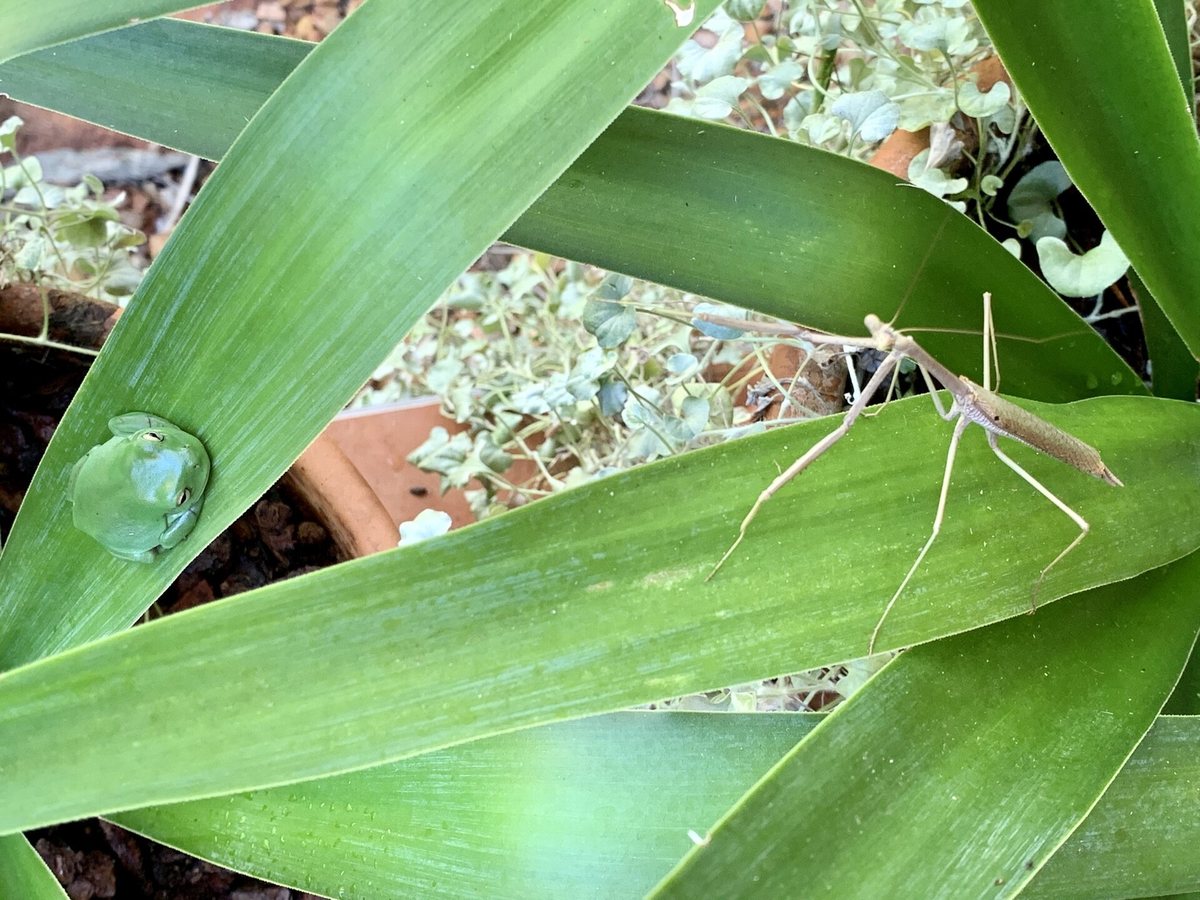
Two previously unrecognized species of large stick insects have been described from far north Queensland, a discovery researchers say underscores how much remains unknown about insect diversity even in a country long celebrated for its unusual wildlife.
The new species, Anchiale robusta and Anchiale mabiensis, belong to the genus Anchiale, a group of large, winged stick insects found in tropical Queensland. Their description was published in the journal Austral Entomology. The study also restored a third insect to full species status, correcting what had been a case of mistaken identity in the scientific record.
Stick insects are among the most accomplished mimics in the natural world, their elongated bodies and muted coloration allowing them to blend into twigs, bark and foliage. That camouflage makes them difficult to spot in the field and, in turn, difficult to study. Large winged species such as those in the genus Anchiale add another layer of complexity, since their ranges and physical traits can overlap in ways that have historically confused taxonomists.
The research was carried out by entomologists working on the tropical fauna of Queensland, Australia's northeastern state. Far north Queensland contains some of the country's most biologically rich rainforest, a landscape that supports a wide array of insects, many of them still poorly documented. The identification of two new species in this setting suggests that further surveys could turn up additional undiscovered insects.
The case of mistaken identity at the center of the study is significant beyond the two new names. Restoring a third insect to full species status means that a population previously treated as part of another species is now recognized as distinct. Such corrections matter for conservation and for understanding how many species actually exist in a given region, because a species that has been misclassified can be overlooked in assessments of biodiversity and habitat health.
Insect diversity remains one of the largest gaps in scientific knowledge. Insects make up the overwhelming majority of known animal species, yet new ones continue to be described regularly, including in well-studied countries such as Australia. Each description adds a small piece to the broader picture of how ecosystems function and how many life forms share a given landscape.
The findings were published in Austral Entomology, a peer-reviewed journal focused on the study of insects. The researchers behind the work say the discovery illustrates how little is still understood about insect diversity, a point that resonates in a field where even large and conspicuous species can remain unnamed for years.
For readers following biodiversity research, the study is a reminder that taxonomy, the science of naming and classifying organisms, is not a finished project. It is an ongoing effort that depends on fieldwork, museum collections and careful comparison of specimens. In the case of the Queensland stick insects, that effort has now produced two new species and corrected the record for a third.
12