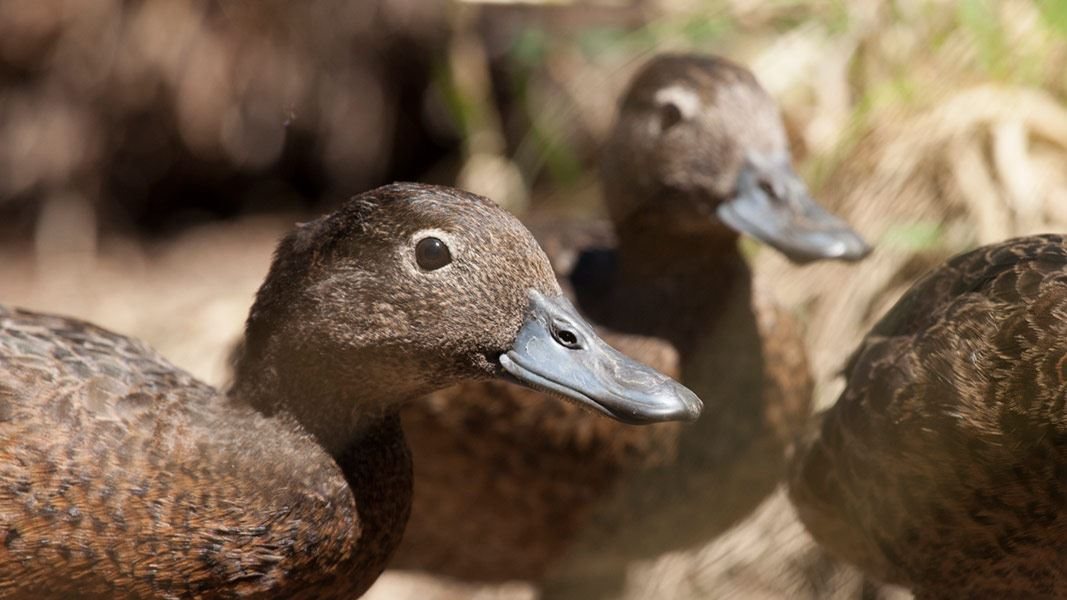
A single feral cat on New Zealand’s Purerua Peninsula became an unusually clear ecological experiment in what can go wrong during species restoration. Conservationists released groups of 20 pāteke in 2023 and again in 2024. In both cases, the same large grey tabby was blamed for killing 15 birds. The cat, nicknamed “Nine Lives,” was finally trapped on July 30, 2026, after evading removal for about three years.
Pāteke, also known as brown teal, are a small dabbling duck endemic to New Zealand. The Department of Conservation says the species was once widespread through lowland freshwater wetlands but is now confined to a much smaller set of natural and re-established populations. In 2022, DOC estimated 2,000 to 2,500 pāteke living in the wild, making them New Zealand’s rarest waterfowl on the mainland.
The species is currently classified by DOC as nationally increasing, which might sound reassuring. The same agency stresses, however, that pāteke remain vulnerable and could decline again if threats are not managed. Predation by introduced mammals is high on that list, alongside habitat loss, hunting, vehicle deaths, food shortages in dry seasons and competition or hybridization with mallards.
Purerua illustrates why the word “managed” matters. Pest Free Purerua believed feral cats were under control when it released 20 birds in 2023. Within a week, the first pāteke was found dead. Cameras identified a tabby with distinctive markings, and staff associated it with another 15 deaths. More traps and night cameras removed other cats, but not this one.
The animal’s behavior made conventional trapping difficult. It would appear at different hours, then vanish for months. When another 20 pāteke were released in 2024, the same cat returned and was blamed for killing 15. The Guardian estimated the total impact at dozens of birds, roughly 1% of the national population. That percentage is an approximate journalistic estimate, but the documented release losses alone show how strongly one predator can shape a small reintroduction.
This is a familiar conservation principle: releasing animals is not the endpoint. A reintroduction creates a population only when survival and reproduction outpace mortality. If predator pressure remains high, adding more individuals can become a repeated transfer of vulnerable prey into a sink habitat.
Nine Lives was caught when its movement briefly became regular. The cat visited a quarry on three consecutive nights in late July. Trappers baited cages with salmon, fried chicken and rabbit. A camera alert on July 30 showed the cat inside a cage, and the animal was subsequently humanely shot. Its stomach contents were due to be examined, and the body was to be taxidermied for education.
New Zealand’s policy is moving toward broader control. In November 2025, the government added feral cats to the Predator Free 2050 target list, while explicitly excluding domestic cats. The stated goals include national coordination, funding for local projects and research into effective and humane control technologies. By March 2026, the government said more than 9,000 community trapping projects were active nationwide.
Purerua may now restart pāteke releases. Ecologically, the crucial question is whether the removal of Nine Lives reflects a durable reduction in predator pressure or only the elimination of one exceptional individual. The next cohort of birds will provide the answer through survival, not symbolism.
80