The Chornobyl Exclusion Zone has become an unusual test of how military defense interacts with a contaminated ecosystem. Ukraine is fortifying the northern frontier to prevent a repeat of Russia’s 2022 advance from Belarus, while scientists, nuclear operators and conservation staff continue to manage a landscape where radiation, wildlife recovery and human access were already tightly regulated before the war.
The defense transformation is legally visible. In December 2024, Ukraine changed the boundaries of the Chornobyl Radiation and Ecological Biosphere Reserve. A presidential decree transferred 695.2 hectares along the border to State Border Guard units for engineering works, fortifications, fences, border clearings and communications. In ecological terms, that is a significant land-use change inside a protected area created in response to long-term radioactive contamination.
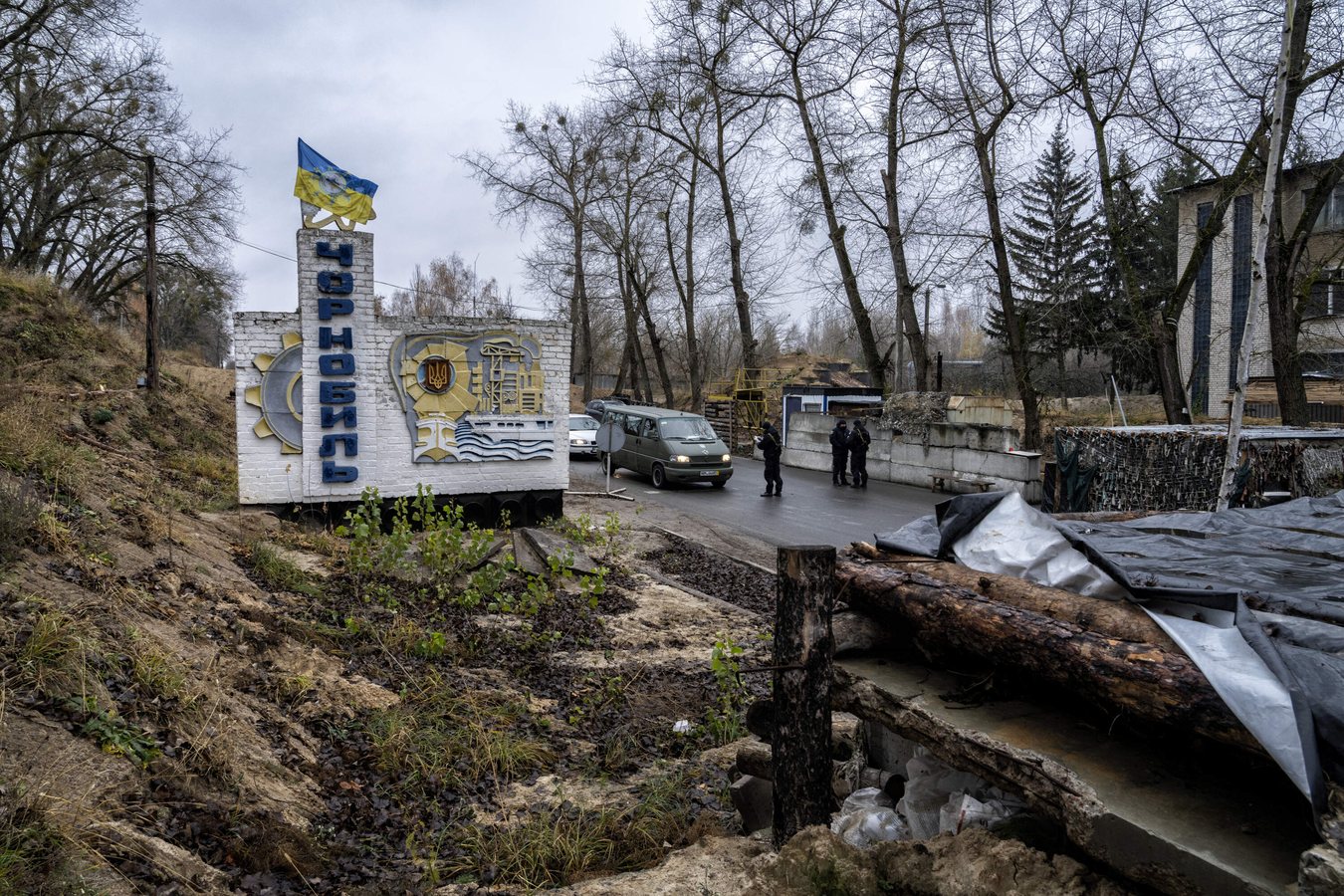
Field reporting shows that the change extends beyond paperwork. Associated Press described the exclusion zone in April 2026 as a heavily monitored military corridor marked by concrete barriers, barbed wire and minefields. In July, AP reported that the broader Belarus frontier includes mines, anti-tank barriers, razor wire and anti-drone systems, while Ukrainian border guards patrol around the clock with drones and other surveillance equipment.
These defenses respond to a demonstrated threat. Russian forces entered the zone from Belarus in February 2022 as part of the assault on Kyiv. AP reported that troops dug positions in contaminated soil and that fires linked to military activity swept through forests. The environmental concern is not that every disturbance automatically produces a radiological emergency. Rather, a contaminated landscape adds uncertainty and potential exposure pathways to ordinary wartime activities such as excavation, vehicle movement and fire suppression.
The evidence also requires precision. Public sources confirm minefields in the exclusion zone and the expansion of mine-explosive barriers in vulnerable border sectors. They do not establish that every road and forest is densely mined. For ecological analysis, that distinction matters: the spatial extent of barriers determines effects on access, fire response, wildlife movement and future remediation, and those details are not publicly available.
Chornobyl’s nuclear infrastructure remains another scientific and safety constraint. A drone strike on Feb. 14, 2025 damaged the New Safe Confinement over the destroyed Unit 4. In an April 2026 status report, the plant operator said the arch had lost its ability to fully maintain the leak-tightness of the internal volume. The same report said the facility remained controlled, automated radiation monitoring was operating normally, radiation dose rates stayed within established control levels and no releases above regulatory limits had been recorded.
That combination is important. Damage to a protective structure does not equal an ongoing radiological release, but it reduces a layer of engineered containment and increases the importance of repair and monitoring. The operator assessed the current risk of an uncontrolled release as low provided systems continue to work normally and no further external impacts occur. In a war zone, the phrase “external impacts” is not a theoretical caveat.
The exclusion zone also contains a paradox familiar to ecologists. Reduced human activity after 1986 allowed many wildlife populations to expand even though contamination persisted. AP’s 2026 reporting highlighted that resilience while also describing new wartime pressures. Fortifications, mines, patrol roads and fires reintroduce intensive human disturbance into parts of a landscape where absence itself became an ecological force.
Ukraine’s security need is straightforward: the route was used for an invasion once, so it cannot be left open. The current intelligence picture, however, does not indicate an imminent new ground assault. Ukrainian officials said in June and July that they did not see a Russian strike buildup near the Belarus border. The defenses are preventative infrastructure.
For science and environmental policy, Chornobyl is therefore becoming a long-duration case study in compound risk. A contaminated ecosystem, a damaged nuclear protective structure, military engineering and the continuing possibility of cross-border attack now exist in the same geography. Monitoring will need to distinguish between radiological effects, ecological disturbance and military damage — and to do so without compromising the security measures intended to prevent another occupation.
105