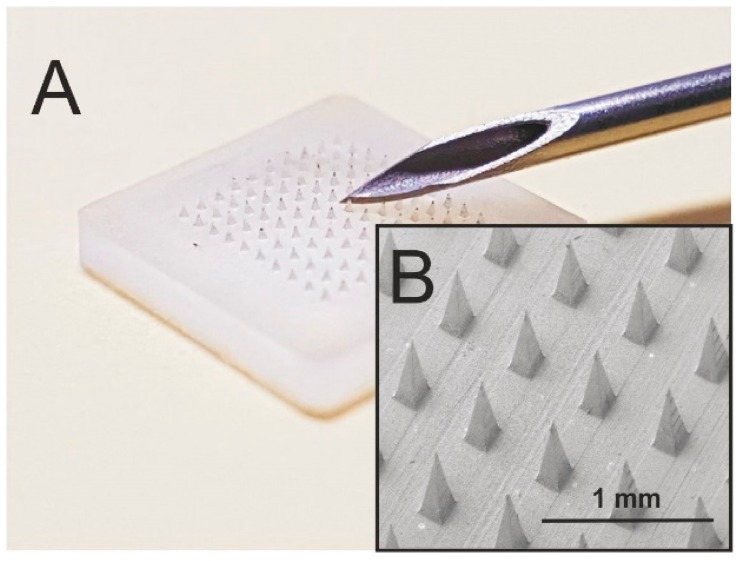
Researchers at the Georgia Institute of Technology have created biodegradable STAR particles that painlessly puncture the skin's outer barrier to improve the absorption of topical medications. The microscopic star-shaped structures, embedded with sharp microneedle tips, address a long-standing challenge in dermatology: the stratum corneum, which blocks most drugs from penetrating the skin effectively.
«Very few drugs can be absorbed effectively into the skin, which means that many drugs in dermatology are given by mouth or injection,» said team leader Mark Prausnitz. «This exposes the whole body to the drug, often causing side effects and reducing drug efficacy. STAR particles painlessly make micropores in the skin that allow drug that is rubbed on the skin to be absorbed. This targets drug delivery exactly to the site where it is needed.»
The team's latest work, reported in Advanced Healthcare Materials, describes polymer STAR particles made from water-soluble poly(vinyl alcohol) (PVA), enzyme-degradable cellulose acetate (CA), and hydrolysable polylactic acid (PLA). These materials have previously been used in microneedle patches, but those patches are generally limited to small skin areas. STAR particles, by contrast, can be rubbed onto large or irregular areas via a gel or cream, offering flexibility for conditions like eczema and psoriasis that affect variable regions of the body.
Fabricated using femtosecond laser micromachining, the particles feature star-shaped structures with sharp, well-defined microneedle tips and a tapered profile. In tests on pig skin, PVA STAR particles suspended in a non-aqueous formulation of isopropyl palmitate successfully punctured the skin, while CA and PLA particles in water formulations demonstrated consistent puncturing ability even after a week of storage. Titania STAR particles, used as a control, generated more pores due to their higher hardness, but they are not biodegradable.
The researchers then evaluated the particles' ability to deliver three drugs into pig skin. PVA STAR particles increased tacrolimus levels 1.7-fold after 10 seconds of rubbing and 3.2-fold after 30 seconds. CA particles boosted methotrexate delivery 5.4-fold and 25.2-fold at the same time points, respectively. PLA particles enhanced copper tripeptide-1 delivery 12.1-fold and 37-fold. These results show that the particles can significantly improve intradermal drug delivery, including for drugs like methotrexate that are normally blocked by the skin barrier.
Safety and environmental considerations were central to the design. Because the particles create micropores, there is a small risk they could enter other body tissues and cause damage. However, the water-soluble PVA particles dissolve rapidly upon contact with wet tissues, eliminating that concern. The CA and PLA particles retain their structure immediately after use but become blunt and weak as they degrade enzymatically or through hydrolysis. The biodegradable materials also reduce the environmental impact compared with non-degradable titania particles.
The team concludes that the biodegradable STAR particles address both environmental and safety concerns while enhancing drug delivery to the skin. The approach could enable delivery of hydrophilic drugs and larger molecules that are usually blocked by the stratum corneum, potentially improving patient outcomes and broadening applications.
Prausnitz told Physics World that the research primarily targets dermatological diseases that can spread over large areas of skin, such as psoriasis, eczema, vitiligo, and allergic rashes, as well as cosmetic applications. «We have licensed the STAR particle technology to a company that is preparing for a clinical trial next year using STAR particles to deliver siRNA as a novel eczema treatment,» he said. «At Georgia Tech, we are focused on advanced materials, manufacturing and formulations for the next generation of STAR particles.»