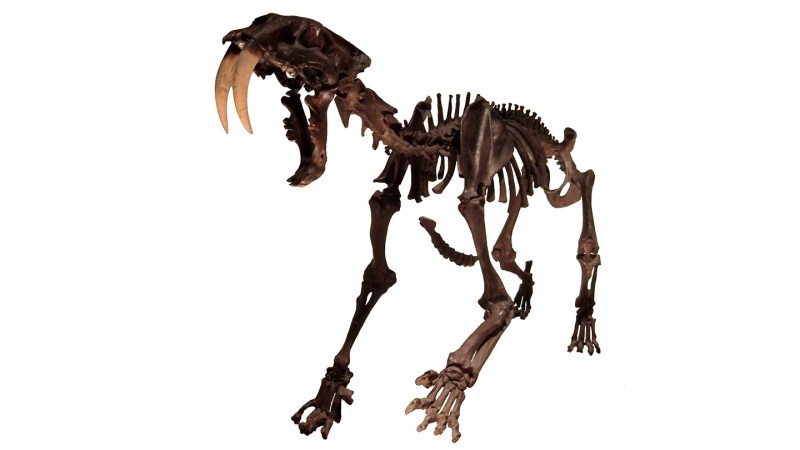
Fossils pulled from the La Brea Tar Pits in Los Angeles are offering new clues about the final years of the saber-toothed cat, a predator that roamed North America until its extinction around 10,000 years ago. A recent examination of the animals' spines revealed a striking number of deformed vertebrae and rare bone tumors, patterns that researchers say point to a history of inbreeding among the last surviving populations.
Saber-toothed cats, known scientifically asSmilodon fatalis, were among the most iconic megafauna of the Pleistocene epoch. Despite their formidable canine teeth and muscular builds, the species eventually vanished along with many other large mammals at the end of the last ice age. The new findings, reported by scientists who studied hundreds of fossilized bones from the tar pits, suggest that genetic problems may have made the cats more vulnerable to extinction.
The study focused on vertebrae from dozens of individual saber-toothed cats preserved in the tar seeps. Researchers found an unusually high incidence of misshapen bones, including vertebrae that were fused or compressed in ways that are rare in healthy wild populations. Such deformities are often associated with genetic disorders that arise from breeding between close relatives.
In addition to the skeletal malformations, the team identified multiple cases of osteochondroma, a type of benign bone tumor that is extremely uncommon in wild animals today. The presence of these tumors, together with the vertebral abnormalities, strongly suggests that the La Brea saber-toothed cats were suffering from a condition similar to hereditary multiple exostoses, a genetic disorder known in humans and other mammals that is linked to inbreeding.
The La Brea Tar Pits are one of the world's richest sources of Ice Age fossils, having trapped and preserved countless animals over tens of thousands of years. The site has yielded tens of thousands of saber-toothed cat bones, making it an ideal location to study the species' biology and health. Because the tar pits acted as a natural trap, the individuals preserved there likely represent a population that lived in the immediate vicinity, giving scientists a snapshot of a single local group over time.
Maura Palacios, a paleontologist at the La Brea Tar Pits and Museum and lead author of the study, noted that such high rates of skeletal anomalies are rarely observed in fossil records. She explained that the pattern fits what would be expected if the population had become small and isolated, forcing individuals to mate with relatives. In modern wildlife, inbreeding depression — the reduced fitness resulting from breeding among close relatives — is known to increase the risk of disease, lower fertility, and cause physical abnormalities.
The research adds to a growing body of evidence suggesting that genetic factors played a role in the extinction of several Ice Age species. While climate change and human hunting have long been considered primary drivers of the megafauna extinctions, the new data indicate that for saber-toothed cats, internal population dynamics may have accelerated their demise. A smaller, genetically impoverished group would have been less able to adapt to environmental pressures or recover from disease outbreaks.
Saber-toothed cats were not the only large predators at La Brea. The tar pits also trapped dire wolves, American lions, and short-faced bears. By comparing the saber-toothed cat bones with those of other species from the same deposits, researchers can determine whether the deformities were unique to the cats or part of a broader trend. The evidence so far indicates that the spinal abnormalities are far more common inSmilodon, suggesting that this species experienced a particularly severe genetic bottleneck.
Fossil records from La Brea span a period of roughly 50,000 years, allowing paleontologists to track changes over time. The presence of inbreeding-related deformities in specimens from later layers suggests that the population was already struggling long before the final extinction event. The findings underscore how even top predators can be vulnerable to genetic erosion when their habitats shrink and populations become fragmented.
Today, conservation biologists use similar skeletal and genetic markers to monitor the health of endangered species. The lesson from the saber-toothed cats, Palacios said, is that preserving genetic diversity is critical for long-term survival. Small populations of modern animals, such as the Florida panther or the Amur leopard, face similar risks if they cannot find new genetic material through natural dispersal or human-assisted reintroductions.
The study was published in a peer-reviewed journal and has been presented at scientific conferences. Researchers plan to continue analyzing the La Brea collection to look for evidence of inbreeding in other fossil species. They also hope to use ancient DNA techniques to confirm the genetic basis of the skeletal abnormalities observed in the saber-toothed cats.
For now, the twisted spines of these ancient predators offer a poignant record of a species in decline. The same tar pits that trapped them have preserved their bones for millennia, allowing scientists to read the story of their final struggle — not just against the changing world around them, but against the vulnerabilities written in their own genes.