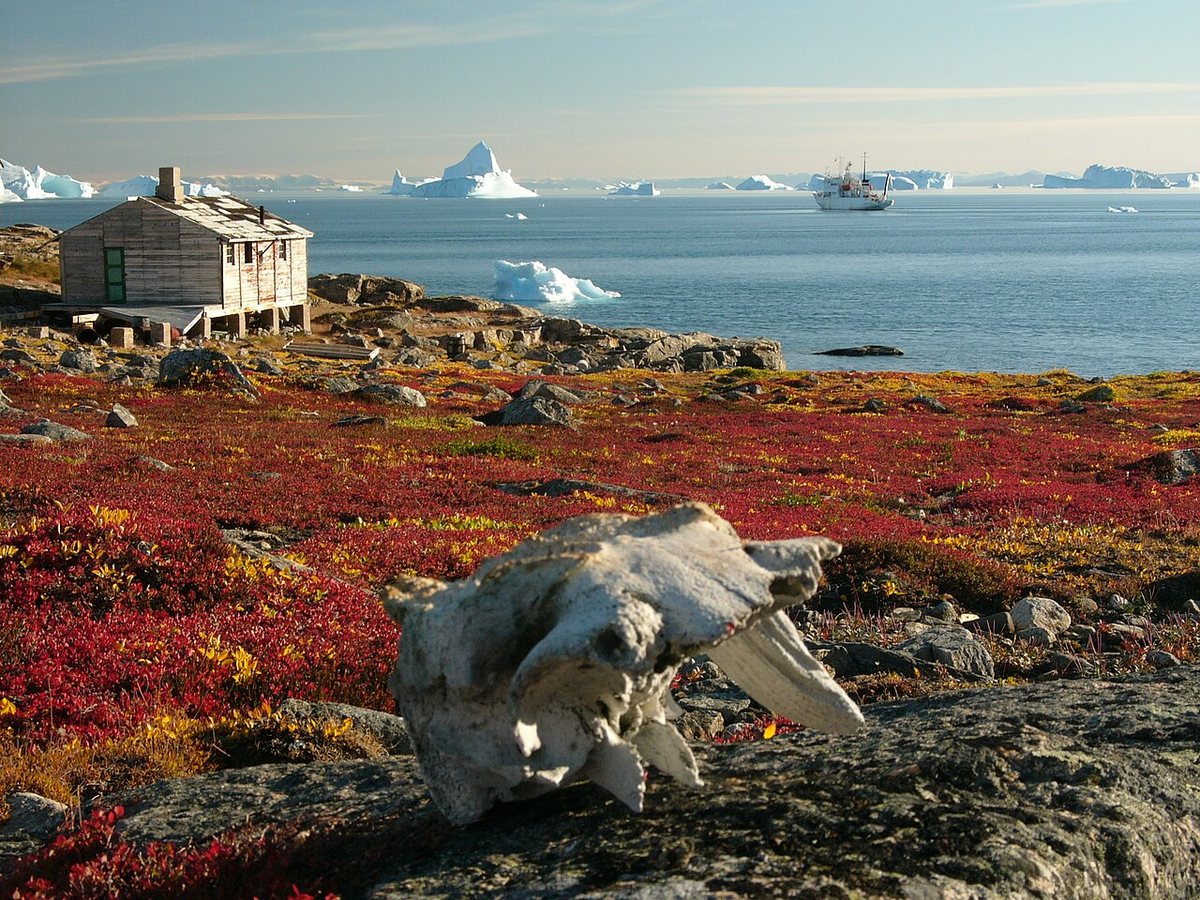
Scientists have launched the first project of its kind to determine whether an entire Arctic ecosystem can evolve to survive the climate crisis, shifting the focus from individual species to the collective adaptation of interdependent organisms. The research, taking place on Alaska's North Slope, examines whether the future of the region's streams and tundra depends not on the survival of the fittest alone, but on how species adapt together.
Researchers are working near Galbraith Creek, where fast-flowing waters drain the Brooks Range of ice and snow. The team treads carefully across clumps of tussock grasses to reach the site, where they string out mist nets to capture white-crowned sparrows. These birds have recently arrived from southerly latitudes, intent on feasting on the insects that will soon descend on the tundra in dense swarms.
The Arctic summer is short-lived, and sparrows have only a few weeks to establish territories, find mates, lay eggs, and raise their chicks on a steady diet of bugs. From every ensnared bird, the scientists collect blood, feather, and faecal samples to determine what the birds are eating and how their diet changes over the course of the summer.
The project represents a significant departure from traditional climate research, which typically studies how individual species respond to warming temperatures. Instead, this approach treats the ecosystem as a single interconnected unit, recognising that the survival of one species often depends on the fate of others. If insects emerge earlier due to warmer springs, for example, sparrows must shift their breeding timing or risk missing the peak food supply.
By tracking the birds' diets and comparing them with insect populations and plant cycles, the researchers hope to learn whether the ecosystem can shift its rhythms in a coordinated way. The question is whether natural selection can act on the entire web of relationships, favouring those interactions that remain synchronised as the climate changes.
The North Slope is one of the fastest-warming regions on Earth, making it a natural laboratory for studying rapid environmental change. Permafrost thaw, shifting vegetation patterns, and altered insect life cycles are already reshaping the landscape. The findings could inform conservation strategies not just in the Arctic but in other ecosystems facing similar pressures.
The research team's work at Galbraith Creek is part of a broader effort to understand the limits of biological adaptation. While individual species may evolve traits that help them cope with warmer conditions, the new study asks whether such changes can keep pace across an entire community of plants, insects, and birds.
Early results are not yet available, but the project's design marks a step forward in ecological forecasting. If ecosystems can adapt collectively, there may be greater hope for preserving biodiversity in a warming world. If they cannot, conservation efforts may need to focus on actively managing habitats to maintain the connections that species depend on.
The research underscores a growing recognition among scientists that climate adaptation is not a solitary process. Species do not exist in isolation, and their ability to survive environmental change is tied to the resilience of the ecosystems they inhabit. The outcome of this experiment could shape how scientists and policymakers think about the future of the Arctic and beyond.
108