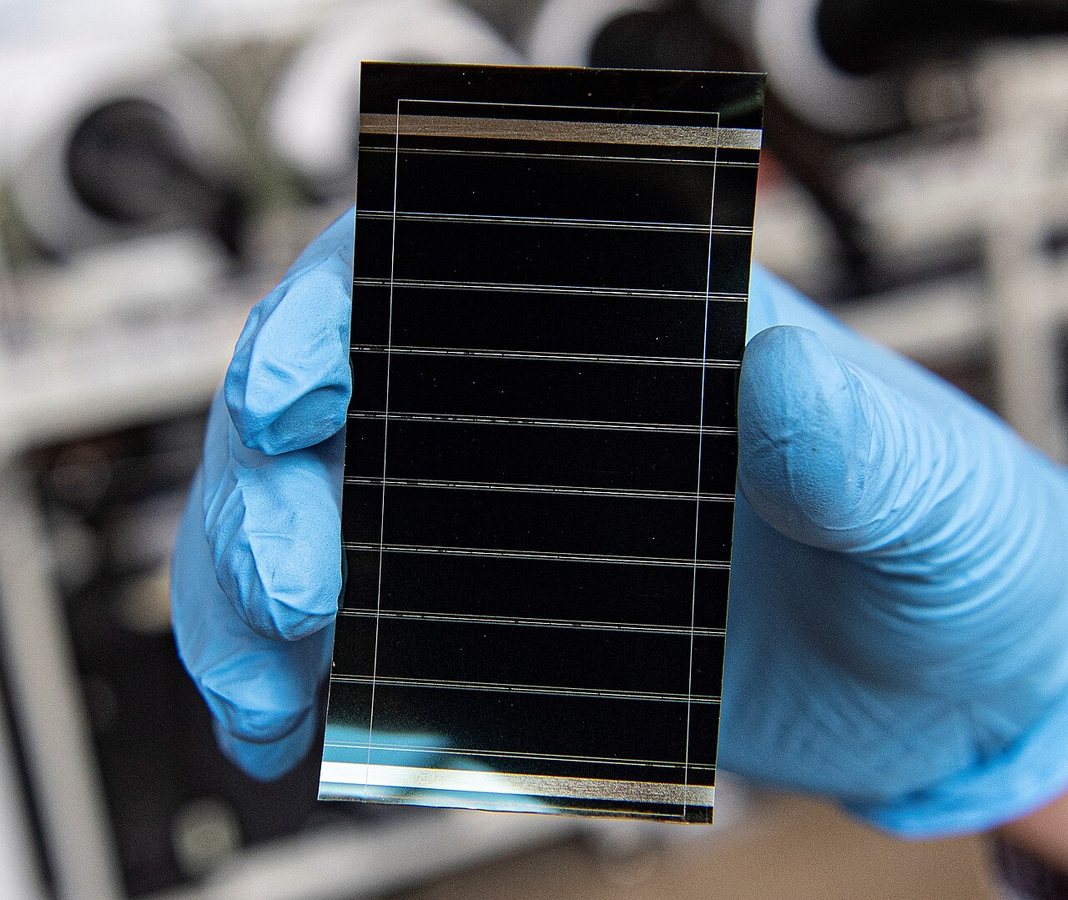
Researchers at the Helmholtz-Zentrum Berlin (HZB) in Germany have cleared a long-standing hurdle in next-generation photovoltaics with a new all-perovskite triple-junction solar cell design that reaches 27.3% power conversion efficiency. The advance relies on a molecular bilayer that fixes optical and electrical losses at the buried interfaces of the device, a problem that has kept this promising technology far from its theoretical potential.
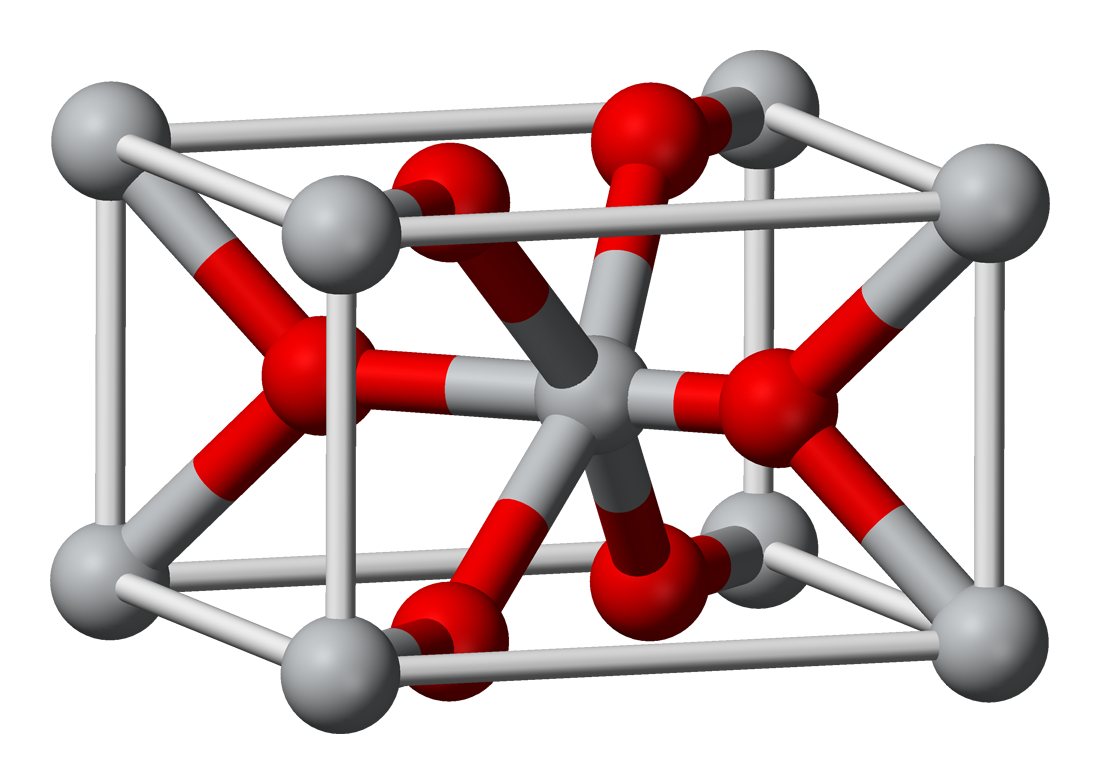
Perovskites are synthetic materials with a crystal structure well suited to absorbing light. In a triple-junction architecture, three distinct perovskite sub-cells are stacked, each tuned to capture a different part of the solar spectrum. This stacking allows multi-junction devices to bypass the efficiency ceiling of traditional single-junction cells. Until now, however, real-world performance has been dragged down by losses at the buried interfaces of the narrow-band-gap sub-cells, the part of the stack that captures near-infrared light.
The main bottleneck sits in the tin-lead bottom sub-cell. For years, the field has relied on an organic polymer called PEDOT:PSS as the hole-transport layer to extract positive charges from this sub-cell. PEDOT:PSS has serious drawbacks: it absorbs light parasitically, robbing the bottom cell of incoming photons, and its acidic, hygroscopic nature chemically degrades the sensitive perovskite material. The result has been a trade-off between efficiency and device lifespan, with a layer meant to extract charge ending up blocking light and slowly destroying the cell structure.
Researchers have looked to self-assembled monolayers (SAMs) as an alternative, since these molecularly engineered layers perform well in pure lead-based perovskites. But when deposited directly onto tin-lead perovskite layers, standard carbazole-based SAMs trigger severe internal electrical field screening and uneven grain growth at the buried interface. Using fast-hysteresis and bias-assisted charge extraction measurements, the HZB team found that these SAMs cause massive ion accumulation that hinders the cell's ability to separate and extract photogenerated charge carriers.
Led by Steve Albrecht, the team designed a synergistic bilayer to circumvent this destructive mechanism. They deposited an ultrathin, uniform layer of hydrophilic graphene oxide onto the transparent indium tin oxide conductive base, then introduced a specialized SAM molecule called MeO-2PACz. The phosphonic acid head groups of the SAM anchor strongly onto the oxygen-containing functional groups of the graphene oxide through hydrogen and covalent bonding. This arrangement prompts a molecular reorientation that deepens the layer's electronic work function, markedly enhancing electrical conductivity. The graphene oxide also provides a smooth, hydrophilic foundation that accelerates crystal nucleation, producing a uniform, high-quality perovskite film free of the nanovoids that plague SAM-only devices.
When integrated into single-junction tin-lead solar cells, the new bilayer achieved a standalone efficiency of 22.1%, far outpacing the 12.0% efficiency of SAM-only equivalents. Optoelectronic characterization confirmed that the improvement came almost entirely from mitigating internal electronic and ionic extraction losses.
The team then integrated the bilayer into a monolithic triple-junction stack with sub-cells band gaps of 2.00, 1.60 and 1.25 eV. By replacing conventional gold and PEDOT:PSS interconnecting layers with an optimized indium tin oxide and graphene oxide/SAM bilayer configuration, they minimized parasitic light absorption in the near-infrared spectrum. This raised the short-circuit current density of the narrow-band-gap bottom cell to 10.3 mA/cm², driving overall triple-junction efficiency to 27.3%.
Beyond efficiency, the chemically benign interface delivered exceptional longevity. While traditional PEDOT:PSS-based cells degrade rapidly due to chemical interactions, the encapsulated bilayer devices retained 90% of their initial performance after 770 hours of continuous operational tracking under 1-sun illumination at room temperature. This sets a new stability record for triple-junction all-perovskite configurations.
The team notes that current performance is still limited by slight current mismatches and series-resistance transport losses across the interconnecting junctions. By further optimizing the wider-band-gap perovskite layers and fine-tuning band alignments of the intermediate contacts, the researchers project that efficiency can comfortably clear the 30% barrier in the near future. The solar cell design is detailed in the journal Joule.
103