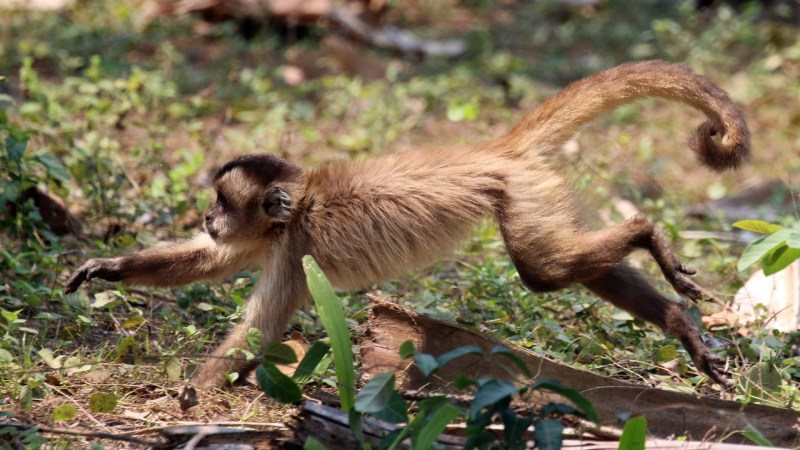
Capuchin monkeys step up their hunting of small vertebrates when fruit becomes scarce, according to a new study that sheds light on how flexible foraging behavior can be. The findings offer a window into the dietary strategies of these primates and may help researchers understand the conditions that shaped early human eating habits.
The study, reported by Science News, found that capuchins living in tropical forests turn more often to hunting and eating small animals such as lizards, birds, and rodents when plant foods like fruit are less available. This behavioral shift appears to be a direct response to food scarcity, rather than a fixed seasonal pattern, suggesting that the monkeys assess their environment and adjust their diet accordingly.
Researchers observed that the increase in hunting was not uniform across all groups or habitats. Instead, it correlated with local fluctuations in fruit abundance, indicating that the monkeys rely on hunting as a fallback strategy when their preferred plant foods dwindle. The study's authors note that this flexibility is likely crucial for survival in environments where food availability changes unpredictably.
The findings have broader implications for understanding primate evolution, including our own. Early humans likely faced similar challenges of fluctuating food resources, and the ability to switch between plant-based and animal-based diets may have been a key adaptation. By studying how modern primates like capuchins respond to food scarcity, scientists can infer how ancestral human populations might have developed hunting behaviors.
The research adds to a growing body of evidence that dietary flexibility is a common strategy among primates, not just a human trait. It also highlights the importance of considering ecological factors when studying animal behavior, as changes in food availability can drive significant shifts in foraging and hunting patterns.
While the study focuses on capuchins, the authors suggest that similar dynamics may apply to other primate species, including those that are more closely related to humans. Understanding these patterns could inform conservation efforts, as habitat changes that reduce fruit availability may force monkeys to alter their diets in ways that could affect their health and survival.
The study was published in a scientific journal and involved detailed observations of capuchin groups over multiple seasons. The researchers tracked both fruit availability and hunting events, allowing them to draw a clear link between the two. The results underscore the adaptability of these primates and provide a model for studying dietary evolution in humans.
As climate change and deforestation continue to alter tropical ecosystems, the findings may also have practical implications. If fruit sources become increasingly scarce, capuchins and other primates may rely more heavily on hunting, which could have cascading effects on local animal populations. The study highlights the need for conservation strategies that consider the full range of resources primates depend on.
76